
Key Takeaways
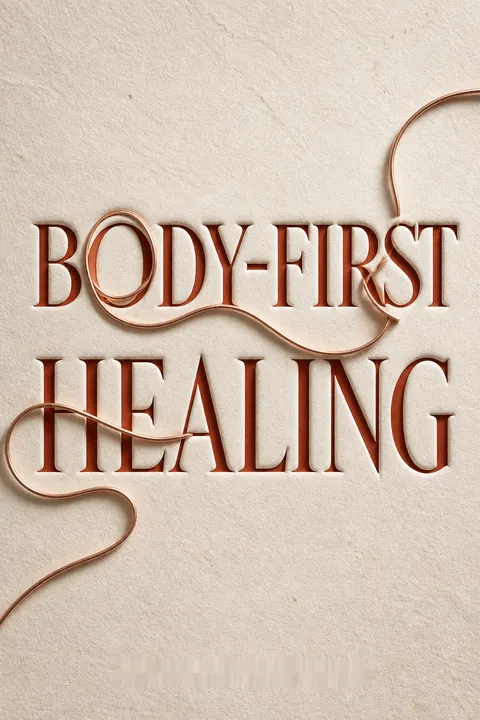
1. Trauma Lives in the Body: A Body-First Approach to Healing
Trauma is an internal straitjacket created when a devastating moment is frozen in time.
Beyond talk therapy. Many people exhaust traditional talk therapy options, yet still feel stuck, because conventional methods often focus on verbally recalling and rehashing traumatic events. This "top-down" approach, targeting the thinking brain, can inadvertently re-traumatize the nervous system, which primarily communicates through sensation and emotion, not words. The body-first approach recognizes that trauma isn't just a mental event; it's a physiological experience stored deep within our biology.
Rediscovering yourself. Healing isn't about becoming a new person, but rather rediscovering who you were before trauma forced your nervous system into chronic survival modes like fight, flight, shutdown, functional freeze, or fawn. These survival responses, while initially protective, can become maladaptive, trapping individuals in adrenaline-fueled cycles even when present danger is absent. The goal is to allow the nervous system to get unstuck from the past and catch up to the safety of the present.
Emotions carry charge. Emotions are "energetically charged," and when they are suppressed or avoided, this charge remains trapped within the body, creating a toxic internal environment. The "4 E's of Emotion" — Emerge, Experience, Express, Expel — outline a natural process for releasing this pent-up survival energy. By learning the language of your unique system through sensation, feeling, and emotion, you gain the capacity to process discomfort and release what was once too overwhelming.
2. Your Nervous System is Your Innate Protector: Understanding Polyvagal Theory
Your body and brain were innately and brilliantly built not just to survive in the worst of conditions, but to truly live and thrive.
Internal surveillance system. Your nervous system acts as your body's subconscious security camera, constantly scanning for cues of safety or danger through a process called "neuroception." This ancient, primal wisdom, rooted in the reptilian and mammalian parts of your brain, prioritizes survival above all else, influencing your thoughts, behaviors, emotions, and even physical health. It's why you often react impulsively before your rational mind can catch up.
Three predictable pathways. Polyvagal Theory (PVT), developed by Dr. Stephen Porges, outlines three hierarchical states of the autonomic nervous system:
- Ventral Vagal (Safe & Connected): The "rest and digest" state, promoting health, growth, and connection.
- Sympathetic (Fight or Flight): The "gas pedal" mobilizing you for action, protection, play, or performance.
- Dorsal Vagal (Shutdown): The "emergency brake" for extreme danger, leading to immobilization, numbness, and disconnection.
Understanding these states helps you recognize why you feel and react the way you do.
Co-regulation is foundational. Humans are hardwired for connection, making co-regulation (being soothed by others) a biological imperative that precedes self-regulation. Our "social engagement system" — involving eyes, ears, voice, and facial expressions — constantly seeks signals of welcome or warning. When the nervous system perceives safety through connection, it supports health and growth. Conversely, disconnection or perceived threat reinforces habitual survival patterns, highlighting why "same equals safe" for the nervous system, even if it's unhealthy.
3. Early Attachment Shapes Your Lifelong Relationships
Attachment is a relationship in the service of a baby’s emotional regulation and exploration.
Early bonds matter. The emotional bonds formed in infancy and early childhood with primary caregivers, known as "attachment," are pivotal for lifelong functioning and development. These early interactions lay the foundation for a child's sense of self, their ability to regulate emotions, and their capacity to form healthy relationships in adulthood. A secure attachment in childhood is a strong predictor of mental and physical health later in life.
Secure vs. insecure. When a caregiver consistently provides presence, attention, and responsive comfort, a child develops a secure attachment, fostering confidence, resilience, and independence. Inconsistent or absent caregiving, however, leads to insecure attachment styles:
- Insecure Resistant (Anxious): Hypervigilance, clinginess, fear of abandonment due to unpredictable care.
- Insecure Avoidant (Dismissive): Emotional suppression, self-reliance, and indifference due to consistently disengaged care.
- Insecure Disorganized (Fearful-Avoidant): Unpredictable push-pull dynamics, confusion, and fear of intimacy due to chaotic or abusive care.
These patterns, formed before language, are stored as implicit body memories.
Healing is possible. While attachment styles are "set in place" by age two, they are not "set in stone." "Earned secure attachment" can be cultivated in adulthood through new, secure relationships with partners, friends, mentors, or therapists. This process involves repairing relational wounds by experiencing consistent safety, attunement, and support, allowing the nervous system to rewire old patterns. Reparenting your younger self, by offering compassion and understanding to your inner child, is also a powerful path to healing.
4. Unmasking Your Armor: The Five Stuck Personalities
People have two needs: attachment and authenticity. When authenticity threatens attachment, attachment trumps authenticity.
Armor as protection. Your nervous system, in its well-intentioned effort to protect you from trauma, creates a physiological "armor." If a felt sense of safety is absent after a traumatic event, this armor remains, trapping you in perpetual survival states. These adaptive coping mechanisms, initially vital for survival, can eventually become burdensome, leading to "stuck personalities" that feel unnatural and self-sabotaging.
Adaptive responses. What are often labeled as "disorders" (e.g., PTSD, OCD, bipolar disorder) can be reframed as adaptive responses—brilliant strategies your brain and biology developed to manage overwhelming experiences. Healing involves recognizing these as armor, not inherent flaws, and gently removing them layer by layer. The goal isn't to discard these protective parts, but to update their strategies so your regulated self can take the lead.
The five stuck personalities:
- Fight (Angry): Explosive, controlling, defensive, quick to anger. Body: rigid spine, bracing, heightened scanning.
- Flight (Anxious): Overachieving, overanalyzing, restless, escapist through busyness or substances. Body: rigid spine, bracing, heightened scanning.
- Shutdown (Depressed): Exhaustion, isolation, numbness, lack of motivation, brain fog. Body: collapsed posture, loose muscles, decreased awareness.
- Fawn (Appeasing): People-pleasing, conflict avoidance, submissive, abandoning boundaries out of fear of rejection. Body: disconnected, bracing, forced expressions.
- Functional Freeze (Autopilot): Functioning externally but detached and numb internally, going through motions without emotion. Body: neutral posture, periods of loose/bracing muscles, dissociation.
These personalities are subconscious procedural patterns, echoing past survival strategies in the present.
5. Your Core Wounds: Unraveling the Layers of Your Protective Patterns
Trauma isn’t about the experience or the event; it’s more about how we hold it, or refuse to hold it, inside.
Beyond the obvious. Many individuals, like the author, initially focus on "big T" traumas (e.g., assault, death of a loved one) while overlooking "not enough" traumas (e.g., emotional neglect, abandonment, lack of empathy). These subtle, chronic experiences can lay dormant, creating equally devastating "core wounds" that shape subconscious beliefs and behaviors. The author's panic attacks when leaving her son, for instance, were traced back to her mother's frequent absences during childhood, a previously unacknowledged wound.
The "onion" of trauma. Core wounds can be understood as an onion with multiple layers, moving from the surface-level coping behavior to the deepest trauma:
- Coping Behavior: The visible action (e.g., isolating, self-medicating, people-pleasing).
- Conscious Thought: The story you tell yourself (e.g., "I don't want people to see me").
- Emotion: The feeling associated with the thought (e.g., shame, embarrassment).
- Limiting Belief: The subconscious conviction (e.g., "Emotions are a weakness").
- Core Wound: The original trauma or experience that seeded the belief (e.g., childhood emotional dismissal).
This framework helps connect present-day struggles to their historical roots.
Three C Inquiry. To unravel these layers, the "Three C Inquiry" provides a compassionate approach:
- Curiosity: Ask what stories and feelings are emerging with a protective pattern, and what evidence supports them in the present moment.
- Context: Understand why the impulse arose, recognizing it as an old, subconscious protective strategy.
- Compassion: Offer self-compassion instead of judgment, acknowledging that the behavior made sense for survival.
This process creates "disconfirming experiences," where new evidence challenges old limiting beliefs, allowing for a shift from self-judgment to self-understanding and healing.
6. Healing is Reclaiming Your Life Force and Healthy Aggression
Anger is an essential and primary emotion, and one that we shouldn’t be afraid of.
Vitality and power. Healthy aggression, or "life force energy," is crucial for setting boundaries, defending oneself, advocating for needs, and propelling forward in life. It's the antidote to suppression and shame, which keep us stuck and disconnected from our authentic selves. When this innate power is stifled, often from early childhood trauma or societal conditioning, individuals can become stagnant, losing their aliveness and sense of purpose.
Sources of suppression. Life force can be extinguished early by:
- Intergenerational Trauma: Inherited impulses to avoid anger or assertiveness.
- Trauma in Utero/Developmental Trauma: Disruptions in early development leading to shutdown or dissociation.
- Toxic Shame: Caregivers instilling shame for natural expressions of power, leading to suppression.
Later in life, shock trauma, boundary ruptures, or chronic medical conditions can also deplete this vital energy, leaving individuals feeling powerless and disconnected from their bodies.
Working with, not against. Reclaiming life force involves working with the body's natural impulses, rather than fighting them. For instance, the author's "empowered birth" experience, where she leaned into the sensations of power and pain, contrasted sharply with her first birth where she resisted her body's primal wisdom. This shift from fear to trust allowed her to reconnect with her vitality. Somatic healing helps individuals slowly re-engage with their healthy aggression, transforming shame into power and allowing the body to express what was once suppressed.
7. The Body Remembers: Healing Through Implicit Memory
Trauma comes back as a reaction, not a memory.
Beyond conscious recall. Even if you can't consciously remember a traumatic event, your body implicitly remembers how it felt. This "body memory" is stored in subconscious brain regions (cerebellum, striatum, amygdala) and lacks a time stamp, meaning a trigger can make you feel as if the past trauma is happening now. This explains why individuals might experience debilitating emotions or physical reactions that seem irrational in the present moment.
Implicit vs. explicit memory.
- Explicit Memory: Consciously recalled, verbal, declarative (who, what, where, when). Develops after age two or three.
- Implicit Memory: Unconscious, non-verbal, body-based (sensations, emotions, procedural). Develops from seven weeks gestation.
Traumatic experiences, especially those occurring before explicit memory develops or during overwhelming events that shut down the hippocampus, are primarily stored as implicit memories. These manifest as "post-traumatic stress reactions" rather than clear narratives.
Visible imprints. Trauma can leave visible imprints on the body, affecting posture, movement, and even creating involuntary physical responses. Examples include:
- A veteran's incessant twitching linked to an incomplete orienting response during an explosion.
- A child's slumped posture reflecting feelings of abandonment and insecurity.
- Physical weakness on one side of the body due to a thwarted defensive response.
These physical manifestations are the body's way of telling its story. Somatic work helps access these implicit memories and allows the body to complete the thwarted responses, leading to profound healing and resolution of symptoms.
8. Somatic Experiencing: A Gentle Roadmap to Getting Unstuck
Trauma happens fast; healing happens slow.
A gentle dialogue. Somatic Experiencing (SE) is a body-first approach that helps you have a dialogue with your body by tracking its sensations (interoception). Instead of rushing to fix or intellectualize feelings, SE encourages slowing down to simply notice and observe, allowing the body's natural wisdom to guide the healing process. This gentle approach helps shift outdated protective patterns and build new muscle memory for healthier responses.
Building blocks of SE:
- SIBAM (Sensation, Image, Behavior, Affect, Meaning): A framework to fully experience and process emotions and sensations.
- Capacity: Building resilience to tolerate discomfort without becoming overwhelmed.
- Titration: A slow, gentle process of exploring small fragments of challenging experiences to avoid re-traumatization.
- Resources: Internal or external anchors (e.g., a comforting object, a pleasant memory, grounding in a chair) that create a felt sense of safety.
- Pendulation: The natural oscillation between states of stress (trauma vortex) and calm (healing/counter-vortex), which SE helps restore.
The five steps of SE:
- Resource: Create a felt sense of safety.
- Pendulate: Gently touch into discomfort, tracking bodily sensations.
- Somatic Completion: Allow natural impulses to express or respond in ways previously thwarted.
- Discharge: Experience the natural release of survival hormones (e.g., trembling, heat, tears).
- Resource: Anchor back into safety and regulation.
This cyclical process, practiced consistently, helps the nervous system renegotiate trauma, release trapped energy, and restore its innate capacity for self-healing, leading to greater joy, meaning, and vitality.
People Also Read



Download PDF
Download EPUB
.epub digital book format is ideal for reading ebooks on phones, tablets, and e-readers.








































