
Key Takeaways
1. Large-Group Identity: "We-ness" as an Invisible Force
When one large group interacts with another, 'we-ness,' whether it is described with reference to religious, ethnic, national, or racial affiliation, acts as an invisible force in the unfolding drama.
Defining "we-ness." Large-group identity, or "we-ness," is a fundamental human need, akin to a protective garment or "ethnic tent" that shelters individuals. It forms from shared traditions, historical continuity, a common mythical origin, and collective experiences. This shared identity differentiates one group from others, often leading to a sense of uniqueness and sometimes superiority.
Pseudospeciation and belonging. Psychoanalyst Erik H. Erikson coined "pseudospeciation" to describe the tendency for groups to view themselves as fully human while perceiving others as subhuman. This primal distinction, rooted in basic survival and competition, evolves into complex cultural indicators like flags, songs, and language, which reinforce group cohesion and self-esteem.
Unconscious connections. Members of a large group are connected by an invisible network, often unconsciously. This "we-ness" becomes acutely apparent during crises or conflicts, where individual needs may be overshadowed by the collective identity. The group's canvas, representing this shared identity, protects its members, while leaders act as "tent poles" holding it erect.
2. Chosen Trauma: Unresolved Historical Wounds Fuel Present Conflicts
When the mental representation becomes so burdensome that members of the group are unable to initiate or resolve the mourning of their losses or reverse their feelings of humiliation, their traumatized self-images are passed down to later generations in the hope that others may be able to mourn and resolve what the prior generation could not.
Defining chosen trauma. A "chosen trauma" is the collective memory of a past calamity that profoundly affects a group's identity. It's not merely a historical event but a mental representation, a consolidated collection of shared feelings, perceptions, fantasies, and interpretations, often involving humiliation and helplessness.
Time collapse and revenge. This trauma can lead to "time collapse," where past injuries are emotionally merged with present conflicts, making new enemies seem like extensions of old ones. The unresolved mourning of these losses fuels a powerful desire for revenge, paradoxically raising the group's self-esteem by attempting to reverse ancestral humiliation.
Examples of chosen trauma:
- Serbs and the Battle of Kosovo (1389): A defeat against the Ottoman Turks, mythologized as a martyrdom, became a core identity marker, reactivated centuries later to justify aggression in Bosnia.
- Navajo Long Walk (1864): The forced march and imprisonment by U.S. soldiers left a transgenerational trauma, with descendants feeling the pain as if it happened "the day before."
- The Holocaust: For Jews, it's a legacy to "never forget," linking them to a precarious fate and shared identity.
3. Chosen Glory: Collective Triumphs Bolster Group Self-Esteem
The mental representation of a historical event that induces feelings of success and triumph, what I call a chosen glory, is a powerful ethnic or large-group marker.
Defining chosen glory. A "chosen glory" is the collective memory of a historical event that brings feelings of success and triumph to a group. These are often deserved victories over another group and, like chosen traumas, become heavily mythologized over time, serving as a source of pride and a key marker of group identity.
Symbolic representations. Chosen glories are proudly displayed through various symbols and rituals, reinforcing the group's positive self-perception. These can range from national anthems and flags to personal mementos. For example, a Soviet psychologist ritualistically playing with his Lenin pin in the U.S. symbolized his connection to his Soviet identity.
Boosting self-esteem. In times of crisis or when a group's identity is threatened, chosen glories are reactivated to boost collective self-esteem and provide a sense of continuity and strength. Saddam Hussein, for instance, invoked the image of Sultan Saladin during the Gulf War to rally his people, despite Saladin being a Kurd, a group Hussein had previously persecuted.
4. Psychological Borders: Differentiating "Us" from "Them"
It is precisely the minor differences in people who are otherwise alike that form the basis of feelings of strangeness and hostility between them.
The accordion phenomenon. Groups in conflict often exhibit an "accordion phenomenon," a rhythmic oscillation between seeking closeness and maintaining distance. This ritual reflects an unconscious effort to manage aggressive feelings and preserve a distinct psychological border between antagonists, even when they share similarities.
Narcissism of minor differences. To maintain these borders, groups exaggerate major differences and elevate minor ones to significant proportions. As Freud noted, "narcissism of minor differences" is a convenient way to satisfy aggression and foster internal cohesion. However, this can escalate from harmless ridicule to deadly conflict, as seen in countless ethnic clashes.
Examples of minor differences:
- Arab-Israeli food: Debates over slight recipe variations in shared dishes.
- Cypriot Greeks and Turks: Distinguishing each other by cigarette brands (blue/white vs. red/white packaging) or sash colors (black/blue vs. red).
- Croats and Serbs: Emphasizing dialectal differences in language (ijekavian vs. ekavian pronunciation) despite mutual intelligibility.
5. Externalization & Projection: Shaping the "Enemy Image"
If the enemy absorbs the externalizations and projections, the situation becomes more complicated.
Depositing unwanted parts. Groups unconsciously deal with unintegrated "bad" aspects of themselves by externalizing and projecting them onto other groups, particularly perceived enemies. This process helps maintain internal cohesion and a "pure" self-image.
Shared reservoirs for projections. Just as children use "suitable reservoirs" for their unintegrated good parts (e.g., a Finnish sauna), groups use others as reservoirs for their bad parts. This creates an "ethnic marker" for the recipient group, often intertwining with existing negative stereotypes.
Examples of externalization:
- Muslims and pigs: Forbidding pork, associating pigs with the "dirty" Christian other, thus externalizing negative aspects onto the animal.
- African Americans: Historically targeted by dominant whites' externalizations and projections, leading to delusions of "whiteness" among some schizophrenic patients, reflecting a desire to identify with the oppressor.
- Bosnian Muslims as "Ottoman Turks": Serbs projected their aggression and historical grievances onto Bosnian Muslims, perceiving them as extensions of their ancient enemy.
6. Regressed Collective Morality: Dehumanization Justifies Violence
When members of a group experience mass regression, their fears are transformed into fear of punishment by the enemy.
Regression of morality. Under extreme stress, a group's collective morality can regress to a primitive stage, where actions are driven by minimizing group anxiety and avoiding perceived punishment from the enemy. This regression often masks itself with intellectual rationalizations for destructive acts.
Dehumanization of the enemy. The enemy is first demonized, then often completely dehumanized, perceived as "vermin" or "feces." This psychological shift makes it easier to inflict harm without remorse, as hurting non-human entities does not trigger the same guilt as harming fellow humans.
Examples of dehumanization:
- Rwandan Hutu and Tutsi: Hutu referred to Tutsi as "cafards" (cockroaches) to justify genocide.
- Bosnian Serbs and Muslims: Serbs associated Bosnian Muslims with "dirty" Ottoman Turks, leading to systematic rapes and killings, seen as a "purification" to eliminate unwanted elements.
- Khomeini's rationale: The Ayatollah's bizarre justification that killing an "infidel" benefits them by preventing further moral suffering.
7. Leaders as "Tent Poles": Guiding Group Identity in Crisis
While the tent pole (the leader) holds the tent erect, the canvas itself, in its own right, is a protector of the group.
The leader's function. In times of crisis, leaders act as the "tent pole" for the "ethnic tent," providing stability and direction for the emotionally bonded large group. Their role is to articulate group interests, transform them into actionable programs, and rally followers.
Charismatic influence. Charismatic leaders, especially those with exaggerated self-esteem, often emerge during crises. Their internal world, shaped by personal traumas and rescue fantasies, can align with the group's need for a savior. They can be "reparative," enhancing shared self-esteem, or destructive, bolstering their group by harming others.
Leader-follower dynamics: Followers project parental images onto leaders, seeking gratification, self-control, and models for maturity. This two-way dynamic means leaders must constantly monitor and respond to the group's psychological needs. Examples include Yassir Arafat as a father figure to Palestinian orphans and Atatiirk as a national savior for Turks.
8. Unresolved Mourning: The Cost of Unprocessed Collective Loss
When the mental representation becomes so burdensome that members of the group are unable to initiate or resolve the mourning of their losses or reverse their feelings of humiliation, their traumatized self-images are passed down to later generations in the hope that others may be able to mourn and resolve what the prior generation could not.
Complicated group mourning. Unlike individual mourning, which typically resolves within a year, collective mourning for severe shared traumas can be complicated and prolonged. When a group cannot process losses, humiliation, or helplessness, the grief remains "fresh," as if the events happened yesterday.
Perennial mourners. Groups can become "perennial mourners," perpetually preoccupied with past losses without achieving adaptive resolution. This prevents the group from converting the traumatic event into a memory that no longer dominates collective thought and emotion.
Societal impact. Unresolved group mourning can manifest in various ways:
- Linking objects: Monuments or rituals that serve as psychological containers for unexpressed emotions (e.g., Vietnam War Memorial).
- Psychological DNA: The transmission of traumatized self-images to future generations.
- Resistance to change: An unconscious clinging to the victim identity, even when positive change is possible.
9. Purification Rituals: Cleansing the "Enemy Within"
Performing such purifications, even innocuous-seeming ones that address only the language, can renew antagonisms and create an atmosphere for crisis.
Symbolic cleansing. Groups often engage in "purification" rituals to symbolically cleanse themselves of unwanted aspects of their history or perceived "enemy within." This can involve linguistic changes, cultural shifts, or even physical acts.
Renewing antagonisms. While seemingly innocuous, these acts can reignite old antagonisms and create an atmosphere of crisis, especially when directed at minority groups or historical adversaries. The goal is to solidify a "pure" group identity by expelling or erasing perceived contaminants.
Examples of purification:
- Greek and Turkish language reforms: Greeks created Katharevusa to remove Turkish words, while Turks discarded Arabic/Persian words, both aiming to cleanse their heritage.
- Latvian cemetery controversy: The desire to remove Soviet Army soldiers' remains from a national cemetery reflected a wish to undo the "sacrilege" of Russification and absorb former Nazi sympathizers into a new Latvian identity.
- Bosnian Serb "janissary" propaganda: Fabricated stories of Muslims impregnating Serb women to create a new "janissary" army, fueling the justification for ethnic cleansing.
10. Ethnic Terrorism: Belonging by Violence and Identity Crisis
The psychological impetus behind ethnic violence... is the belief that only by destroying the victimizer can the victimized aspects of the self be eliminated.
Roots in trauma and identity. Ethnic terrorism often stems from leaders and followers with profound personal identity problems and histories of victimization. They use ethnic identity as their primary self-structure, compensating for personal inadequacies and finding a sense of belonging through violence.
Idealization of violence. Terrorist leaders, often malignant narcissists, idealize violence as a means to achieve "aggressive triumphs" and verify their self-worth. They project their victimized self-aspects and the victimizing aspects of their aggressors onto innocent targets, feeling no guilt for their destructive acts.
Recruitment and "threat of success": Youths, often alienated and traumatized, are recruited and indoctrinated through intense group bonding, religious chanting, and promises of immortality. Paradoxically, terrorist groups unconsciously aim for perpetual conflict, as achieving their stated goals would lead to their dissolution and an identity vacuum for their members.
11. Transgenerational Transmission: Psychological "DNA" Across Generations
The transmissions of traumatized self-images occur almost as if psychological DNA were planted in the personality of the younger generation through its relationships with the previous one.
Passing down trauma. Unresolved traumas, humiliations, and identity conflicts are not confined to one generation but are transmitted across generations, like "psychological DNA." Children unconsciously absorb the wishes and expectations of their elders, becoming "reservoirs" for their ancestors' traumatized selves.
Shaping individual and group behavior. This transmitted psychological DNA profoundly affects both individual identity and adult behavior. Later generations may feel compelled to mourn, reverse humiliation, or seek revenge for what their forebears could not resolve, often without conscious awareness of the original source of these feelings.
Examples of transmission:
- Gregory and Peter: A WWII POW (Gregory) externalized his humiliated self onto his stepson (Peter), who then became a "hunter" to deny powerlessness, leading his daughter to become a veterinarian, symbolically "saving" animals.
- Holocaust survivors' children: Many Jewish people inherited a legacy to "never forget," shaping their identity even if far removed from the direct events.
- Abdullah Ocalan (PKK leader): His childhood experiences of humiliation and rage, stemming from his family's low status, were transmitted and later fueled his violent quest for a "new" Kurdish identity.
12. Unofficial Diplomacy: Bridging Divides with Psychoanalytic Insights
The psychoanalytic study of the psychology of large groups can do much to illuminate this large, shadowy area.
Addressing psychological barriers. Traditional diplomacy often overlooks the deep-seated psychological barriers that fuel international conflicts. Unofficial diplomacy, or "Track Two" initiatives, uses psychoanalytic insights to address these underlying emotions, fantasies, and historical grievances that impede peaceful resolution.
Facilitating dialogue. Interdisciplinary teams, acting as neutral facilitators, create safe environments for dialogue. They help participants:
- Express emotions: Allowing historical grievances and anxieties to surface.
- Challenge rigid perceptions: By exploring the "accordion phenomenon" and projections.
- Use metaphors: To contain and understand complex emotional issues (e.g., the "elephant and rabbit" metaphor in Estonia).
Building adaptive institutions. The goal is not instant reconciliation but a gradual process of reducing emotional "venom," fostering empathy, and building institutions that can absorb psychological insights. This helps groups mourn past losses, adapt to change, and prevent future regressions, as demonstrated in the Estonia project between Estonians and Russians.
Review Summary
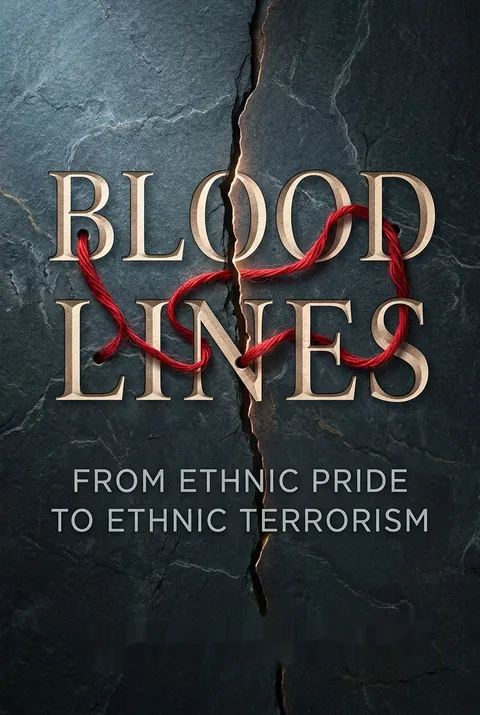
Blood Lines examines ethnic conflicts through a Freudian psychoanalytic lens, exploring deeply rooted group identities and shared beliefs. Readers found it informative and insightful, particularly regarding the psychological underpinnings of nationalism and religious-political movements. However, some felt the analyses occasionally overreached in connecting theory to real-world events, and noted an overreliance on Freudian frameworks. Critics also pointed out a Western bias, surprising given the author's Turkish-Cypriot background. The book's brief exploration of diplomacy and psychoanalysis was highlighted as a compelling area worthy of further reading.
Download PDF
Download EPUB
.epub digital book format is ideal for reading ebooks on phones, tablets, and e-readers.








































