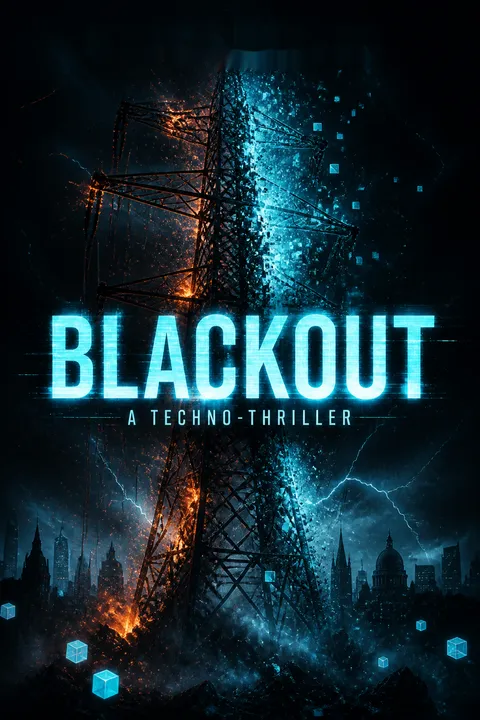

Plot Summary
Ordinary Night, Sudden Darkness
Piero Manzano, a former hacker, is driving home through Milan, his mind on mundane comforts, when the city's traffic lights abruptly fail. In a split second, chaos erupts—cars crash, people are injured, and the city is plunged into an unnatural, suffocating darkness. Across Europe, similar scenes unfold: power grids collapse, plunging millions into confusion and fear. The sudden loss of electricity is more than an inconvenience; it is a rupture in the fabric of daily life, exposing the fragility of modern civilization. As emergency services struggle to respond, the first night of the blackout is marked by panic, helplessness, and the dawning realization that something far more sinister than a technical glitch is at play.
Europe Plunged Into Chaos
As the blackout ripples across Europe, the interconnectedness of national power grids becomes a curse. Control centers in Italy, Germany, Austria, and France are overwhelmed by cascading failures. Cities freeze, food and water supplies dwindle, and transportation grinds to a halt. Hospitals, airports, and communication networks falter, leaving millions stranded and vulnerable. The initial hope that the outage is temporary fades as the hours drag on. People huddle in cold apartments, emergency shelters fill, and rumors of sabotage begin to circulate. The blackout exposes the dependence of society on invisible systems, and the first cracks of social order appear as desperation mounts.
The Grid Fails, Lives Shatter
The blackout's human toll becomes painfully clear. Families are separated, travelers stranded, and the sick and elderly left in peril. In Paris, Berlin, and rural France, people struggle to stay warm and fed. Hospitals run on dwindling backup power, and tragic scenes unfold as life-support systems fail. Supermarkets are looted, and makeshift refugee camps spring up at gas stations and rest stops. Amidst the chaos, Manzano, recovering from his accident, begins to suspect that the blackout is not a random event. His technical curiosity and unease set him on a path that will draw him into the heart of the crisis.
A Hacker's Suspicion
Haunted by the blackout's timing and scope, Manzano investigates his own smart meter and discovers a mysterious code—KL 956739—never meant for use in Italy. His knowledge of IT security and past as a hacker allow him to see what others miss: the blackout was triggered by remote manipulation of smart meters, not by natural causes. He tries to alert the authorities, but is dismissed as a crank. With the help of his neighbor's daughter, Lara, and her friends, he begins to piece together the technical evidence, realizing that the attack exploited vulnerabilities in Europe's push for a "smart" energy grid.
Survival and Desperation
As days pass without power, survival becomes paramount. People barter for food and fuel, and black markets emerge. In rural Austria and Germany, farmers and city dwellers alike confront the limits of self-sufficiency. Hospitals and care homes become death traps, and the social contract frays. Scenes of solidarity—sharing food, helping strangers—are counterbalanced by violence and exploitation. The blackout is no longer just a technical crisis; it is a test of character and community. Manzano's journey takes him across borders, as he seeks allies who will listen to his warnings and help avert further catastrophe.
The Hunt for Answers
Europol, national police, and intelligence agencies launch frantic investigations. As Manzano's technical findings gain traction, he is both sought after as an expert and targeted as a suspect due to his hacker past. He is drawn into a web of suspicion, surveillance, and bureaucratic inertia. Journalists like Lauren Shannon sense a bigger story, while government officials struggle to coordinate a response amid failing communications and mounting public panic. The search for the saboteurs becomes a race against time, as evidence points to a coordinated, transnational conspiracy exploiting the very systems meant to modernize Europe.
Unmasking the Invisible Enemy
Investigators trace the attack to a handful of manipulated smart meters in Italy and Sweden, planted by impostor technicians. The malware spreads through the grid, exploiting weak authentication and interconnected systems. The attackers, a shadowy collective of radicalized, highly skilled individuals from diverse backgrounds, communicate via a hidden online platform. Their goal is not ransom or simple destruction, but a revolutionary "reset" of society. As the technical and psychological sophistication of the attack becomes clear, the authorities realize they are facing adversaries who understand both code and human nature.
Systems Compromised, Trust Broken
The attack is not limited to power grids. Hospitals, water supplies, financial systems, and government communications are all compromised. False messages and sabotage sow confusion, and even the crisis centers themselves are spied upon. The public's trust in institutions erodes as rumors, misinformation, and fear spread. Attempts to restore power are thwarted by hidden "time bombs" in the software, and every effort to coordinate a response is hampered by the attackers' deep penetration of digital systems. The line between friend and foe blurs, and paranoia takes hold at every level.
The World on the Brink
Just as Europe begins to grasp the scale of the attack, the United States is hit by a similar blackout. The psychological impact is devastating: the world's last superpower is brought to its knees without a single shot fired. International aid is stretched thin, and suspicions of state-sponsored cyberwarfare threaten to ignite global conflict. NATO, the EU, and national governments debate whether to accept help from Russia and China, even as conspiracy theories and xenophobia surge. The blackout becomes a geopolitical crisis, exposing the vulnerabilities of a hyperconnected, interdependent world.
The Saboteurs' Web
Through painstaking digital forensics, investigators identify the core group behind the attack: a multinational, ideologically diverse collective united by a desire to "reset" civilization. Their leaders are disillusioned intellectuals, failed entrepreneurs, and heirs to fortunes, radicalized by personal and political grievances. They exploit both left- and right-wing rhetoric, and their methods blend technical genius with psychological manipulation. The group's communications, uncovered by Manzano and others, reveal a chilling logic: only by destroying the old order can a new, just society emerge. Their plan includes not just the initial blackout, but hidden triggers for further chaos.
Collapse and Uprising
As the blackout drags on, social order collapses in many regions. Food riots, looting, and violence erupt in cities across Europe. Refugee flows, mass graves, and the breakdown of law enforcement become daily realities. Military coups occur in Spain, Portugal, and Greece. In the Netherlands and Germany, desperate crowds storm government buildings. The psychological toll is immense: families are torn apart, and the trauma of deprivation and loss leaves deep scars. Yet, amid the chaos, acts of courage and solidarity persist, and the struggle to restore order continues.
The Race to Restore Power
With the saboteurs' code partially uncovered, engineers and investigators race to patch the infected systems and restore power. The discovery of a "block-code" that must be sent every forty-eight hours to prevent a second wave of blackouts adds urgency. Manzano, wounded but relentless, and his allies work with international teams to identify the remaining saboteurs and neutralize the hidden threats. Special forces raid the attackers' headquarters in Istanbul and Mexico City, capturing or killing many of the core conspirators. The technical fix is deployed just in time, and the lights begin to flicker back on across Europe.
The Final Trap
As the world breathes a tentative sigh of relief, Manzano and his friends are ambushed by the last free saboteur, Jorge Pucao, who seeks revenge and a final chance to trigger the collapse. In a tense, violent struggle, Manzano and his companions manage to subdue Pucao and send the crucial block-code, averting disaster by minutes. The authorities round up the remaining conspirators, and the RESET platform is dismantled. The world is saved from a second, potentially irreversible blackout, but at a tremendous cost in lives, trust, and innocence.
Aftermath and Reckoning
As power is restored, the scale of the catastrophe becomes clear: millions dead, economies shattered, and entire regions rendered uninhabitable by nuclear accidents. The saboteurs are interrogated, their motives dissected, and their methods studied. Public anger turns from the attackers to the institutions that failed to prevent or mitigate the disaster. Political upheaval, economic depression, and social unrest persist. Survivors struggle to rebuild their lives, haunted by trauma and loss. Yet, amid the ruins, there are moments of hope, resilience, and the determination to learn from the ordeal.
Lessons in Fragility
In the aftermath, society confronts uncomfortable truths about its dependence on technology, the dangers of interconnected systems, and the ease with which trust can be undermined. The blackout is a wake-up call: security, resilience, and community must be rebuilt alongside infrastructure. The story ends with Manzano and Sophia, survivors and witnesses, looking out over a city still scarred but alive, pondering the possibility of a better way forward. The world has been changed forever, but the future remains unwritten—a challenge and an opportunity for all.
Analysis
Marc Elsberg's Blackout is a chilling, meticulously researched exploration of the vulnerabilities inherent in modern, interconnected societies. The novel's central warning is clear: technological progress, when pursued without adequate safeguards or ethical reflection, can become a weapon against the very civilization it is meant to serve. By dramatizing a continent-wide blackout triggered by cyber sabotage, Elsberg exposes the fragility of systems we take for granted—electricity, water, food, healthcare, communication—and the speed with which order can unravel. The story's emotional power lies in its human focus: ordinary people forced to confront extraordinary challenges, and the thin line between solidarity and savagery. The saboteurs' ideology, while extreme, is rooted in real discontents, forcing readers to grapple with uncomfortable questions about justice, power, and the costs of complacency. Ultimately, Blackout is both a gripping thriller and a cautionary tale, urging vigilance, humility, and the rebuilding of trust—not just in technology, but in each other. The lesson is urgent and universal: resilience is not just a matter of infrastructure, but of community, foresight, and moral courage.
Review Summary
Blackout received mostly positive reviews, praised for its well-researched and realistic portrayal of a Europe-wide power outage. Readers found the premise thought-provoking and the technical details impressive. Many appreciated the fast-paced, thrilling narrative and its exploration of society's dependence on electricity. Some critics found the characters underdeveloped and the plot repetitive at times. The book's length and occasional dry passages were points of contention. Overall, it was considered a compelling and relevant techno-thriller that raises important questions about modern infrastructure vulnerabilities.
Characters
Piero Manzano
Manzano is a former Italian hacker with a checkered past, marked by activism and brushes with the law. Intelligent, skeptical, and driven by a sense of justice, he is both an insider and outsider—distrusted by authorities yet indispensable for his technical expertise. The blackout awakens his investigative instincts and moral courage, propelling him from bystander to central figure in the crisis. His journey is one of redemption: he must overcome suspicion, physical injury, and self-doubt to expose the saboteurs and help save millions. Manzano's relationships—with neighbors, friends, and fellow investigators—reveal his empathy and vulnerability, while his hacker's mindset allows him to see patterns others miss. By the end, he is transformed: scarred but wiser, a symbol of resilience and the power of individual action.
Lauren Shannon
An American freelance journalist based in Paris, Shannon is resourceful, courageous, and driven by a deep sense of responsibility to inform the public. Her outsider status gives her a unique perspective on the crisis, and her tenacity leads her to uncover crucial evidence and challenge official narratives. Shannon's empathy and quick thinking make her both a witness and participant in the unfolding drama. Her relationship with Manzano is complex—part partnership, part rivalry, part unspoken affection. Through her eyes, the reader experiences the human cost of the blackout and the ethical dilemmas of reporting in a time of chaos. Shannon's arc is one of growth: from ambitious reporter to survivor and, ultimately, a voice for accountability and hope.
François Bollard
A senior Europol officer, Bollard is methodical, principled, and deeply committed to both his work and his family. He serves as a linchpin between national and international efforts, navigating bureaucratic obstacles and personal risks. Bollard's psychological depth emerges in his struggle to balance duty and love, especially as his own family is endangered by the crisis. His leadership is tested by the scale of the disaster, the complexity of the investigation, and the moral ambiguities of counterterrorism. Bollard's development is marked by increasing empathy, humility, and a willingness to trust unconventional allies like Manzano and Shannon. He embodies the challenges and possibilities of collective action in a fractured world.
Sophia Angström
A Swedish official at the EU's Monitoring and Information Centre, Sophia is analytical, composed, and quietly compassionate. Her technical skills and level-headedness make her a vital part of the response team. Sophia's relationship with Manzano evolves from professional collaboration to deep personal connection, providing both with solace and motivation. She represents the often-unseen labor of crisis management and the importance of empathy and communication. Sophia's psychological resilience is tested by the trauma and loss she witnesses, but she remains a source of hope and stability for those around her.
Jorge Pucao
Pucao is the intellectual and emotional leader of the saboteurs—a brilliant, disillusioned Argentine with a history of activism and radicalization. His psychological profile is complex: driven by a genuine desire for justice, but warped by resentment, absolutism, and a willingness to sacrifice innocents for his vision. Pucao's charisma and rhetorical skill allow him to recruit and manipulate others, but his inability to empathize with suffering marks his downfall. He is both a product and critic of the system he seeks to destroy, embodying the dangers of utopian thinking and the seductions of power.
Lekue Birabi
A Nigerian intellectual and co-conspirator, Birabi brings a global perspective and strategic acumen to the saboteurs' plans. His background in political science and experience with exploitation in the Niger Delta inform his radicalism. Birabi's psychological struggle is between his ideals and the human cost of their actions. He is both a true believer and a man haunted by doubt, representing the internal conflicts that can arise within revolutionary movements.
Hermann Dragenau
Once a brilliant software architect, Dragenau is embittered by professional failure and personal grievances. His insertion of malicious code into critical infrastructure years before the attack is both an act of revenge and a desperate bid for significance. Dragenau's psychological isolation and resentment make him vulnerable to recruitment by the saboteurs. Ultimately, he is a tragic figure—his genius twisted by bitterness, his actions unleashing consequences beyond his control.
James Wickley
As CEO of Talaefer AG, Wickley is ambitious, self-assured, and obsessed with technological progress. He champions the "smart grid" revolution, blind to its vulnerabilities and the ethical implications of profit-driven innovation. Wickley's psychological arc is one of denial, rationalization, and eventual reckoning as his company's products are revealed to be the attack's vector. He represents the dangers of unchecked technological optimism and the moral hazards of corporate power.
Valentina Condotto
An Italian grid operator, Condotto is diligent, conscientious, and deeply affected by the suffering she witnesses. Her psychological journey mirrors that of many frontline workers: from confidence in the system to shock, guilt, and determination to do whatever she can. Condotto's story highlights the human cost of systemic failure and the heroism of ordinary people in extraordinary times.
Lara Bondoni
Lara, daughter of Manzano's neighbor, is a European Commission official whose personal and professional networks help Manzano gain access to key decision-makers. She is pragmatic, supportive, and emotionally intelligent, providing a vital link between the technical, political, and personal dimensions of the crisis. Lara's development is marked by her growing sense of agency and her ability to navigate complex relationships under pressure.
Plot Devices
Interconnected Grids and Smart Meters
The novel's central plot device is the interconnectedness of Europe's power grids and the widespread adoption of "smart" meters and control systems. These innovations, intended to increase efficiency and flexibility, become the very means by which the saboteurs cripple society. The attack exploits weak authentication, remote access, and the lack of robust security protocols. The smart grid, a symbol of modernity, is revealed as a fragile, easily subverted system. This device serves as both a literal mechanism for the plot and a metaphor for the dangers of complexity and overconfidence in technology.
Multiple Perspectives and Parallel Narratives
The story unfolds through a mosaic of characters—engineers, officials, journalists, ordinary citizens—across Europe. This structure allows the reader to experience the blackout's impact at every level: personal, communal, institutional, and geopolitical. The shifting perspectives create suspense, empathy, and a sense of scale, while also highlighting the interconnectedness and diversity of modern society. The parallel narratives converge as the investigation progresses, building tension and emotional investment.
Foreshadowing and Escalation
From the first moments of darkness, the narrative foreshadows the scale and intent of the attack. Technical anomalies, unexplained failures, and the protagonists' growing unease signal that the crisis is not accidental. The escalation is relentless: what begins as a local inconvenience becomes a continental catastrophe, then a global existential threat. Each failed attempt to restore order reveals deeper layers of sabotage, culminating in the discovery of hidden "time bombs" and the race to prevent a second collapse.
The "RESET" Platform and Hidden Communications
The saboteurs' use of a hidden online platform—RESET—serves as both a narrative engine and a symbol of the dark side of digital connectivity. Investigators' efforts to penetrate, decode, and analyze the platform mirror the broader struggle to understand and counter the attack. The platform's careless security, human error, and the protagonists' technical ingenuity drive key plot twists, including the identification of the conspirators and the final confrontation.
Moral Ambiguity and Psychological Realism
The novel resists simple binaries of good and evil. The saboteurs' motives are rooted in genuine grievances, and their rhetoric echoes real-world critiques of inequality and environmental destruction. The authorities, meanwhile, are hampered by bureaucracy, mistrust, and their own complicity in creating vulnerable systems. Characters face ethical dilemmas—whether to sacrifice a few for the many, whether to trust outsiders, how to balance transparency and order. This psychological realism deepens the story's impact and invites readers to question their own assumptions.
Download PDF
Download EPUB
.epub digital book format is ideal for reading ebooks on phones, tablets, and e-readers.








































