
Summary Temporarily Unavailable
This summary is temporarily unavailable and is currently being updated. You can still explore the FAQs and other metadata below.
Plot Summary
Black Shack Alley Childhood
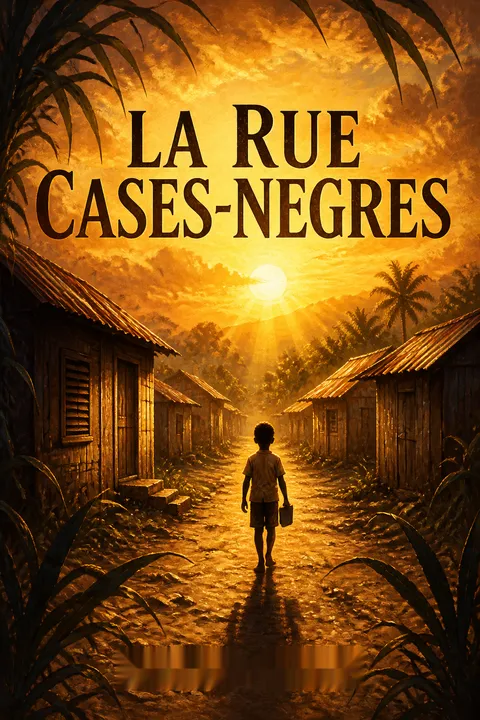
José's earliest memories are of Black Shack Alley, a row of shacks on a Martinican plantation, where children run wild while their parents labor in the cane fields. His grandmother, M'man Tine, is the center of his world—stern, loving, and determined to shield him from the fate of the fields. The evenings are filled with the comfort of her presence, the ritual of food, and the quiet pride she takes in keeping him fed and clean. Yet, the shadow of poverty and the relentless grind of plantation life loom over every moment, shaping José's understanding of hardship, resilience, and the small joys that punctuate their days.
M'man Tine's Iron Will
M'man Tine embodies the matriarchal strength of the plantation's women, sacrificing her own comfort and future to ensure José's escape from the cycle of labor. She is both mother and father, her love expressed through discipline and high expectations rather than tenderness. Her life is a testament to endurance—her hands and body bear the marks of endless toil, yet her mind is fixed on a single goal: to see José educated and free. Her authority is absolute, her sacrifices silent, and her pride in José's small achievements is the fuel that keeps her going, even as the plantation slowly destroys her.
Tales and Africa Remembered
José's friendship with the old man Médouze opens a window to a world beyond the plantation—a world of riddles, stories, and the lingering spirit of Africa. Médouze's tales are filled with loss, survival, and the pain of slavery, but also with a sense of mystery and hope. Through these stories, José learns about Guinea, the ancestral homeland, and the resilience of those who endured. The oral tradition becomes a lifeline, connecting the present to a past that is both painful and sustaining, and planting in José a longing for knowledge and a sense of belonging to something greater.
Plantation Games and Punishments
The children of Black Shack Alley revel in their brief moments of freedom, exploring the fields, stealing fruit, and inventing games. Yet, their adventures often end in disaster—broken dishes, torn clothes, and the inevitable beatings from their exhausted parents. The adults' discipline is harsh but rooted in love and fear for their children's futures. The children's camaraderie is strong, but so is the ever-present anxiety of punishment and the knowledge that their world is bounded by poverty and the threat of being sent to work in the fields.
Fire, Fear, and Consequence
When the children accidentally set fire to Mr. Saint-Louis's garden, the consequences are severe. The adults' anger is swift and terrifying, and the children are beaten and shamed. The incident marks a turning point—José and his friends are forced to accompany their parents to the fields, their freedom curtailed, and their innocence shaken. The episode underscores the precariousness of their lives, the thin line between play and disaster, and the way a single mistake can bring down the full weight of adult suffering and fear on their young shoulders.
School: A New World
M'man Tine's relentless efforts finally send José to school in the nearby village. The world of education is both exhilarating and bewildering—new rules, new friendships, and the sting of being an outsider. José is both proud and anxious, eager to please his grandmother and his teacher, but also humiliated by poverty and the subtle cruelties of class. School becomes the gateway to another life, but it is also a place of loneliness, where the comforts of home are replaced by the coldness of charity and the unfamiliarity of new routines.
Hunger, Humiliation, and Escape
At school, José faces daily hunger and the humiliation of being treated as a charity case by Mme Léonce. The chores he is forced to do—washing dishes, polishing shoes—erode his dignity, and the food he receives is tainted by the sense of being unwanted. Eventually, a broken pitcher and a panic-driven flight lead him to abandon Mme Léonce's house, surviving instead on stolen fruit and the generosity of strangers. This period of deprivation and secrecy is both a test of endurance and a lesson in the quiet resourcefulness required to survive poverty.
Village Life and Friendship
Life in Petit-Bourg brings new friends—Raphael, Michel, Jojo—and new experiences. The village is a tapestry of characters, each with their own struggles and dreams. José's friendships are deep and formative, but always shadowed by the realities of class, color, and the unspoken hierarchies of colonial society. The children's games, the rituals of catechism, and the small dramas of daily life are interwoven with lessons about loyalty, shame, and the limits of ambition. The village is both a place of belonging and a reminder of the barriers that must be overcome.
Loss, Sickness, and Survival
When M'man Tine falls ill, José is thrust into a world of uncertainty and fear. The community rallies around her, but her absence leaves him vulnerable—hungry, neglected, and painfully aware of how much he depends on her. The episode is a stark reminder of the precariousness of their existence, the thin safety net provided by neighbors, and the ever-present threat of loss. Yet, it is also a testament to the resilience of the matriarchal family and the ways in which love and duty persist even in the face of suffering.
The Certificat d'Etudes Quest
As José advances in school, the pressure to succeed mounts. The Certificat d'Etudes becomes a symbol of escape—a way out of the fields and into a future of possibility. The community invests its hopes in him, and the sacrifices of M'man Tine and his mother become ever more apparent. The examination is both a personal challenge and a collective aspiration, fraught with anxiety, competition, and the fear of failure. Success brings pride and relief, but also the realization that each step forward comes at a cost, and that the journey is far from over.
City Bound: Fort-de-France
Winning a scholarship takes José and his mother to Fort-de-France, where the promise of the city is quickly tempered by the realities of urban poverty. The slums of Sainte-Thérèse are a world apart from the plantation, but the struggles are familiar—finding work, paying school fees, and navigating the invisible barriers of race and class. The city offers new opportunities but also new forms of alienation, as José confronts the indifference of the lycée, the loneliness of being an outsider, and the relentless demands placed on his mother.
Mother's Sacrifice, Son's Struggle
M'man Délia's determination to see José succeed mirrors that of M'man Tine, but the city exacts its own toll. She works herself to exhaustion, taking in laundry and sacrificing comfort to pay for José's education. José, in turn, is wracked by guilt and the pressure to justify her sacrifices. The bond between mother and son is both a source of strength and a source of pain, as each struggles to fulfill the other's dreams while contending with the daily humiliations and hardships of poverty.
Alienation at the Lycée
At the Lycée Schoelcher, José is confronted by the full force of colonial hierarchy. Surrounded by wealthier, lighter-skinned students, he is acutely aware of his difference—his clothes, his accent, his poverty. Friendships are tentative, and the curriculum feels alien and irrelevant. The teachers' indifference and the subtle racism of the institution deepen his sense of isolation. Yet, through reading and the support of a few friends, José begins to carve out a space for himself, even as he grapples with the contradictions of his identity and aspirations.
New Friendships, Old Wounds
In the city, José forms new bonds—with Carmen, the driver, and Jojo, his childhood friend now working as a gardener. Their stories echo his own, marked by dreams deferred, brushes with the law, and the ever-present weight of color and class. The friendships are a source of comfort and laughter, but also a reminder of the limits imposed by society. The betrayals and disappointments—Jojo's fall from privilege, Carmen's struggles—underscore the fragility of hope and the persistence of old wounds.
The Color Line Exposed
The world of Fort-de-France is rigidly stratified—whites, mulattoes, and blacks each occupying their prescribed place. The servants of Route Didier, the mulatto elite, and the white békés all play their roles in a system designed to perpetuate inequality. José witnesses the ways in which color shapes ambition, self-worth, and the possibilities available to each person. The internalization of racism—seen in the self-hatred of characters like Adréa and the aspirations of the upwardly mobile—reveals the deep scars left by colonialism and the ongoing struggle for dignity.
Dreams, Disappointments, and Hope
As José approaches the baccalauréat, he is beset by doubts—about the value of education, the meaning of success, and the possibility of real change. Failures and setbacks are met with renewed determination, but also with a growing awareness of the limitations imposed by society. The dreams of his friends—Jojo's plan to become a driver, Carmen's desire to read and write—are both inspiring and heartbreaking. Yet, through literature, friendship, and the memory of those who sacrificed for him, José finds the strength to continue, even as the future remains uncertain.
M'man Tine's Final Sacrifice
The death of M'man Tine is a devastating blow, marking the end of an era and the culmination of her life's work. Her hands—cracked, swollen, and scarred—become a symbol of all she endured and all she gave. Her passing is mourned by the community, but her legacy lives on in José's achievements and in the values she instilled. The loss is both personal and collective, a reminder of the countless women whose sacrifices made possible the dreams of the next generation.
The Story Continues
As José moves forward—armed with education, shaped by loss, and sustained by memory—the story remains unfinished. The challenges of color, class, and colonialism persist, and the path ahead is uncertain. Yet, the narrative ends with a sense of continuity—the story of Black Shack Alley is not just José's, but that of an entire people, struggling to define themselves, claim their dignity, and imagine a future beyond the boundaries of the plantation and the city.
Analysis
A modern reflection on race, class, and resilienceBlack Shack Alley is a powerful exploration of the legacies of slavery, colonialism, and poverty in the French Caribbean, told through the intimate lens of a child's coming of age. Joseph Zobel's narrative is both a tribute to the matriarchal strength that sustained generations and a critique of the social hierarchies that continue to shape lives. The novel's enduring relevance lies in its unflinching portrayal of the psychological scars left by racism and deprivation, as well as its celebration of resilience, solidarity, and the transformative power of education. Through the character of José, Zobel invites readers to consider the costs and possibilities of upward mobility, the complexities of identity, and the ways in which personal and collective histories are intertwined. The lessons of Black Shack Alley resonate far beyond Martinique, offering a universal meditation on the struggle for dignity, the pain of loss, and the hope that endures in the face of adversity.
Last updated:
Report IssueReview Summary
Black Shack Alley is a powerful semi-autobiographical novel set in colonial Martinique. Readers praise Zobel's vivid depiction of poverty, racism, and the struggle for education. The story follows José's coming-of-age journey, highlighting the sacrifices of his grandmother and mother. Many reviewers found the book emotionally impactful, appreciating its exploration of identity, colonialism, and social mobility. The beautiful prose and authentic portrayal of Martinican life resonated with readers, who often described it as eye-opening and moving. Overall, the novel is highly regarded for its historical significance and compelling narrative.
Characters
José Hassam
José is the novel's protagonist and narrator, whose journey from the plantation to the city mirrors the broader transition of Martinican society. Raised by his grandmother, he is shaped by poverty, discipline, and a deep thirst for knowledge. José's relationships—with M'man Tine, his mother, and his friends—are marked by loyalty, empathy, and a growing awareness of injustice. His psychological development is defined by the tension between ambition and guilt, belonging and alienation, and the desire to honor the sacrifices made for him. Through education, he seeks escape, but also grapples with the burdens of expectation and the complexities of identity in a racially stratified world.
M'man Tine (Amantine)
M'man Tine is José's grandmother and the emotional core of the novel. Her life is defined by relentless labor, stoic endurance, and an unwavering commitment to her grandson's future. She embodies the matrifocal family structure of the plantation, assuming both maternal and paternal roles. Her love is expressed through discipline, sacrifice, and a refusal to indulge in sentimentality. Psychologically, she is both hardened by suffering and sustained by hope, her authority rooted in experience and necessity. Her death marks the end of an era, but her legacy endures in José's achievements and values.
M'man Délia
José's mother, Délia, represents the next generation of women striving for a better life. She leaves the plantation for the city, working as a servant and later as a laundress to support José's education. Her relationship with José is marked by both distance and deep affection, as she sacrifices comfort and stability for his future. Délia's psychological complexity lies in her determination, pride, and the quiet pain of separation from her son. She is both an extension of M'man Tine's strength and a symbol of the ongoing struggle for dignity and advancement.
Médouze
Médouze is the oldest and most marginalized man on the plantation, serving as a surrogate grandfather and spiritual guide to José. Through riddles, stories, and songs, he transmits the oral traditions and memories of Africa, offering José a sense of identity and connection to a lost homeland. Médouze's psychological depth is rooted in his solitude, his quiet resistance, and his role as a living link to the past. His death is a profound loss, severing José's last direct tie to the world of the ancestors.
Jojo (Georges Roc)
Jojo is José's close friend, whose life trajectory mirrors the complexities of color and class in Martinique. Born to a mulatto father and a black mother, Jojo experiences both privilege and exclusion, ultimately ending up as a gardener in the city. His story is one of longing, disappointment, and resilience, marked by the pain of separation from his mother and the humiliation of social decline. Jojo's psychological struggles reflect the broader dilemmas of identity, belonging, and the search for dignity in a divided society.
Carmen
Carmen is a driver and friend to José in Fort-de-France, embodying the resourcefulness and humor of the working class. His life is a patchwork of hardship, love affairs, and small victories, and he becomes both a pupil and a confidant to José. Carmen's desire to learn to read and write, his irrepressible spirit, and his candid reflections on race and class make him a complex figure—both a product of his environment and a subtle challenger of its limitations.
Raphael
Raphael is José's schoolmate in Petit-Bourg, known for his energy, leadership, and occasional troublemaking. His relationship with José is marked by camaraderie, competition, and shared experiences of discipline and humiliation. Raphael's family life and his own struggles with authority provide a counterpoint to José's more introspective nature, highlighting the diversity of childhood experiences within the same community.
Mme Léonce
Mme Léonce is the woman who provides José with lunch during his early school years, but her charity is tinged with condescension and exploitation. She forces José to perform menial chores, reinforcing his sense of inferiority and alienation. Psychologically, she represents the complexities of class within the black community, as well as the ways in which power can be wielded even among the marginalized.
Adréa
Adréa is a bar cashier in Fort-de-France, whose internalized racism and ambivalence about her identity reflect the deep scars of colonialism. Her interactions with José and his friends reveal the psychological toll of colorism and the ways in which self-worth is shaped by societal hierarchies. Adréa's character serves as a mirror for the broader community's struggles with acceptance and pride.
The Békés and Mulatto Elite
The white békés and the mulatto elite are largely unseen but ever-present forces in the novel, shaping the destinies of the black characters through ownership, privilege, and exclusion. Their psychological distance and indifference reinforce the sense of alienation and frustration experienced by José and his peers. The mulattoes, occupying a middle position, are both resented and envied, embodying the ambiguities and tensions of a society built on color and class.
Plot Devices
Autobiographical Narrative and Child's Perspective
The novel's autobiographical structure, filtered through the eyes of young José, lends authenticity and immediacy to the narrative. The use of a child's perspective allows for a gradual awakening to the realities of race, class, and injustice, while preserving the innocence and wonder of childhood. This device also enables the author to blend personal memory with social commentary, creating a narrative that is both intimate and universal.
Oral Tradition and Storytelling
The frequent use of riddles, stories, and songs—especially through Médouze—serves as a bridge between generations and a means of preserving cultural memory. Storytelling is both a source of comfort and a tool for resistance, offering alternative visions of identity and possibility. The oral tradition also functions as a form of foreshadowing, hinting at the challenges and losses to come.
Matrifocal Family Structure
The focus on the matriarchal family—embodied by M'man Tine and M'man Délia—highlights the centrality of women in the survival and advancement of the community. Their sacrifices, authority, and emotional distance are both a response to and a product of the plantation system. This device underscores the theme of generational struggle and the transmission of values.
Color and Class Hierarchies
The novel employs the devices of social observation and character contrast to expose the rigid hierarchies of color and class in Martinique. The interactions between blacks, mulattoes, and whites are fraught with tension, envy, and internalized shame. The narrative structure often juxtaposes moments of solidarity with episodes of betrayal and humiliation, reinforcing the pervasiveness of these divisions.
Foreshadowing and Symbolism
The recurring motifs of hands, hunger, and the cane fields serve as symbols of labor, deprivation, and the inescapable legacy of slavery. The deaths of Médouze and M'man Tine are foreshadowed by their physical decline and the stories they tell, underscoring the theme of sacrifice and the cyclical nature of suffering and hope.
Bildungsroman Structure
The novel follows the classic arc of the bildungsroman, charting José's growth from childhood innocence to adult awareness. Each stage—plantation, village, city—marks a new set of challenges and revelations, with education serving as both a means of escape and a source of alienation. The structure allows for a nuanced exploration of psychological development, social mobility, and the costs of ambition.
About the Author
Joseph Zobel was a Martinican author known for his portrayal of rural poverty and colonial life in his homeland. His writing focused on the harsh conditions of plantation systems and the struggles of the working-class poor. Zobel's friendships with literary figures like Aimé Césaire and Léopold Sédar Senghor influenced his career and travels. He gained international recognition when his novel "La Rue Cases Nègres" was adapted into an award-winning film. Zobel's works include novels, poetry, and short stories that explore themes of colonialism, poverty, and identity. He is remembered as a writer who understood and transcended poverty, leaving a lasting impact on Martinican literature.
Download PDF
Download EPUB
.epub digital book format is ideal for reading ebooks on phones, tablets, and e-readers.








































