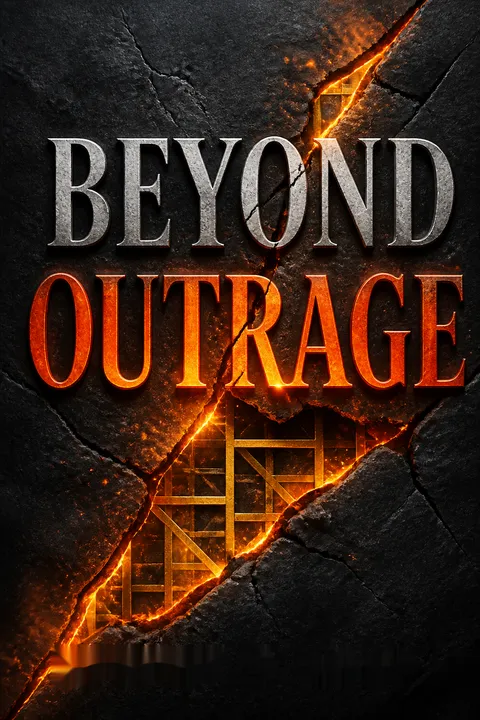

Key Takeaways
1. The American Economy and Democracy Are Rigged
We are perilously close to losing an economy and a democracy that are meant to work for everyone and to replacing them with an economy and a government that will exist mainly for a few wealthy and powerful people.
Systemic challenge. Robert Reich argues that the fundamental structures of the American economy and democracy have become distorted, leading to a system rigged against average working people. This isn't a minor issue but a systemic problem where wealth and power are increasingly concentrated at the very top. The consequences are dire, threatening the core principles of fairness and opportunity that America is supposed to embody.
Historical parallels. The current level of concentrated wealth hasn't been seen since the Gilded Age of the late nineteenth century. This era was characterized by immense fortunes for a few "robber barons" while the majority faced economic hardship and limited opportunities. Reich highlights that the top 1% of Americans now command a share of total income that has more than doubled since the 1960s and 1970s, reaching 23.5% by 2007.
Consequences for all. This concentration of wealth isn't just an issue for the poor; it hobbles jobs and growth for everyone else, undermines democracy, fosters public cynicism, and turns Americans against one another. The author emphasizes that understanding this "big picture" is crucial for effective mobilization and action.
2. A Vicious Cycle of Inequality and Cynicism
Connect these dots and you understand why we’ve come to where we are.
Interconnected problems. Reich connects seven seemingly unrelated issues to illustrate a vicious cycle that has gripped America. This cycle begins with the disproportionate flow of economic gains to the top, leading to a weakened middle class and anemic economic recovery. This economic imbalance then fuels political corruption, as wealth translates into political clout.
Policy outcomes. The increased political power of the wealthy results in policies that further benefit them, such as lower taxes, corporate welfare, and reduced regulations. This, in turn, squeezes government budgets, leading to the deterioration of public services that benefit the broader population. The result is heightened competition among average Americans for shrinking resources and a pervasive sense of unfairness.
Political paralysis. This environment of economic insecurity and perceived injustice culminates in a meaner, more cynical, and polarized political landscape where compromise is difficult and nothing gets solved. This cynicism becomes a self-fulfilling prophecy, further entrenching the problems. The well-being of future generations depends on reversing this cycle.
3. Government Serves the Wealthy, Not the Public
The problem is the big money that’s taking over government.
Influence of wealth. The author contends that the surge of cynicism about government isn't about its size, but a growing perception that it works for big business, Wall Street, and the very rich. As income and wealth have concentrated at the top, so has political clout, with politicians relying on wealthy donors for campaign funding. This dependence leads to policies favoring these patrons.
Policy examples:
- Tax cuts: The rich and corporations pay lower taxes, with the top 1% saving more from Bush tax cuts than the rest of America combined.
- Corporate welfare: Subsidies, bailouts, government contracts, and loan guarantees flow to favored industries like agribusiness, pharma, and oil.
- Deregulation: Industries like finance and nuclear energy push for fewer regulations, often at the expense of public safety.
- Lobbying power: Wall Street and defense contractors employ legions of lobbyists to influence legislation and secure favorable outcomes, even for outdated weapons systems.
Revolving door. A "revolving door" between regulatory agencies and the industries they oversee further compromises public protection. Officials often move from government roles to lucrative positions in the very companies they once regulated, creating a disincentive to enforce strict rules. This dynamic ensures that government actions primarily serve powerful private interests.
4. The Erosion of Public Goods and Shared Prosperity
A society is embodied most visibly in public institutions—public schools, public libraries, public transportation, public hospitals, public parks, public museums, public recreation, public universities, and so on.
Shift to privatization. Public institutions, once the bedrock of shared prosperity, are increasingly privatized or allowed to deteriorate. Tolls rise on public infrastructure, tuition at public universities soars, and admission fees appear at public parks. Those who can afford it opt for private alternatives, further eroding support for public services.
Vicious cycle of decline. This trend began when economic gains disproportionately flowed to the top, leading the wealthy to withdraw political support for public institutions and push for lower taxes. This created a cycle of diminishing public revenues, declining quality, and further flight to private options. The idea of "we're all in it together" has been replaced by "you're on your own."
Impact on the vulnerable. The decline in public spending disproportionately harms children and lower-income families. Cuts to education, infrastructure, and basic research have been drastic, with total public spending on these vital areas dropping from 12% of GDP in the 1970s to less than 3% last year. This jeopardizes America's future productivity and exacerbates social inequalities.
5. The Broken Basic Bargain: Stagnant Wages, Soaring Profits
The real reason the American economy tanked in 2008, and why we’re still struggling to recover, is that the basic bargain has been broken.
Historical context. For most of the last century, the "basic bargain" ensured that employers paid workers enough to buy what American businesses produced, creating a virtuous cycle of higher living standards and economic growth. Henry Ford's $5-a-day wage in 1914 exemplified this, turning workers into customers and boosting profits.
Modern divergence. This bargain began to unravel three decades ago. While worker productivity continued to rise, real hourly compensation stagnated or declined. New technologies and globalization allowed companies to automate jobs or move them overseas, impacting pay more than overall job numbers. The result is that employee pay is now the smallest share of the economy since 1929, while corporate profits are the largest.
Economic instability. The disconnect between productivity and wages forces middle-class families to go deeper into debt to maintain their living standards, as seen before the 1929 and 2008 crashes. The current "recovery" is anemic because the middle class lacks purchasing power. A healthy economy cannot be sustained when gains disproportionately benefit corporate owners and top executives at the expense of average workers.
6. The Regressive Right's Social Darwinist Agenda
Listen carefully to today’s Republican right and you hear the same social Darwinism that was used more than a century ago to justify the brazen inequality of the Gilded Age: survival of the fittest.
Ideological roots. Reich identifies a "regressive right" that seeks to return America to a pre-New Deal era, before social safety nets, labor laws, and progressive taxation. This movement, funded by wealthy interests, embraces social Darwinism, arguing that society strengthens through competitive struggle and that government aid to the needy only encourages laziness.
Modern proponents. Figures like Paul Ryan, Newt Gingrich, and Rick Santorum echo 19th-century social Darwinist William Graham Sumner, who believed in "liberty, inequality, survival of the fittest." They advocate for:
- Not helping the poor or unemployed, as it fosters "dependency."
- Letting markets "hit the bottom" without government intervention.
- Rewarding "entrepreneurs" (the wealthy) as "naturally selected agents of society."
- Dismantling regulations and social programs.
Stop-at-nothing tactics. This regressive movement, often associated with the Tea Party, employs aggressive tactics, including government shutdowns and threats to default on national debt, to achieve its goals. They prioritize shrinking government over reducing the national debt, even if it means jeopardizing the nation's financial stability.
7. Exposing the Ten Biggest Economic Lies
Demagogues through history have known that big lies, repeated often enough, start being believed—unless they’re rebutted.
Debunking misinformation. Reich identifies ten pervasive economic falsehoods propagated by the regressive right, which, if left unchallenged, become accepted truths. These lies serve to justify policies that benefit the wealthy and undermine the public good.
Key falsehoods include:
- Trickle-down economics: Tax cuts for the rich do not trickle down; historical data shows faster growth when top tax rates were higher.
- Corporate tax cuts for jobs: Corporations are sitting on trillions in cash; they need customers, not more tax breaks.
- Shrinking government for growth: Reducing government means fewer public workers and contractors, increasing unemployment.
- Fewer regulations improve the economy: Regulations protect public health, safety, and the environment, which are public goods.
- Immediate deficit cuts: Cutting the budget during high unemployment exacerbates the problem; jobs and growth should be the priority.
- Medicare/Medicaid must be scaled back: The real issue is overall healthcare costs; Medicare can be part of the solution, not the problem.
- Overly generous safety nets: The rise in benefits is due to economic catastrophe, not dependency; safety nets are often too small.
- Social Security is a Ponzi scheme: It's solvent for decades and can be fixed by raising the cap on taxable income.
- Unfair tax burden on the rich: The rich pay a lower percentage of their income in total taxes than many middle- and lower-income Americans.
- Flat tax is fairer: A flat tax disproportionately benefits the rich by eliminating progressivity and is often a smoke screen for further tax cuts for the wealthy.
Call to action. Reich urges readers to understand these facts and spread them, emphasizing that an informed public is essential to counter the demagoguery and prevent these lies from becoming accepted truth.
8. Beyond Outrage: Mobilizing for Progressive Change
Your outrage is understandable. Moral outrage is the prerequisite of social change. But you also need to move beyond outrage and take action.
The need for action. Reich acknowledges the widespread outrage and cynicism but stresses that these emotions must be channeled into sustained, organized action. No president, however well-intentioned, can achieve significant change without active public support and pressure.
Strategies for mobilization:
- Join with others: Individual complaints are ignored; collective action creates political significance and media attention.
- Educate broadly: Engage with those who disagree or are uninformed, reaching beyond ideological bubbles.
- Combine moral clarity with facts: Be convincing by appealing to shared values, using undeniable facts, and common sense.
- Direct engagement: Prioritize in-person organizing over solely online activism to build trust and enduring connections.
- Broaden focus: Connect single issues to the larger systemic problems of wealth concentration and democratic corruption.
- Patience and persistence: Structural changes take years; celebrate small victories, pace yourself, and avoid burnout.
Sustained pressure. Political activism shouldn't end on Election Day. A determined progressive movement must continuously pressure elected officials, rewarding those who advance a progressive agenda and holding accountable those who don't, even by supporting primary challengers.
9. A Progressive Agenda for Economic and Democratic Restoration
Mr. President, we hear what you’re saying about the dangers to our economy and our democracy of the increasing concentration of income and wealth at the top. We agree.
Tax reform. The agenda begins with significant tax increases on the wealthy to address budget deficits and fund public investments. This includes:
- Raising the top marginal income tax rate to 70% for incomes over $1 million, similar to pre-1981 levels.
- Treating all sources of income, including capital gains, equally to close loopholes.
- Implementing a 2% surtax on the wealth of the richest 0.5% of Americans.
- Introducing a 0.5% tax on all financial transactions to curb speculation and generate revenue.
Budget re-prioritization. The plan calls for substantial cuts to the military budget, beyond scheduled reductions, by eliminating outdated weapons systems and reducing strategic nuclear arsenals. These savings, along with new tax revenues, would be redirected to vital public goods.
Investment in public goods. The increased revenues and budget savings should be used to invest heavily in:
- Education: Federal aid for struggling public schools, early childhood education, and restoring public higher education.
- Infrastructure: Repairing crumbling roads, bridges, water systems, and modernizing the electricity grid and high-speed internet.
These are crucial investments in future productivity, justifying borrowing when costs are low.
10. Reclaiming Democracy from Big Money and Corporate Power
As the great jurist and Supreme Court justice Louis Brandeis once said, “We may have democracy or we may have great wealth concentrated in the hands of a few, but we can’t have both.”
Financial sector reform. The agenda demands reining in Wall Street's excessive power to prevent future economic crises. This includes:
- Resurrecting the Glass-Steagall Act: Separating investment banking from commercial banking to prevent risky gambling with insured deposits.
- Capping the size of big banks: Breaking up financial leviathans that are "too big to fail" and pose a systemic risk to the economy and democracy.
- Mandatory mortgage modification: Requiring big banks to reduce principal for underwater homeowners, and allowing homeowners to use bankruptcy for primary residences.
Campaign finance reform. To address the corruption of democracy by big money, the agenda proposes:
- Overturning Citizens United: Appointing Supreme Court justices who will reverse the ruling that equates money with speech and corporations with people.
- Constitutional amendment: Declaring corporations are not citizens and empowering Congress to limit campaign spending.
- Public financing: Establishing a system where presidential and congressional candidates can receive public funds matching small donations.
- Transparency and accountability: Requiring disclosure of all super PAC donors and banning political activity by major government contractors.
Empowering citizens. These reforms aim to restore a government responsive to the needs of average people, not just wealthy individuals and corporations. The ultimate goal is to ensure that the economy serves the well-being of all Americans, not just a privileged few.
Review Summary
Beyond Outrage receives generally positive reviews, averaging 4.06/5. Readers praise Reich's clear, accessible writing style and his compelling analysis of economic inequality, corporate influence in politics, and the rigged nature of America's financial system. Supporters appreciate his actionable prescriptions for civic engagement. Critics note the book feels repetitive for familiar followers, is overtly one-sided, and lacks substantive solutions. Conservative readers may find it too politically charged, while progressive readers appreciate its crystallization of left-leaning economic arguments. Most agree it's a worthwhile, quick read despite its partisan perspective.
People Also Read







About the Author
Download PDF
Download EPUB
.epub digital book format is ideal for reading ebooks on phones, tablets, and e-readers.








































