
Plot Summary
Newsprint and Old Wounds
In 1906 Philadelphia, Alma Mitchell's carefully constructed life is upended by a newspaper article: an Indian man, Harry Muskrat, faces execution for the murder of a federal agent. The name is achingly familiar—Harry, once a boy at her father's Indian boarding school, Stover, in Wisconsin. The news stirs a torrent of memories and guilt, forcing Alma to confront a past she has long tried to bury. Her husband, Stewart, a lawyer, is skeptical but agrees to help. Alma's certainty of Harry's innocence is rooted in childhood bonds and the idealism of her youth, but the world has changed, and so has Harry. The past, it seems, is not content to remain silent, and Alma is compelled to act, even as old wounds threaten to reopen.
Arrival at Stover School
In 1881, young Alma's family opens Stover School for Indians, a government boarding school meant to "civilize" Native children. Alma, eager for friends, is both fascinated and bewildered by the new arrivals—children torn from their homes, silent and wary, their vibrant clothes and long hair soon stripped away. Her father, driven by missionary zeal, sees salvation; her mother, by social anxiety, sees only threat. The children's resistance is met with force: hair is shorn, clothes burned, names replaced. Alma, caught between her parents' ideals and her own longing for connection, witnesses the violence of assimilation firsthand. The school's founding is both a promise and a wound, setting the stage for lifelong consequences.
Names and New Identities
The first days at Stover are marked by the systematic erasure of the children's identities. Christian names are chosen from a blackboard, sewn onto uniforms, and enforced with the threat of punishment. Alma, both participant and observer, tries to help but is rebuffed by the Indian children and reprimanded by teachers. The process is humiliating and confusing for the students, who struggle to understand English and the rules of their new world. Alma's attempts at friendship are clumsy, her privilege invisible to her. The children's silence is not ignorance but resistance, and the seeds of alienation are sown. The school's mission—to "kill the Indian, save the man"—is enacted in every detail.
Haircuts, Whistles, and Fire
The daily routines at Stover are rituals of discipline and erasure. Hair is cut, bodies scrubbed, and personal belongings—like a beloved doll—are burned. Alma, tasked with destroying the doll, hesitates, feeling the injustice but unable to defy her mother. The Indian children's grief is palpable, their tears and silence a protest against the violence done to them. Alma's complicity is both innocent and damning; she wants to help but cannot see the depth of the loss. The school's order is maintained by whistles, rulers, and the constant threat of demerits. The children's culture is not just suppressed but actively destroyed, and Alma's growing discomfort foreshadows her later reckoning.
English Only, Silence Enforced
In the dining hall and classroom, English is the only language permitted. Punishments for speaking native tongues are harsh—soap in the mouth, public humiliation. Alma, still desperate for friendship, tries to bridge the gap but is met with suspicion and resentment. Harry, clever and observant, is among the first to adapt, but the cost is high. The children's laughter and stories are stifled, their sense of self eroded. Alma's attempts to help often backfire, highlighting the gulf between intention and impact. The school's insistence on English is not just about communication but about power, and the children's silence becomes a form of resistance.
Bonds and Barriers
As years pass, bonds form among the students, but barriers remain. Alma grows close to Margaret (Minowe) and Harry (Askuwheteau), learning their languages and stories, sharing secrets and small rebellions. Yet, the lines between white and Indian, teacher and student, are never fully erased. Rivalries flare, especially with new arrivals like George, whose defiance challenges both the school's authority and Alma's assumptions. The children's games and nighttime escapades are acts of survival and solidarity. Alma's own identity is shaped by these friendships, but she remains an outsider, her privilege both a shield and a prison. The seeds of future tragedy are sown in these formative years.
The Past Returns
In 1906, Alma and Stewart travel to Minnesota to help Harry, now accused of murder. The journey is both literal and emotional, forcing Alma to revisit the places and people of her youth. The reservation is a landscape of loss—over-logged forests, poverty, and broken promises. Alma's search for witnesses and allies is met with suspicion and hostility. Old friends like Minowe and Frederick are changed, their lives marked by hardship and betrayal. The school's legacy is everywhere: in the faces of children who no longer speak their language, in the bitterness of those who survived. Alma's faith in justice is tested, and the lines between victim and perpetrator blur.
Nighttime Rebellion
At Stover, the children find ways to resist: sneaking out at night, holding forbidden dances, speaking their languages in whispers. Alma joins them, drawn by the thrill of rebellion and the warmth of belonging. These moments are fleeting but vital, a reminder of what has been lost and what endures. The school's discipline is relentless, but the children's spirit is not easily broken. Alma's complicity is complicated by her growing awareness of the harm being done. The bonds formed in these secret gatherings will shape her life, for better and worse.
Reunion and Reckoning
Alma's return to Stover and the reservation is a reckoning. She seeks out Minowe, hoping for forgiveness and help in Harry's case. Their reunion is fraught with pain and accusation—old betrayals, unspoken love, and the scars of assimilation. Minowe's life is marked by poverty and loss, her children's future uncertain. The two women fight, physically and emotionally, before finding a fragile truce. Alma learns the truth about the corruption that led to the murder, but also about her own role in the tragedy. The past cannot be undone, but understanding is possible, and perhaps, a measure of peace.
Love and Betrayal
Alma's youthful romance with George (Tshikw'set) is passionate and doomed. Their plan to elope is betrayed—by Minowe, out of jealousy and fear, and by the world that cannot accept their union. The consequences are catastrophic: George is lynched by a mob, Alma is exiled from Stover, and the friendships that once sustained her are shattered. The violence of assimilation is not just institutional but personal, destroying lives and relationships. Alma's guilt and grief will haunt her for decades, shaping her every choice. The love that once seemed a bridge between worlds becomes another wound.
The Law's Long Shadow
In the present, Harry's trial is a farce—evidence ignored, witnesses dismissed, the outcome predetermined. Alma and Stewart uncover corruption and injustice, but Harry refuses their help, insisting on his guilt. His confession is both a rejection of the white world and an embrace of his lost identity. The law, meant to protect, becomes another tool of oppression. Alma's efforts to save Harry are ultimately futile; the system is rigged against him. Yet, in his final moments, Harry claims a measure of agency, choosing death on his own terms. Alma is left to grapple with the limits of her own power and the meaning of justice.
The Price of Assimilation
The story's final chapters lay bare the cost of assimilation: lost languages, broken families, and the hollowing out of identity. The children of Stover grow into adults marked by trauma and displacement. Some, like Frederick, find a place in the white world but feel empty; others, like Minowe, are left behind, struggling to survive. Alma's own life is shaped by these losses—her marriage, her sense of self, her understanding of the world. The promise of progress is revealed as a lie, and the wounds of the past remain unhealed. Yet, there is resilience, too: in the songs and stories that survive, in the bonds that endure despite everything.
The Circle Remains
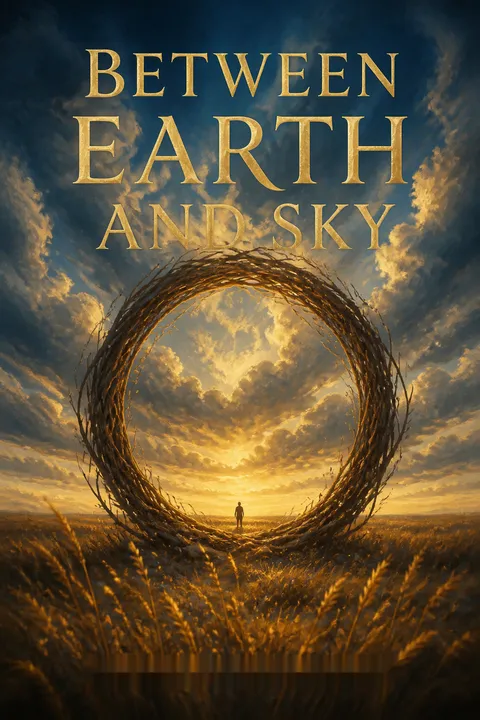
In the end, Alma is left with memories—of love and loss, of friendship and betrayal, of a world that tried to erase difference but could not. The story closes with the image of the circle: life is not a straight line but a loop, and those who enter it remain forever. Alma's journey is one of reckoning, not redemption; she cannot undo the past, but she can bear witness. The lessons of Stover, both good and ill, live on in her and in the world she helped shape. The circle remains, scarred but unbroken, between earth and sky.
Analysis
Between Earth and Sky is a powerful meditation on the violence of assimilation, the persistence of memory, and the complexity of forgiveness. Amanda Skenandore's novel exposes the human cost of well-intentioned but destructive policies, showing how the erasure of culture and identity leaves wounds that span generations. Through Alma's journey—from naive complicity to painful reckoning—the book interrogates the limits of good intentions and the necessity of bearing witness. The dual timeline structure deepens the emotional impact, making clear that the past is never truly past. The novel's greatest strength lies in its refusal to offer easy redemption: there are no simple villains or heroes, only people shaped by history, love, and loss. The lessons are urgent and enduring: that justice without understanding is hollow, that healing requires truth, and that the circle of memory binds us all, between earth and sky.
Review Summary
Between Earth and Sky receives an overall rating of 4.33/5, with most reviewers praising its heartbreaking portrayal of Native American boarding schools and forced assimilation policies in late 19th-century America. Readers consistently highlight the compelling dual-timeline narrative, well-developed characters, and emotional depth. Many appreciated learning this overlooked history. Critical reviews cite slow pacing, predictable characters, and concerns about white savior themes. The debut novel is widely recommended for historical fiction fans seeking thought-provoking, educational reads.
People Also Read
Characters
Alma Blanchard Mitchell
Alma is the daughter of Stover's founder, raised with the ideals of assimilation but drawn to the children she is meant to "civilize." Her longing for connection leads to deep friendships—and a forbidden love—with her Indian classmates. As an adult, she is wracked by guilt and nostalgia, her life in Philadelphia a fragile refuge from the past. Alma's psychological journey is one of reckoning: she must confront her complicity in the violence of assimilation, her failures as a friend and lover, and the limits of her own power. Her relationships—with Harry, Minowe, George, and Stewart—are marked by love, betrayal, and the search for forgiveness. Alma is both a victim and an agent of history, her story a meditation on memory, loss, and the possibility of healing.
Harry Muskrat / Askuwheteau
Harry, later known by his Anishinaabe name Askuwheteau, is one of Stover's brightest students, excelling in academics and adapting to the white world. Yet, the cost is profound: he loses his language, his place among his people, and ultimately, his sense of self. His return to the reservation is marked by alienation and despair. Accused of murder, he refuses to defend himself, embracing guilt as a form of agency and belonging. Harry's psychological arc is one of loss and reclamation—he is hollowed out by assimilation but seeks to reclaim his identity, even at the cost of his life. His relationship with Alma is complex: she is both a friend and a symbol of the world that destroyed him.
Minowe / Margaret
Minowe is Alma's closest friend at Stover, a girl of song and laughter, whose spirit is gradually worn down by loss and hardship. Her love for her brother and for George is deep, but her jealousy and fear lead her to betray Alma, setting in motion the tragedy that follows. As an adult, Minowe is marked by poverty and regret, her life a testament to the enduring wounds of assimilation. Her reunion with Alma is fraught with pain, but also the possibility of forgiveness. Minowe embodies both the resilience and the scars of her people, her story a counterpoint to Alma's.
George / Tshikw'set
George arrives at Stover older and more resistant than the other children, refusing to assimilate and challenging authority at every turn. His romance with Alma is passionate and doomed, a collision of worlds that cannot be reconciled. George's defiance is both a survival strategy and a source of tragedy; his refusal to submit makes him a target, and his love for Alma leads to his death. He is both a victim of the system and an agent of his own fate, his story a reminder of the personal cost of cultural violence.
Stewart Mitchell
Stewart is Alma's husband, a lawyer whose commitment to justice is tested by the realities of Harry's case and the secrets of Alma's past. He is supportive but limited by his own worldview, struggling to understand the depth of Alma's trauma and the complexity of the world she left behind. Stewart's journey is one of disillusionment and, ultimately, acceptance; his love for Alma survives betrayal, but not without scars. He represents the well-meaning but often blind liberalism of his era.
Francis Blanchard
Alma's father is the architect of Stover, driven by a belief in the redemptive power of assimilation. His intentions are sincere, but his blindness to the harm he causes is devastating. His relationship with Alma is loving but fraught; his refusal to accept her love for George leads to tragedy. Francis embodies the contradictions of his time: progressive in intent, destructive in effect. His arc is one of hubris and regret.
Cora Blanchard
Alma's mother is a product of her class and era, more concerned with appearances than with the inner lives of her family or the Indian children. She is critical, controlling, and ultimately unable to offer comfort or understanding. Her relationship with Alma is marked by disappointment and misunderstanding, her love conditional and brittle.
Miss Wells
The head teacher at Stover, Miss Wells is the embodiment of the system's violence: strict, punitive, and unyielding. She believes in the mission of the school but is blind to its harm. Her interactions with the children are marked by discipline and control, her affection reserved for those who conform. She is both a villain and a victim of her own convictions.
Frederick
Frederick is one of Stover's success stories, finding work in the white world but feeling empty and disconnected from his roots. His story illustrates the cost of assimilation: survival at the price of identity. He is loyal to his friends but unable to bridge the gap between worlds.
Zhawaeshk
Zhawaeshk is a witness to the murder and a symbol of the reservation's despair: scarred, alcoholic, and haunted by loss. His testimony is crucial to Harry's case, but his life is a testament to the enduring wounds of colonization. He is both a victim and a survivor, his story a reminder of the human cost of history.
Plot Devices
Dual Timeline Structure
The novel alternates between Alma's childhood at Stover and her adult quest to save Harry, using the dual timeline to explore the long-term effects of assimilation and personal betrayal. This structure allows the reader to see the seeds of tragedy sown in youth and their harvest in adulthood. The interplay of memory and action deepens the emotional resonance, making the past ever-present and the present haunted by what came before.
Symbolism of Names and Language
The forced renaming of Indian children is a central motif, symbolizing the erasure of culture and the imposition of new identities. Language is both a weapon and a refuge: English is enforced, native tongues punished, but in secret, the children keep their stories and songs alive. The struggle over names and language mirrors the larger battle for selfhood and belonging.
Foreshadowing and Irony
The rituals of control at Stover—haircutting, burning of clothes, enforced silence—foreshadow the violence and loss to come. Alma's naive complicity is laced with irony; her attempts to help often cause harm, and her belief in progress is gradually dismantled. The love story with George is doomed from the start, its passion a prelude to catastrophe.
Letters, Documents, and Testimony
The search for documents and witness statements in Harry's trial serves as a metaphor for the search for truth—and the ways in which truth is shaped, suppressed, or ignored by those in power. The law, meant to protect, becomes another tool of oppression, and the evidence that might save Harry is rendered moot by his own confession and the system's bias.
The Circle as Metaphor
The Anishinaabe concept of the circle—life as a loop, not a straight path—recurs throughout the novel. It is a symbol of memory, belonging, and the persistence of the past. Those who enter the circle remain forever, shaping the lives of those who come after. The circle endures, scarred but unbroken, between earth and sky.
About the Author
Other books by Amanda Skenandore

Download PDF
Download EPUB
.epub digital book format is ideal for reading ebooks on phones, tablets, and e-readers.








































