
Key Takeaways
1. Feminism is Flawed, Pluralistic, and Personal
In truth, feminism is flawed because it is a movement powered by people and people are inherently flawed.
Feminism's inherent imperfections. Feminism, as a movement, is not perfect because it is driven by imperfect individuals. We often hold feminism to an unreasonable standard, expecting it to be flawless and always make the best choices, leading to disappointment when it falls short. This often causes people to blame the movement itself rather than the flawed people acting in its name.
Beyond visible figures. Feminism is frequently conflated with highly visible figures or "Professional Feminists" whose personal brands dictate public perception. When these figureheads fail, the movement is unfairly discredited. True feminism is not solely defined by popular media personalities but is a complex, evolving, and pluralistic philosophy that should respect diverse interpretations.
Simple, yet profound principles. Roxane Gay's personal feminism is simple: believing in equal opportunities for women and men, reproductive freedom, affordable healthcare, and equal pay. She emphasizes that feminism is a choice, and even if a woman doesn't identify as a feminist, it remains a collective responsibility to fight for her rights, grounded in supporting women's choices, even if they differ from one's own.
2. Embracing the "Bad Feminist" Label for Authenticity
I openly embrace the label of bad feminist. I do so because I am flawed and human.
Freedom in imperfection. Embracing the "bad feminist" label is a liberating act, acknowledging one's flaws and humanity rather than striving for an unattainable perfection. This stance rejects the "Feminist Pedestal," where individuals are expected to pose perfectly and are then knocked off for any misstep, allowing for genuine self-expression.
Challenging caricatures. Historically, feminism has been caricatured as angry, sex-hating, and man-hating, leading many, including Gay in her youth, to disavow the label out of fear of ostracization. This misrepresentation is perpetuated by those who fear feminism's success. The "bad feminist" reclaims the label by demonstrating that one can be a feminist while loving pink, enjoying sex, and dancing to problematic music.
Beyond rigid ideals. The concept of "bad feminism" allows for a separation from "Capital-F Feminism" or "Essential Feminism," which often excludes women of color, queer women, and transgender women. It advocates for an intersectional approach, recognizing that feminism should advocate for gender equality in all realms while considering all factors influencing identity and experience.
3. Privilege is Complex, Contextual, and Often Unacknowledged
The acknowledgment of my privilege is not a denial of the ways I have been and am marginalized, the ways I have suffered.
Privilege is multifaceted. Privilege is a peculiar benefit or advantage, encompassing racial, gender, heterosexual, economic, able-bodied, educational, and religious forms. It's a complex, ongoing project to accept and acknowledge one's own privileges, even when simultaneously experiencing marginalization.
Beyond "privilege police." Cultural critics often dilute the meaning of "privilege" through overuse, turning it into white noise. Accusations of privilege can be defensive, as people resent the implication that their lives are easy. The "Game of Privilege" (e.g., wealthy black woman vs. wealthy white man) is pointless mental masturbation, as it fails to acknowledge that nearly everyone has some form of privilege, especially in intellectual communities.
Observation, not accusation. We need to move towards discussing privilege through observation and acknowledgment rather than accusation. The goal is to understand the extent and consequences of one's privilege, recognizing that others experience the world differently. This awareness can then be used for the greater good, to level the playing field and work for social justice, rather than hoarding advantages.
4. Gender is a Performance, Often Trapping Women in Roles
Gender ought not to be construed as a stable identity or locus of agency from which various acts follow; rather, gender is an identity tenuously constituted in time, instituted in an exterior space through a stylized repetition of acts.
The theatricality of gender. Judith Butler's theory of gender as a performance highlights how identity is formed through repeated, stylized acts in exterior spaces. Women, knowingly or unknowingly, perform femininity, often trapped by societal expectations. This performance can sometimes replace identity, making women feel like characters speaking someone else's lines.
Public display and self-awareness. Women are intimately aware of being on display in public, constantly performing their roles. This self-awareness can lead to conflicting desires: wanting to be invisible at times, yet craving to be seen, desired, and loved at others. The "green girl" in Kate Zambreno's novel exemplifies this tension, navigating vulnerability and viciousness while playing the part of "girl."
Reality TV's garish spectacle. Reality television amplifies this performance, reducing women to stereotypes of low self-esteem, marital desperation, and an obsession with beauty. Women on these shows become "green girls interrupted," manipulated into worst versions of themselves, often complicit in maintaining the artifice for attention and fame. They revel in watching themselves suffer, unable to evolve beyond their scripted roles.
5. The Pervasiveness and Careless Language of Sexual Violence
We have appropriated the language of rape for all manner of violations, great and small.
Rape culture's insidious presence. We live in a culture where male aggression and violence toward women are often deemed acceptable or inevitable, necessitating the term "rape culture." This environment normalizes sexual violence, leading to its frequent depiction in media and casual appropriation of its language for minor inconveniences, desensitizing society to its true horror.
Media's problematic portrayals. Television and movies inundate us with rape storylines, often graphic and gratuitous, yet strangely antiseptic. These portrayals, from "Beverly Hills 90210" to "Law & Order: SVU," once had a didactic element but now often serve as entertainment fodder, contributing to a cultural numbness where the gravity of rape and its devastating effects are overlooked.
Careless language, criminal consequences. The "New York Times" article on an 11-year-old gang-rape victim, titled "Vicious Assault Shakes Texas Town," exemplifies careless language by focusing on the attackers' lives and the town's distress rather than the child's trauma. This linguistic buffering obscures the material realities of rape, making it impossible to hold perpetrators accountable and perpetuating a "criminal language of sexual violence."
6. Media Representation of Women and Minorities is Deeply Flawed
There are few opportunities for people of color to recognize themselves in literature, in theater, on television, and in movies.
The burden of representation. Popular culture places immense pressure on singular artifacts like "Bridesmaids" or "Girls" to be revolutionary for women, highlighting the scarcity of diverse and authentic portrayals. When these works fall short, they face intense scrutiny, often for issues like nepotism, privilege, or the glaring absence of racial diversity, as seen in "Girls."
The "magical negro" trope. Hollywood frequently relies on the "magical negro" trope, where black characters exist primarily to bestow wisdom or facilitate the growth of white protagonists, as exemplified by "The Help." This reduces black characters to one-dimensional figures, overlooking their own stories and perpetuating harmful stereotypes, even when played by immensely talented actors.
Exhaustion with struggle narratives. There's an exhaustion with "slavery and struggle narratives" in black cinema, which, while important, often become the only path to critical acclaim. Movies like "12 Years a Slave" are lauded for depicting brutality, but often use black women's suffering to further a man's story, or lack new insights. This perpetuates a cycle where Hollywood rewards specific, often painful, narratives, limiting the range of black experiences shown.
7. The Politics of Respectability Fails to Address Systemic Racism
Respectability politics completely overlook institutional racism and the ways in which the education system, the social welfare system, and the justice system only reinforce many of the problems the black community faces.
Mimicry over systemic change. Respectability politics, espoused by figures like Bill Cosby and Don Lemon, suggest that if black people simply behave in "culturally approved" ways—mimicking the dominant white culture—they can avoid the effects of racism. This ideology, however, dangerously overlooks the deep-seated institutional racism embedded in education, welfare, and justice systems.
Ignoring institutional barriers. Leaders advocating respectability often highlight their own success as proof that anyone can transcend racism, but they fail to acknowledge the systemic barriers that prevent others from doing the same. This approach places the burden of ending oppression solely on the oppressed, rather than demanding fundamental societal change.
Racism's pervasive nature. Racism doesn't care about respectability, wealth, education, or status, as evidenced by Oprah Winfrey's experiences. The belief that one can "outrun racism" by being "respectable enough" is a delusion. Everyone carries some degree of racial bias, often rooted in centuries of cultural conditioning, and these biases manifest in both overt and subtle ways, even in seemingly innocuous interactions.
8. Women's Rights Remain Alienable, Not Inalienable
What this debate shows us is that even in this day and age, the rights of women are not inalienable. Our rights can be and are, with alarming regularity, stripped away.
Reproductive freedom under siege. Despite historical struggles for reproductive freedom, women's rights to control their bodies and choices are constantly debated and restricted. Politicians, often men, cynically reintroduce abortion and birth control into national discourse, using it as a distraction from pressing societal issues, forcing women to fight battles that should have been won long ago.
Legislating the female body. State legislatures impose invasive, insulting, and condescending restrictions on abortion, such as mandatory ultrasounds and waiting periods, designed to punish women and pressure them into changing their minds. This legislative intervention into a deeply personal experience is a transparent ploy to control women's bodies and futures, treating them as less deserving of human rights than criminals.
Birth control as a battleground. The debate extends to birth control, with women forced to justify its use and facing public shaming. This regressive climate ignores that birth control is a medical marvel for preventing unwanted pregnancies and enhancing women's quality of life. The refusal of men to share responsibility for contraception, coupled with the profitability of female birth control, highlights how women's bodies remain negotiable.
9. The Burden of Likability and Unlikable Women in Fiction
When women are unlikable, it becomes a point of obsession in critical conversations by professional and amateur critics alike.
The elusive nature of likability. Likability in fiction is an elaborate lie, a performance dictated by a code of conduct that characters are expected to follow. Critics often demand characters be "lovable" and "do right," reflecting a cultural malaise with anything unpleasant. This is particularly true for women, who are scrutinized for any deviation from traditionally "likable" traits.
Double standards for gender. While unlikable men are often celebrated as "antiheroes"—inscrutably interesting, dark, or tormented—unlikable women are met with obsession and disapproval. Critics question why these women "dare to flaunt convention" or aren't making themselves "acceptable to polite society," as exemplified by the reception of Mavis Gary in "Young Adult" or Nora in Claire Messud's "The Woman Upstairs."
Freedom in unlikability. Unlikable women in fiction, by refusing to pretend or conform, often become the most honest and "alive" characters. They make "bad choices," speak their minds, and prioritize themselves without apology, leading to compelling narratives. Authors like Sara Levine, Pamela Ribon, Megan Abbott, and Lydia Millet showcase women who are bold, resolute, and independent, existing beyond the constraints of societal expectations.
10. The Enduring Impact of Personal Trauma and the Illusion of Safety
Just because you survive something does not mean you are strong.
Trauma's lasting echoes. Personal trauma leaves indelible marks, manifesting as visceral reactions to triggers long after the event. These triggers can be seemingly innocuous, revealing how deeply the past is embedded within an individual, challenging the illusion of being "over it."
Trigger warnings: illusion or necessity? Trigger warnings, designed to create "safe spaces" online, offer an illusion of protection from traumatic memories. While intellectually understanding their intent, Gay questions their efficacy and practicality, arguing that they cannot truly shield individuals from their histories or the unpredictable nature of triggers. She also worries they might hinder learning to cope.
The cost of "safety." The debate around trigger warnings highlights a societal desire for safety and protection, despite overwhelming evidence to the contrary in life. While some find value in these warnings, others, like Gay, see them as potentially belittling or a form of censorship, preferring to confront triggers and embrace the "freedom in fear" that comes from acknowledging one's brokenness and capacity for endurance.
11. The Power and Limitations of Social Media in Activism
Average people with Internet connections did the work we used to trust major journalism outlets to do.
Social media's dual nature. Social media presents a paradox: an endless stream of triviality alongside moments of profound cultural significance. While often a platform for self-promotion and knee-jerk reactions, it can also be a powerful tool for community building, information dissemination during crises, and grassroots activism, as seen during Hurricane Sandy.
Bridging the news gap. In breaking news, social media often outpaces traditional journalism, which requires time for verification. During events like Wendy Davis's filibuster, social media platforms like Twitter and YouTube became primary sources, allowing average citizens to track political maneuvers and hold officials accountable when major news networks failed to provide adequate coverage.
A flawed, yet necessary conscience. Social networks, despite their flaws, act as a collective conscience, constantly reminding us of the need for commitment, compassion, and advocacy. They broaden conversations, offering diverse perspectives on complex issues like marriage equality, and provide solace during culturally significant moments, even as they challenge traditional journalistic roles.
12. Compassion and Nuance are Essential in the Face of Tragedy
We cannot put these two tragedies on a chart and connect them with a straight line. We cannot understand these tragedies neatly.
Tragedy defies language. Terrible things happen daily, often defying comprehension and language. In the aftermath of atrocities like the Norway bombings, society struggles to articulate grief and understanding, often fumbling for words in a realm beyond vocabulary. The perpetrator's profile, unexpectedly "normal," challenges preconceived notions of extremism.
The politics of grief. In the wake of tragedy, there's a tendency to politicize suffering, to create hierarchies of grief, and to judge how others mourn. This can lead to "political posturing" and "righteousness" that overshadow genuine compassion. The tools of the modern age, while offering connection, can also cost us the time and space needed to properly process tragedy.
Compassion is not finite. Despite the overwhelming scale of global suffering, compassion should not be treated as a finite resource. Whether mourning a public figure like Amy Winehouse or victims of mass violence, the depth and reach of tragedy should not be measured before deciding to respond with kindness. Recognizing the shared human experience of brokenness and the capacity for hurt is crucial for fostering empathy.
Review Summary
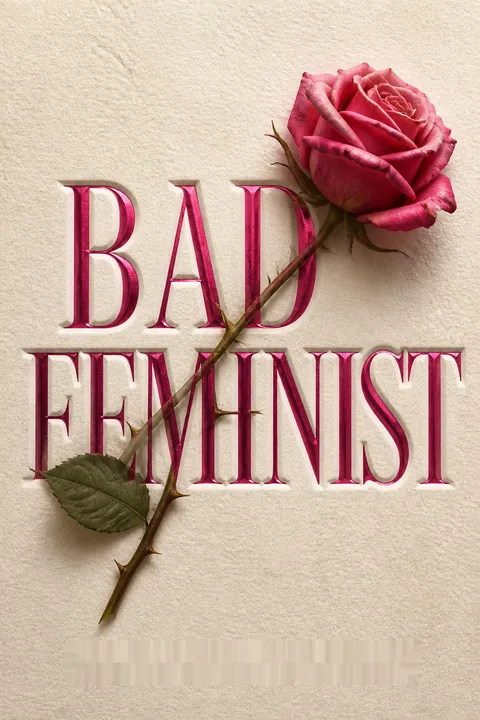
Bad Feminist by Roxane Gay receives polarized reviews. Many praise Gay's sharp, honest voice exploring feminism, race, pop culture, and personal experience, appreciating her embrace of imperfection and contradictions. Readers value her accessible writing style and important cultural commentary on topics like rape culture, privilege, and representation. However, critics find the essays shallow, lacking structure, overly focused on pop culture references, and reading more like blog posts than deep analysis. Some feel disappointed by repetitive arguments and outdated references, while others appreciate the collection's wit, vulnerability, and perspective from a Black woman academic navigating contemporary feminism.
People Also Read




Download PDF
Download EPUB
.epub digital book format is ideal for reading ebooks on phones, tablets, and e-readers.








































