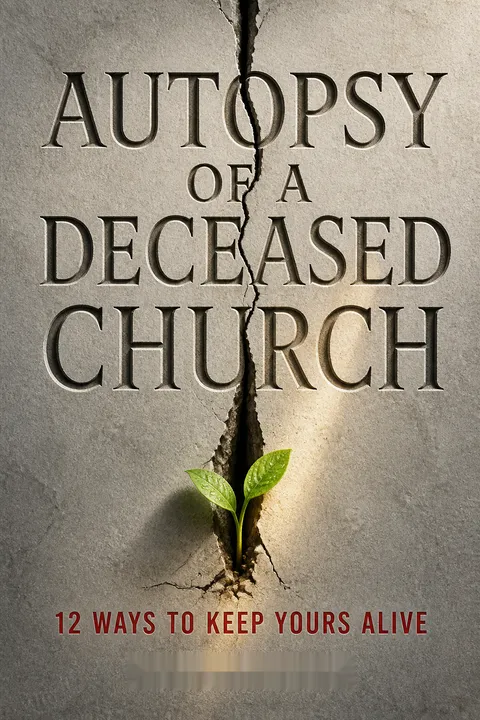

Key Takeaways
1. Denial and Slow Erosion: Churches often die because members refuse to acknowledge gradual decline and resist necessary change.
It is rare for a long-term church member to see erosion in his or her church.
Unseen decline. Churches, much like a small hometown slowly turning into a ghost town, often experience a gradual, imperceptible deterioration. Long-term members, accustomed to daily changes, fail to recognize the cumulative decline in facilities, ministries, prayer life, and community connection. This lack of awareness fosters a dangerous sense of complacency.
Angry denial. When confronted with the reality of their decline, many churches respond with fierce, angry denial, refusing to admit sickness or consider radical change. This resistance, often fueled by a desire to maintain the status quo, seals their fate, prolonging suffering rather than seeking healing. The author's personal experience with a church he warned had five years to live, only to see it cling on for ten more years of pain, illustrates this tragic pattern.
Painful necessity. Autopsies, whether on humans or churches, are painful but necessary to understand the cause of death. By examining the reasons why churches die, surviving congregations can gain crucial insights to avoid similar paths, making the difficult process a warning for the living rather than just a dwelling on the past. This understanding is vital for the estimated 100,000 churches in America showing signs of decline.
2. The Past as Hero: Clinging to "the good old days" and personal preferences, rather than biblical truth, becomes a fatal obsession.
They often clung to things of the past with desperation and fear.
Past over purpose. The most common thread in deceased churches is an idolatrous reverence for "the good old days," where the past becomes the hero. Members cling to personal preferences—music styles, service orders, building aesthetics, or even specific pastors—with fierce resistance to any change, often declaring, "We will die before we change." This isn't about biblical truths or doctrines, but comfort.
Self-serving attitudes. This preference-driven mindset shifts the church's focus from others to "me, myself, and I." Members demand their desired music, programs, and staff attention, embodying a self-entitled attitude rather than the self-sacrificial spirit of Christ described in Philippians 2:5-11. This inward focus starves the church of its lifeblood, making death inevitable.
Comfort over Christ. Unlike the "heroes of faith" in Hebrews 11 who sacrificed comfort and possessions for an eternal future, dying churches cling to everything that makes them comfortable and happy in this temporary life. This attachment to worldly preferences, even when facing certain demise, mirrors Harry Randall Truman's refusal to leave his home at the foot of Mount St. Helens, choosing death over change.
3. Fortress Mentality: Churches become inward-focused fortresses, refusing to reflect or serve their changing communities.
The church becomes a fortress.
Community disconnect. Dying churches often fail to adapt as their surrounding communities change ethnically, racially, age-wise, or socioeconomically. While original members may drive back to "their church," their children and grandchildren seek churches closer to their homes, leading to a slow, family-by-family decline. The church becomes increasingly out of sync with its neighborhood.
Outsiders unwelcome. These churches develop a "fortress mentality," where the primary concern is protecting their established ways and keeping "outsiders" out. The thought of significant changes to reach the community, or even transitioning leadership to community residents, is seen as treasonous. They believe the community members haven't "given a dime" to the congregation, so why should they have a say?
Self-preservation. Paul's exhortation to the Philippian church (Phil. 2:1-4) to "consider others as more important than yourselves" highlights the stark contrast with dying churches. Vibrant churches are other-centered, concerned for their communities, and open their doors. Dying churches, however, prioritize self-preservation and their preferred way of doing church, ultimately closing their doors to those God called them to reach.
4. Inward-Focused Budget: Financial resources shift from outward mission to internal comfort and self-preservation.
For where the money of the church goes, so goes its heart.
Following the money. An autopsy of a church's budget reveals its true heart. In dying churches, a predictable pattern emerges: funds increasingly move inward, prioritizing the comfort of existing members over outward mission. Personnel costs, for instance, often remain high proportionally, as staff are viewed as personal caretakers for members, limiting their outreach.
Comfort over mission. Expenditures that maintain member comfort—like building and facility costs—are typically the last to be cut. Conversely, ministries and programs with an outward focus, such as community outreach or missions, are often the first to be reduced or eliminated, justified by declining receipts. This reveals a fundamental shift in priorities.
Dying with treasure. Like the rich young ruler who grieved at the thought of giving up his possessions, some dying churches hold onto accumulated funds, fearing not having "enough." They prioritize accumulation over Kingdom impact, dying with a "treasure chest" but a heart problem. The money becomes the focus, rather than a tool for the Great Commission and Great Commandment.
5. Great Commission Omission: Neglecting Christ's command to "go and make disciples" leads to spiritual amnesia and purposelessness.
But the deceased church, somewhere in its history, forgot to act upon the Great Commission.
Amnesia or disobedience? Churches often begin with a strong commitment to the Great Commission (Matthew 28:19-20), but over time, the methods become the focus, and the command itself is forgotten or omitted. This "Great Commission amnesia" is perhaps more accurately "Great Commission disobedience," as churches choose comfort over the effort required to "go, make disciples, baptize, and teach."
Purposeless routines. As the Great Commission fades, churches lose their clear, gospel-centered purpose, becoming stuck in routines and traditions without meaningful direction. Members "go through the motions," attached to "the way we've always done it" rather than asking what the Lord wants them to do. This purposelessness transforms the church into a mere activity, not a vibrant body.
Convenient omission. Members of dying churches often recall nostalgic "good old days" of growth but conveniently omit the hard work, prayer, and sacrifice that fueled that growth. They desire the results of yesteryear without the effort, unwilling to go into the community, invite unchurched friends, or fund vibrant outreach. Ultimately, they only want growth if new members are "like them" and the church maintains their preferences.
6. Pastoral Turnover & Resistance: Short pastoral tenures and fierce resistance to leadership's attempts at change accelerate decline.
Most pastors in dying churches have shorter tenure.
Revolving door. In many dying churches, pastoral tenure becomes a predictable, short cycle of two to three years. A new pastor is called with hopes of revival, but their attempts at change are met with fierce resistance. Discouraged, the pastor leaves or is forced out, perpetuating a cycle of instability and further decline.
Stages of tenure. Pastoral tenure often follows distinct stages: a honeymoon (Year 1), conflicts and challenges (Years 2-3), a critical crossroads (Years 4-5), fruit and harvest (Years 6-10), and another crossroads (Years 11+). Dying churches typically see pastors leave during the "conflicts and challenges" stage, unable to overcome the entrenched resistance to change.
Caretakers of comfort. In rare cases, long-term pastors in dying churches choose the path of least resistance, becoming caretakers of existing members rather than leaders of change. They avoid conflict, side with members' preferences, and allow the church to decline, often until their retirement or the church's eventual closure. This avoids immediate pain but ensures ultimate demise.
7. Ritualistic Prayer: Corporate prayer loses its fervency and passion, becoming a mere ritual, signaling a loss of dependence on God.
Prayer was not an add-on to give them permission to eat a meal. It was serious stuff for a serious group of church members.
Routine over devotion. While most dying churches maintain some form of "prayer time," it often devolves into a routine or ritual, like reading names from a list before a meal. Survivors of deceased churches admit these times lacked the meaningful, fervent, and passionate devotion seen in New Testament churches, such as the early Jerusalem church described in Acts 2:42.
Loss of lifeblood. Meaningful, corporate prayer is the lifeblood of a healthy church, both a cause and result of greater spiritual vitality. When churches stop praying with intensity and belief, they lose their dependence on God and their outward focus. This decline in prayer often coincides with the beginning of a church's overall decline, leading to its eventual death.
Fear replaces faith. One survivor recalled that as their community changed, fear replaced faith, leading members to focus on self-preservation rather than serving the community. This shift directly correlated with a loss of passionate prayer. When a church stops taking prayer seriously, it stops hoping, and the dying process accelerates.
8. Facility Obsession: Idolatrous focus on physical buildings and memorials distracts from the church's eternal mission.
We were fighting over a stupid room while the church died.
Idolatry of things. Dying churches often become obsessed with physical facilities and specific items, turning stewardship into idolatry. Conflicts erupt over pulpits, stained-glass windows, pews, or even specific rooms named as memorials. These battles, often involving inactive members who only appear for contested votes, highlight a misplaced focus on the temporal over the eternal.
Distraction from mission. While good stewardship of church property is commendable, an obsession with "things" distracts from God's mission. Jesus' words in Matthew 6:19-21, "For where your treasure is, there your heart will be also," apply directly to churches. When the heart is fixated on material items, no matter how meaningful, the eternal focus is lost, bringing the church closer to death.
Silly, sad fights. The stories are tragically common: a church splitting over a new pulpit, or families changing locks on memorial rooms. These "silly, sad" fights over physical objects, even as the rest of the building deteriorates, serve as clear markers of a church's decline. The energy and attention diverted to these internal squabbles could have been used for vital outreach.
9. Hope for Sick Churches: Churches showing early symptoms of sickness must take immediate, outward-focused action and honest self-assessment.
The first mandate is to impact your local community.
Early warning signs. Approximately 40% of American churches exhibit early symptoms of sickness, including a pervasive belief that their best days are in the past, declining attendance, an inward shift in ministries, a lack of disciple-making plans, and program clutter without meaningful purpose. Recognizing these signs is the first step toward recovery.
Four critical responses:
- Pray for opportunities: Ask God to open eyes to community outreach, remembering the Acts 1:8 mandate to be witnesses in Jerusalem (your local community).
- Audit involvement: Honestly assess how members spend their time, shifting from "holy huddles" to ministries beyond the church walls.
- Audit finances: Evaluate the budget to ensure a balance between internal needs and outward mission, correcting any inward bias.
- Plan outreach: Develop specific, concrete plans to minister and evangelize the community, such as partnering with local schools or initiating service projects.
Catalyst for change. These responses are not quick fixes but a call to obedience and a willingness to be a catalyst for change. An honest self-assessment, coupled with prayer and intentional outward action, can prevent a church from progressing to more severe stages of sickness.
10. Radical Change for Very Sick Churches: Very sick churches require radical, God-empowered change, starting with honest confession and a willingness to sacrifice comfort.
With men this is impossible, but with God all things are possible.
Grave condition. Another 40% of American churches are "very sick," characterized by significant numerical decline over decades, prolonged apathy punctuated by intense conflict, being unknown in their community, rare new members, revolving pastors, and a distant memory of "good old days." Reversing this deterioration is incredibly difficult, akin to Frank, who waited too long to seek medical help.
God's intervention. While humanly unlikely, reversal is not hopeless, for "with God all things are possible" (Matthew 19:26). God often works through willing leaders, like Moses or Nehemiah, who find willing people to enact change. The challenge is immense, requiring the church to confront decades of cumulative problems in a short time.
Four radical responses:
- Admit dire need: The church must honestly confess its critical condition, moving past denial.
- Pray for wisdom and strength: Seek divine guidance and power for the difficult changes ahead.
- Radical change: Be willing to fundamentally alter long-standing behaviors and traditions, sacrificing comfort.
- Action and outward focus: Implement these radical changes through positive, outward-focused actions, essentially becoming a new church.
11. Embracing Mortality for Dying Churches: Even churches on the brink of death can find hope in God's power, but it demands a willingness to confront painful realities and surrender.
I refused to accept that my dad was dying.
Confronting death. Just as individuals often deny the inevitable path of death, churches on the brink of closure resist accepting their terminal diagnosis. This denial, fueled by grief, resentment, and a desire for things to remain as they were, prolongs suffering and hinders any potential for miraculous intervention. The author's personal experience with his dying father mirrors this profound struggle.
Hope in surrender. While the odds are stacked against them, the possibility of hope remains, rooted in God's power. However, this hope is not found in clinging to the past or demanding comfort, but in a willingness to confront painful realities and surrender to God's will. It requires a profound shift from self-preservation to a desperate plea for divine intervention.
A new beginning. For a dying church, embracing its mortality means asking what God truly desires, even if it leads to a complete transformation or a new form of ministry. It's about letting go of what was, to embrace what could be, under God's sovereign hand. This painful surrender, though it feels like death, can paradoxically be the pathway to new life or a faithful conclusion that glorifies God.
Review Summary
Reviews for Autopsy of a Deceased Church are generally positive, averaging 4.17 out of 5. Many readers appreciate its concise, accessible format and practical insights into the warning signs of declining churches. Positive reviewers highlight its value for pastors, church planters, and members alike, praising its candid approach and discussion questions. Critics, however, note its limited research scope, lack of biblical depth, insufficient practical solutions, and flawed exegesis. Some feel it could have been condensed into a blog post rather than a full book.
People Also Read





About the Author

Download PDF
Download EPUB
.epub digital book format is ideal for reading ebooks on phones, tablets, and e-readers.








































