
Key Takeaways
1. Trump's Authoritarianism: A Childhood Legacy of Dominance
“When I look at myself in the first grade and I look at myself now, I’m basically the same. The temperament is not different.”
Early conditioning. Donald Trump's authoritarian drive for dominance is deeply rooted in his childhood, shaped primarily by his father, Fred Trump. Fred, a tough and hyper-competitive real estate developer, instilled in his son the relentless pursuit of winning and the belief that one must be a "killer" to become a "king." This intense pressure, coupled with a distant mother, fostered a profound need for validation and a zero-sum worldview where one either dominates or submits.
Bullying tendencies. From a young age, Donald exhibited aggressive and bullying behaviors, often targeting those smaller than himself. His expulsion from elementary school for throwing erasers at teachers and punching a music teacher, along with his collection of switchblade knives, led his parents to send him to military school at age 13. There, he learned to "play" authority figures and further honed his competitive drive, always striving to be "number one" and seeking public recognition.
Fame as validation. A local newspaper headline, "Trump Wins Game for NYMA," ignited in young Donald a lifelong love affair with publicity and fame. This early taste of widespread recognition became a powerful elixir, fulfilling his deep-seated need to matter and to impress. This craving for attention, coupled with his father's relentless demands for success, set the stage for a personality that would constantly seek self-aggrandizement, regardless of the truth.
2. The Con Man's Ascent: A Life of Fakery and Fraud
“One of the most useful skills a person should develop is how to look someone straight in the eye and lie convincingly.”
Amoral manipulation. Donald Trump's adult life has been characterized by a consistent pattern of amoral, manipulative, and deceitful behavior, aligning perfectly with traits measured by the "Conman Scale." From dodging the Vietnam draft with a dubious bone spur diagnosis to inheriting vast wealth while falsely claiming self-made success, Trump consistently prioritized personal gain over ethical conduct. His association with attorney Roy Cohn further solidified his "attack, deny, and never apologize" playbook.
Image over reality. Trump mastered the art of creating a grand, often false, image to impress and exploit others. His early real estate deals, like the Grand Hyatt and Trump Tower, were built on a foundation of his father's money, political connections, and cleverly arranged tax breaks, yet he publicly boasted of his own genius. He inflated his net worth to make the Forbes 400 list and used an alter-ego, "John Barron," to feed flattering stories to the press.
Serial failures and blame. Despite his carefully crafted image, Trump's business career was marked by spectacular failures, including multiple bankruptcies in Atlantic City and the collapse of Trump Airlines. Instead of learning from these mistakes, he blamed external forces or others, never expressing guilt or contrition. His most egregious fraud, Trump University, preyed on vulnerable individuals, leading to a $25 million settlement and a ban from operating charities in New York.
3. A Presidency Defined by Unchecked Authoritarian Traits
“Since taking office [Trump] has become the worst version of himself.”
Incessant mendacity. Trump's presidency has been a stark continuation and amplification of his lifelong authoritarian traits. His incessant lying, with over 16,000 false or misleading claims in his first three years, demonstrates a profound disregard for truth, often contradicting himself within days or even hours. This "whack-a-mole" approach to reality creates a "Trump World" of "alternate facts" where consistency is irrelevant.
Cognitive disarray. The president exhibits a troubling inability to think straight, focus, or synthesize information. His impulsive decisions, frequent policy U-turns, and tendency to veer off-topic during briefings reveal a scatterbrained mind. This intellectual disinterest, particularly in expert advice, proved deadly during the COVID-19 pandemic, as he dismissed warnings and delayed crucial actions, leading to tens of thousands of preventable deaths.
Loyalty and aggression. Trump demands absolute, unquestioning loyalty, viewing dissent as betrayal. He has systematically purged his administration of anyone who challenges him, replacing them with "Trump-pets" who prioritize his ego over national interest. His aggression, evident in his constant attacks on opponents, the media, and even military leaders, has escalated, fueled by deep-seated insecurities and a vengeful desire to "destroy anyone who deliberately blocks my plans and goals."
4. Social Dominators: Trump's Base Craves Hierarchy and Control
“Some groups of people must be kept in their place.”
Belief in inequality. A significant portion of Trump's base consists of "Social Dominators," individuals who score highly on the Social Dominance Orientation (SDO) Scale. These people fundamentally believe in inequality between groups, desiring that their own group (typically white, in this context) remains at the top of the social hierarchy. They are often:
- Pitiless and vengeful
- Amoral and exploitative
- Highly prejudiced (racist, sexist, homophobic)
- Militant and nationalistic
Attraction to xenophobia. Trump's rhetoric, particularly his infamous "Mexican rapists" comment, instantly resonated with these voters. His "America First" and anti-immigrant stance appealed to their desire to maintain existing power structures and prevent perceived threats to their group's dominance. They saw Trump as a "take-charge tough guy" who would "crack down on all the people who were not 'real Americans'."
"The forgotten" narrative. Many social dominators, especially white men without college degrees, felt economically and culturally displaced. Trump's narrative of "the forgotten" spoke directly to their anxieties, promising to restore their perceived rightful place in society. Their willingness to "break some rules" for a leader who promised to "set things right" highlights their preference for authoritarian solutions over democratic processes.
5. Authoritarian Followers: The Deep-Seated Need for a Mighty Leader
“Our country desperately needs a mighty leader who will do what has to be done to destroy the radical new ways and sinfulness that are ruining us.”
Submission and aggression. Another large segment of Trump's base comprises "Authoritarian Followers," characterized by high levels of submission to perceived legitimate authorities, aggression in the name of those authorities, and rigid conventionalism. These individuals are often fearful of the world and crave the protection of a strong leader who will impose order and defend their traditional values.
Unquestioning loyalty. Trump's followers exhibit an almost unwavering loyalty, accepting his contradictory statements and even life-threatening advice (e.g., on COVID-19) without question. Their support for his policies, even when they involve breaking laws or undermining democratic institutions, stems from their deep-seated need to submit to authority and their belief that their leader is always right. This was evident in their continued backing despite his disastrous handling of the pandemic.
Fear and self-righteousness. Authoritarian followers are noticeably more afraid of the world than others, and this fear often instigates their aggression. Their self-righteousness, often rooted in fundamentalist religious beliefs, provides the moral justification for attacking "outsiders" or those who violate their conventions. Trump's constant fear-mongering about immigrants and terrorists, combined with his "in-your-face racism," resonated deeply with their prejudices and provided an outlet for their stored-up hostility.
6. Cognitive Biases: Why Trump's Base Ignores Contradictions
“The things I believe in are so completely true, I could never doubt them.”
Compartmentalized thinking. Authoritarian followers exhibit highly compartmentalized thinking, allowing them to hold conflicting and contradictory beliefs without experiencing significant cognitive dissonance. Ideas are stored in isolated mental "boxes," preventing critical examination or integration. This enables them to simultaneously believe in freedom of speech while supporting the persecution of critics, or to value human life (unborn) while dismissing deaths from a pandemic.
Double standards. This unintegrated thinking leads to rampant double standards in judgment. High RWAs are lenient on authorities or in-group members who commit wrongdoing but punitive towards out-group offenders. They readily accepted Trump's "Crooked Hillary" narrative while ignoring his own documented history of fraud and illegal charity operations. Their bias extends to dismissing conclusive evidence that contradicts their beliefs, such as Russian interference in elections or scientific consensus on climate change.
Dogmatism and lack of self-awareness. Authoritarian followers are profoundly dogmatic, refusing to change their views even in the face of overwhelming evidence. This stems from having memorized rather than reasoned their beliefs, making them unable to defend their ideas logically. Furthermore, they possess a remarkable lack of self-awareness, believing themselves to be "normal" and unprejudiced, even when studies clearly show otherwise. They actively avoid information that challenges their self-perception or their leader's infallibility.
7. The "Lethal Union": Dangerous Double High Authoritarians
“Double Highs generally carry with them the worst features of high SDOs and high RWAs.”
Compounding negative traits. "Double Highs" are individuals who score highly on both the Social Dominance Orientation (SDO) and Right-Wing Authoritarianism (RWA) scales. This combination creates a particularly dangerous personality type, as they embody the worst traits of both groups. They are not only driven to dominate others and maintain group hierarchies but also exhibit extreme submission to authority, aggression in its name, and rigid conventionalism.
Extreme prejudice. Double Highs consistently demonstrate the highest levels of prejudice across all studies, surpassing both SDOs and RWAs individually. Their desire for white dominance, coupled with fear of "the other" and self-righteousness, fuels an intense intolerance towards any minority or disadvantaged group. This makes them the most prejudiced group identified in social science research.
Threat to democracy. While rare in past research, the Monmouth University survey found a surprisingly high number of Double Highs in the American electorate, particularly among Trump's supporters. These individuals, often found among "the forgotten" and white evangelicals, are uniquely susceptible to authoritarian leaders. Their presence in significant numbers poses an amplified threat to democratic norms, as they are predisposed to support leaders who promise to "stomp out the rot" and are willing to use unethical means to achieve their goals.
8. Evangelical Support: A Paradox Explained by Authoritarianism
“Given the guilt-evaporating belief that God will forgive everything you confess, why wouldn’t you sin when temptation arose, with such easy-off, easy-on ramps to holiness continually available as you travel through life?”
Unlikely alliance. Donald Trump's overwhelming support from white evangelical Christians, despite his overtly un-Christian behavior and moral failings, is a profound paradox. Evangelicals, typically prioritizing character and religious adherence, embraced a man who openly reveled in sin, displayed ignorance of biblical teachings, and boasted of sexual misconduct. This alliance is explained by the deep-seated authoritarianism within this demographic.
Authoritarian appeal. Evangelicals, often high RWAs, are drawn to Trump's image as a strong, decisive leader who promises protection from a perceived dangerous world. His aggressive rhetoric against "outsiders" and his "America First" nationalism resonated with their ethnocentric prejudices. They readily accepted his sudden conversion to "pro-life" and overlooked his blatant lies, demonstrating their susceptibility to "he agrees with me, therefore he believes what he's saying" self-deception.
"Cheap grace" and hypocrisy. Research suggests that for many evangelicals, their religious commitment is superficial and easily disengaged when it conflicts with their political desires. The concept of "cheap grace"—the belief that salvation is guaranteed regardless of one's actions—allows them to rationalize immoral behavior, both their own and Trump's. Studies show evangelicals are as likely as others to cheat, divorce, and engage in other behaviors contrary to their stated beliefs, yet they maintain a strong sense of self-righteousness, enabling them to support a morally compromised leader.
9. Authoritarianism's Deep Roots in the Republican Party
“The Republican Party had become the Authoritarian Party by the mid-1990s.”
Legislative shift. Studies of state lawmakers from the 1980s and 90s revealed a significant and consistent trend: Republican legislators, as a group, scored markedly higher on the RWA Scale than their Democratic counterparts. This indicated a growing authoritarian presence within the GOP, even before the rise of figures like Newt Gingrich, who actively promoted polarizing, "cutthroat" politics.
Ideological alignment. High RWA lawmakers consistently demonstrated beliefs and attitudes associated with authoritarianism, including:
- Dismissing equality as an unimportant value
- Favoring increased capital punishment and police power
- Opposing gun control and affirmative action
- Supporting the teaching of Christianity in public schools
- Showing racial and ethnic prejudice
Transformation complete. The influx of religious conservatives (many of whom are high RWAs) and "the forgotten" (including social dominators) over decades has solidified the Republican Party's transformation. This shift has created a party whose leaders, many of whom are "Double Highs," are deeply authoritarian themselves. Their willingness to disregard constitutional principles and enable Trump's abuses of power stems from this fundamental ideological alignment, rather than mere political expediency.
10. Trump's Enablers: Loyalty Over Constitutional Principles
“Whatever evil Trump does, whatever he damages or destroys, at least he enables Barr, Pence, and Pompeo to save America from a far worse fate. If you are convinced we are living in the End Times, then anything the president does can be forgiven.”
Subservient staff. Trump's administration is characterized by an extraordinary turnover rate, as he systematically replaces qualified individuals with "Trump-pets" who offer absolute, unquestioning loyalty. This preference for sycophancy over competence ensures that no one challenges his decisions, even when they are ill-advised or illegal. His inner circle, including Vice President Mike Pence, Secretary of State Mike Pompeo, and Attorney General William Barr, exemplify this dynamic.
Ideological collaborators. These key enablers, often hard-right religious conservatives, initially expressed reservations about Trump but quickly became his most ardent defenders. They view Trump as a means to an end, believing he can advance their ideological goals, such as expanding presidential power, packing the judiciary with conservative judges, and promoting a Christian nationalist agenda. Their rationale often involves a "Vichy government" mentality, where Trump's flaws are tolerated because the political opposition is perceived as a far greater threat.
"End Times" justification. For some, particularly Pence and Pompeo, their collaboration is rooted in a belief that they are living in "biblical times" or the "End Times." This apocalyptic worldview allows them to rationalize Trump's "evil" and "damage" as necessary to prevent a "far worse fate" (e.g., the rise of "militant secularism"). This profound ideological commitment, combined with personal ambition, makes them willing to disregard constitutional principles and enable Trump's authoritarian tendencies.
11. The 2020 Election: A Pivotal Test for American Democracy
“America has not stood so clearly at a fork in the road since the 1860s.”
A critical juncture. The 2020 election represents a profound test for American democracy, with the potential for either a return to democratic norms or a further slide into authoritarianism. Trump's presidency has exposed deep vulnerabilities in the system, fueled by a large base of authoritarian supporters and enabled by a compliant Republican Party. His mishandling of crises like COVID-19 and racial unrest has further polarized the nation.
Trump's playbook. Trump's reelection strategy relies heavily on:
- Fear-mongering: Portraying opponents as radical threats to white Americans.
- Smear tactics: Discrediting opponents with fabricated stories and conspiracy theories.
- Vote suppression: Employing various tactics to disenfranchise minority and young voters.
- October surprises: Orchestrating dramatic, unverified events to sway undecided voters.
- Refusal to concede: Potentially challenging election results and refusing a peaceful transfer of power.
The path forward. Defeating Trump requires a massive turnout from Democrats and independent voters, particularly young adults who are less prejudiced and more civically engaged. Overcoming vote suppression, uniting disparate factions of the opposition, and actively engaging non-voters are crucial. The stakes are immense: the preservation of the Constitution, the rule of law, and American democracy itself. Failure to act could lead to a permanent shift towards authoritarian rule, fulfilling the founders' warnings against "cunning, ambitious, and unprincipled men."
Review Summary
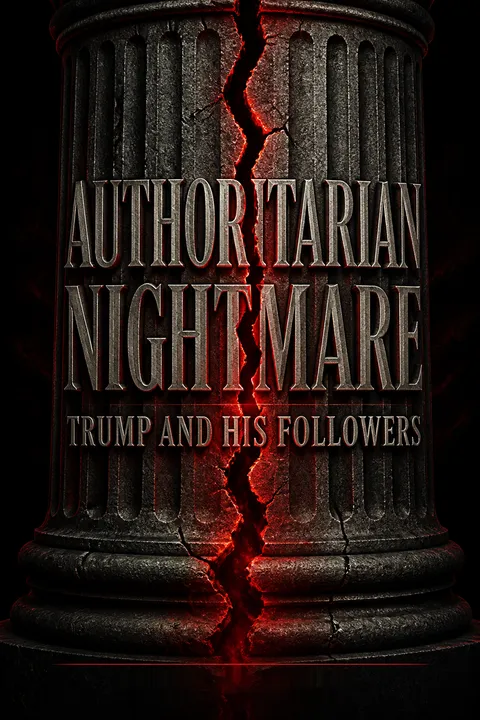
Authoritarian Nightmare by John W. Dean and Bob Altemeyer examines Trump's authoritarian tendencies and his followers' psychology through decades of research. Reviews praise the book's predictive accuracy regarding election denial and January 6th, and its explanation of Right-Wing Authoritarians who follow strong leaders submissively. The research identifies "social dominators" and "authoritarian followers," revealing why supporters ignore contradictory evidence. While some found it repetitive or textbook-like, most appreciated understanding Trump's base psychology. Critics note the dire warnings about democracy's future and concerns that smarter authoritarians may emerge.
People Also Read





About the Author
Other books by John W. Dean

Download PDF
Download EPUB
.epub digital book format is ideal for reading ebooks on phones, tablets, and e-readers.








































