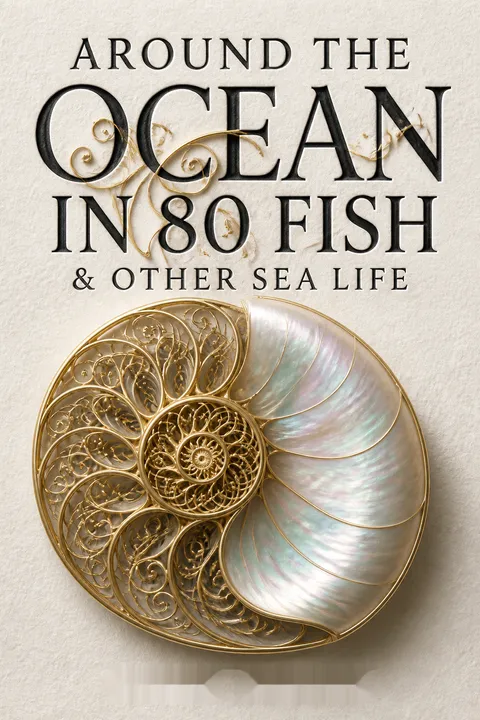

Key Takeaways
1. The Ocean: Earth's Vast, Unseen Biosphere of Wonders
More than 90 per cent of the Earth’s biosphere – the space where life dwells – is ocean.
A water planet. Earth is predominantly a water planet, with its surface largely covered by a deep, interconnected global ocean that hosts the vast majority of the planet's life. This immense, three-dimensional realm remains largely unexplored, holding countless secrets and surprises far beyond human experience on land. The sheer scale of marine biodiversity is staggering, with hundreds of thousands of known species and many more yet to be discovered.
Daily global migration. One of the most profound yet unseen phenomena is the daily vertical migration of trillions of marine animals, including lanternfish, from the twilight zone to the surface and back. This is the largest animal migration on Earth, happening constantly around the world, showcasing the dynamic and interconnected nature of ocean ecosystems. These migrations are critical for nutrient cycling and carbon sequestration, playing a vital role in global climate regulation.
Kaleidoscope of life. From the sunlit coasts to the crushing depths, ocean organisms exhibit an astonishing array of colors, shapes, and behaviors. The book curates a collection of 80 species that embody the strange, hidden, and beguiling aspects of marine life, reflecting the continuous learning process of scientists about the ocean's inner workings and how everything fits together in this biodiverse planet.
2. Evolution's Masterpieces: Bizarre Adaptations for Extreme Survival
All through this enormous, three-dimensional realm, organisms have taken on colours, shapes and behaviours that we just don’t see here on land.
Ingenious survival. Marine life has evolved an incredible array of unique and often bizarre adaptations to thrive in diverse and extreme environments. These range from the deep-sea hagfish's ability to produce vast quantities of slime for defense and knot its body to clean itself, to the scaly-foot snail's iron-plated shell and sulfur-expelling scales that protect it from toxic hydrothermal vent fluids.
Sensory marvels. Many species possess extraordinary sensory capabilities. Barreleyes, for instance, have swiveling, emerald-green tubular eyes that can rotate within a transparent dome on their heads, allowing them to spot prey in the dim twilight zone while protecting their eyes from siphonophore stings. Hammerhead sharks' wide cephalofoils enhance their senses of smell and electroreception, aiding in hunting prey hidden in the seabed.
Physical transformations. Adaptations also include remarkable physical transformations and behaviors. Pufferfish can inflate their bodies up to three times their original volume by swallowing seawater, making them too cumbersome for predators. Walking sharks, defying typical shark behavior, can hold their breath for an hour and use their fins as rudimentary legs to clamber between tide pools, showcasing recent evolutionary divergence.
3. Beyond Instinct: Surprising Intelligence and Complex Social Lives
To see one is to contemplate the closest thing to an intelligent alien.
Octopus intellect. Octopuses, with their half-billion neurons distributed between their doughnut-shaped brain and eight arms, exhibit a unique form of intelligence. They demonstrate complex problem-solving, self-control (passing the "marshmallow test"), and even personality, leading to their recognition as sentient beings in some legal frameworks. Their ability to change skin color and texture while sleeping suggests they might even dream.
Social and cognitive fish. Fish, often underestimated, display impressive cognitive abilities. Cleaner wrasse remember hundreds of individual clients, tailoring their services and even performing "fin massages" to reduce stress hormones in their clients. They may even possess self-awareness, as suggested by mirror tests. Damselfish, on the other hand, are known to "farm" algae and even "domesticate" mysid shrimp, which fertilize their algal crops, representing the first known example of a vertebrate domesticating another animal besides humans.
Learned behaviors. Sharks, too, defy the "mindless killing machine" stereotype. Lemon sharks form social "gangs," preferring to swim with known individuals, and exhibit distinct personalities, with some being bold leaders and others content to follow. They also demonstrate impressive long-term memory, remembering learned tasks for months, and females return to their natal grounds to give birth, showcasing complex navigation.
4. Humanity's Deep Roots: Cultural, Historical, and Economic Ties to the Sea
This is a part of our world that humans can still visit only briefly. Mostly, we stand at the edges of the sea and gaze over the waves, pondering and dreaming about what lies below.
Ancient connections. For millennia, humans have been deeply connected to the ocean, drawing sustenance, resources, and inspiration from its depths. Evidence of ancient fishing dates back tens of thousands of years, with early humans catching pelagic fish like tuna. Marine products have served diverse purposes:
- Food: Caviar from sturgeon, jellied eels, abalone, and the highly prized bluefin tuna.
- Materials: Sea silk from noble pen shells, mother-of-pearl from oysters, and leather from hagfish skin.
- Currency: Money cowries were a significant currency in West Africa, tragically linked to the transatlantic slave trade.
Myths and legends. The ocean's mysterious inhabitants have fueled countless myths and legends. Sawfish rostrums were revered as symbols of protection and warfare across various cultures, from Aztec offerings to African masks. Narwhal tusks were famously sold as "unicorn horns" in medieval Europe, believed to possess magical antidotal properties. Sea cows inspired tales of mermaids and sirens, embodying human-animal hybrids.
Cultural significance. Many marine animals hold profound cultural significance. Spiny oysters were traded across Neolithic Europe and revered by Aztec, Mayan, and Incan civilizations for jewelry and ritual. Fijians use sperm whale teeth (tabua) as traditional offerings for marriage proposals. The John Dory fish is linked to St. Peter, while the flying fish is a national symbol in Barbados, appearing on passports and coins.
5. The Ocean's Unseen Services: Sustaining All Life on Earth
all life on Earth depends on a healthy ocean.
Life-giving oxygen. The ocean provides countless critical, often unseen, services essential for all life on Earth. Half the oxygen we breathe comes from plankton and algae in the surface seas, which are nourished by nutrients sweeping up from the deep ocean. This fundamental process underpins the habitability of our planet.
Climate regulation. The ocean plays a colossal role in regulating the global climate by absorbing vast quantities of heat and carbon dioxide. Organisms like lanternfish contribute significantly to this by actively pulling millions of tonnes of carbon into the deep sea each year through their daily migrations, where it can remain locked away for millennia. Sea cucumbers, acting as "earthworms of the sea," bioturbate sediments, recycle nutrients, and release calcium carbonate, which aids coral growth.
Ecosystem engineers. Marine animals are vital ecosystem engineers. Parrotfish, through their continuous grazing and digestion of coral, produce the white sandy beaches characteristic of tropical paradises. Their activity also keeps coral reefs healthy by preventing algae overgrowth, creating clean surfaces for new coral larvae to settle and grow. The presence of large predators like tiger sharks influences the grazing behavior of dugongs, maintaining the health of vast seagrass meadows.
6. Nature's Innovators: Marine Life Inspiring Human Solutions
Right now, people are increasingly looking to the ocean and ocean life for new ideas to solve human problems.
Biomedical breakthroughs. Marine organisms are a treasure trove of chemical compounds inspiring new medicines. Cone snails produce complex conotoxins, some of which are being tweaked into powerful painkillers and potential treatments for AIDS, COVID-19, and malaria. Sponges yield anti-leukemia and breast-cancer drugs, with many more in the pipeline. The antifreeze proteins found in Antarctic icefish are being explored for cryopreservation and even used in ice cream production.
Material science marvels. The unique properties of marine life are driving innovations in material science. Hagfish slime, with its stretchy, super-strong protein threads, is inspiring engineers to create bungee cords, protective fabrics, and even temporary ship-halting goo for the US Navy. The layered structure of pearls, 3,000 times tougher than their constituent materials, offers insights for developing new super-materials for solar panels and spacecraft.
Engineering and technology. The ocean's inhabitants also provide blueprints for engineering solutions. Mako sharks' tiny, flexible denticles, which reduce drag, inspired early attempts at faster swimwear. The self-cleaning gills of manta rays, designed to prevent clogging while filtering food, are being mimicked to sieve microplastics from wastewater. The ultra-black skin of deep-sea dragonfish, which absorbs 99.95% of light, is informing the creation of new ultra-black materials for high-powered telescopes.
7. A Call to Action: Protecting Our Fragile, Irreplaceable Ocean
The hopeful news is that gradually more people are shifting their mindset and realizing that the ocean is not too big to break.
Mounting threats. The ocean faces unprecedented threats from human activities. Industrial fishing has decimated populations of species like the Atlantic bluefin tuna, European eel, and spiny dogfish, with some, like the vaquita and totoaba, on the brink of extinction due to illegal trade. Pollution, including plastics and persistent organic pollutants, contaminates marine life, as seen in pilot whales accumulating toxins. Habitat destruction, from dredging for shellfish to dynamite fishing, devastates vital ecosystems like oyster reefs and coral habitats.
Climate crisis impacts. Climate change exacerbates these issues, leading to warming, rising, and stormier seas. This forces species like the John Dory to expand their ranges into cooler waters, while immobile species like handfish face extinction. Ocean acidification, caused by increased carbon absorption, threatens shell-forming organisms like nautiluses and ammonites, highlighting the fragility of marine life.
Hope and solutions. Despite the grim outlook, there is growing awareness and concerted effort to protect the ocean. Science-based conservation measures, such as fishing quotas for bluefin tuna and protected spawning sites for Nassau groupers, are showing signs of success. Efforts to restore lost oyster reefs and combat illegal wildlife trade, like the use of smartphone apps to track humphead wrasse, offer glimmers of hope. Ultimately, safeguarding the ocean requires a global shift in mindset, recognizing its finite, precious, and irreplaceable nature, and taking diverse actions worldwide.
Review Summary
Around the Ocean in 80 Fish & Other Sea Life receives widespread praise for its stunning illustrations by Marcel George and accessible, informative writing. Readers appreciate its ocean-by-ocean structure, covering the Atlantic, Mediterranean, Indian Ocean, Pacific, Caribbean, and Polar Seas. Many highlight discovering previously unknown species like Yeti crabs and Pom Pom crabs. While most find it delightful and educational, a few note the content can feel surface-level for seasoned enthusiasts. Conservation themes resonate strongly, and the book is considered an excellent gift for all ages.
People Also Read
Download PDF
Download EPUB
.epub digital book format is ideal for reading ebooks on phones, tablets, and e-readers.








































