
Plot Summary
Daydreams and Flying Saucers
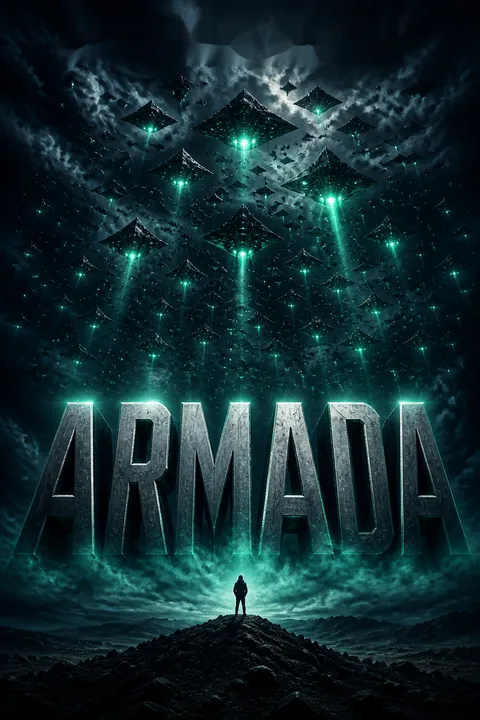
Zack Lightman, a high school senior in Beaverton, Oregon, spends his days lost in daydreams, yearning for something extraordinary to shatter his mundane existence. One afternoon, he spots a flying saucer outside his classroom window—an impossible craft identical to the enemy ships in his favorite video game, Armada. Torn between skepticism and awe, Zack questions his sanity, haunted by memories of his late father's obsession with games and conspiracies. The sighting triggers a cascade of emotions and memories, especially about his father's mysterious past and the strange journal he left behind. Zack's world, once defined by routine and adolescent struggles, suddenly teeters on the edge of the fantastic, as the boundaries between fiction and reality begin to blur.
The Father's Secret Journal
Haunted by the saucer sighting, Zack races home to the attic, where he unearths his father's old journal. The battered notebook, cryptically titled "PHAËTON," is filled with timelines, sketches, and wild theories connecting video games, military conspiracies, and alien invasions. His father, Xavier, believed that games like Armada were covert training tools, preparing humanity for a real extraterrestrial threat. The journal's feverish entries blur the line between genius and madness, but Zack can't shake the feeling that his father's warnings might be more than delusion. As he pores over the evidence, Zack's sense of reality is further destabilized, and he wonders if he's inherited more than just his father's love of games.
Games, Conspiracies, and Reality
Zack's daily life is a patchwork of adolescent drama, nostalgia, and gaming. At work in the local game store, Starbase Ace, he debates pop culture with his boss Ray and friends, all while the lines between fiction and reality continue to blur. The video games Armada and Terra Firma, once mere entertainment, now seem like eerily accurate simulations of the world's secret war. Zack's father's theories echo in his mind: what if the games are real, and the world is being prepared for something? As Zack navigates school bullies, lost love, and the comfort of his gaming rituals, he senses that his ordinary life is a prelude to something much larger.
The Call to Adventure
After a public confrontation with a bully and a surreal encounter with an Earth Defense Alliance (EDA) shuttle landing at his school, Zack's life is upended. His boss Ray, revealed as an undercover EDA agent, whisks him away in a real-life version of the game's troop shuttle. Zack is thrust into a world of secret military installations, advanced technology, and global conspiracies. The EDA, a clandestine organization, has been monitoring and training the world's best gamers for decades, preparing for an imminent alien invasion. Zack, once a daydreamer, is now a chosen recruit, his skills and lineage making him a key player in humanity's defense.
The Truth About Armada
At the EDA's hidden base, Zack and other elite gamers from around the world are briefed on the true nature of Armada and Terra Firma: they are not just games, but sophisticated training simulators designed to prepare civilians for drone warfare against an alien threat. The EDA reveals that for decades, pop culture and video games have been used to acclimate humanity to the idea of extraterrestrial conflict. The enemy, dubbed the Europans, has been building an armada on Jupiter's moon Europa, and the time for open war has arrived. Zack's father's wild theories are vindicated, and Zack is forced to accept that his entire life has been a covert preparation for this moment.
Recruitment and Revelation
Zack and a diverse group of top-ranked gamers are conscripted into the EDA, whisked away to a fortified base in Nebraska. There, they undergo a crash course in the reality of the coming invasion, learning that their gaming skills are now humanity's last hope. Zack is reunited with his father—long thought dead—who is revealed to be the legendary pilot RedJive, the top player in Armada and a general in the EDA. The emotional reunion is fraught with guilt, pride, and unresolved pain, as father and son must quickly bridge the gap between them to face the existential threat together.
The EDA's Hidden War
The EDA reveals the true history of first contact: decades ago, a NASA probe discovered a swastika on Europa, leading to a covert arms race and a series of escalating skirmishes. The Europans, communicating only through cryptic messages, have sent annual waves of drones to test Earth's defenses, each time increasing the scale and sophistication of their attacks. The EDA, using reverse-engineered alien technology, has built a global network of drones and hidden bases, all operated by civilian gamers. The war has been waged in secret, but now, with the Europan armada en route, the conflict is about to go public.
The Briefing: Humanity's Test
As the Europan armada approaches, the EDA finally reveals the truth to the world, broadcasting a briefing film narrated by Carl Sagan. Humanity learns of the decades-long cover-up, the alien threat, and the role of games in preparing for war. The world's population is mobilized, with millions logging in to take control of drones and defend their cities. Zack and his fellow recruits are stationed at Moon Base Alpha, the EDA's last line of defense. The emotional weight of the moment is palpable, as the recruits grapple with fear, hope, and the knowledge that the fate of the world rests on their shoulders.
The First Invasion Wave
The Europan vanguard arrives, and the battle for Earth begins in earnest. Zack and his team, piloting drones from Moon Base Alpha, face overwhelming odds as the enemy splits its forces, attacking both the moon and Earth. The base is overrun, and many of Zack's friends and mentors are killed in the desperate defense. In the chaos, Zack's father makes a heroic sacrifice, buying time for Zack and a handful of survivors to escape. The cost is immense, and the survivors are left reeling, mourning their losses even as the war rages on.
Moon Base Alpha's Last Stand
As Moon Base Alpha falls, Zack and a few others escape in prototype manned Interceptors, piloting their ships back to Earth. Along the way, they are aided by friends and allies, including Lex, a brilliant hacker and pilot who becomes Zack's confidante and love interest. The survivors reunite with their families, but the joy is tempered by grief and the knowledge that the war is far from over. Zack's father, gravely wounded, is finally able to return home, and the family is briefly reunited before the next wave of the invasion looms.
Reunion and Sacrifice
Zack's reunion with his father and mother is bittersweet, marked by relief, guilt, and the scars of battle. The family grapples with the trauma of loss and the burden of responsibility, as Zack and his father prepare for the next phase of the war. The emotional stakes are heightened as the second wave of the Europan armada approaches, and the survivors must find the strength to fight on, even as the odds grow longer and the cost of victory becomes ever more uncertain.
The Second Wave and Betrayal
As the second wave of the invasion arrives, the EDA's leadership, led by Admiral Vance, prepares to deploy the Icebreaker—a doomsday weapon designed to destroy Europa and the Europan armada. Zack and his father, convinced that this escalation will doom humanity, race to stop the launch. Betrayed by their own leaders and hunted by their former allies, they must rely on their friends, hacking skills, and sheer determination to prevent mutual annihilation. The tension mounts as the countdown to the Icebreaker's launch ticks down, and the fate of both species hangs in the balance.
The Icebreaker Dilemma
Zack and his allies infiltrate the EDA's command center, battling both enemy drones and their own side's defenses. In a final confrontation, Zack's father sacrifices himself to buy time, and Zack is left to face Admiral Vance in a desperate dogfight above Europa. With seconds to spare, Zack destroys the Icebreaker, preventing the annihilation of the Europans. The act of mercy is both a personal and collective leap of faith, a rejection of vengeance in favor of hope and the possibility of peace.
The Final Battle for Earth
With the Icebreaker destroyed, the Europan drones suddenly deactivate, and the invasion ceases. The world reels in shock, struggling to comprehend the abrupt end to the war. As Zack and his friends process their losses and the enormity of what has happened, a new presence reveals itself: the Emissary, an artificial intelligence representing a galactic community known as the Sodality. The Emissary explains that the invasion was a test, designed to assess humanity's capacity for empathy, restraint, and unity. By choosing not to escalate to mutual destruction, humanity has passed the test and is invited to join the Sodality.
The Emissary's Judgment
The Emissary reveals the true nature of the conflict: there were never any Europans, only a simulation orchestrated to test humanity's readiness for interstellar community. The test, while devastating, was designed to provoke the very choices that define a species' character. Zack, as the individual who made the crucial decision, is offered the chance to accept the invitation on behalf of humanity. He does so, and the world is forever changed as the Sodality begins to share its knowledge, technology, and medicine, ushering in a new era for Earth.
Aftermath and New Beginnings
In the wake of the war, humanity begins to rebuild, aided by the gifts of the Sodality. Disease, hunger, and energy scarcity are eradicated, and the world enters a new golden age. Zack and his friends are celebrated as heroes, but the scars of loss and trauma linger. Zack's family, once shattered, is made whole again, and new life begins as his mother gives birth to a baby brother. Yet, beneath the surface, questions remain about the true motives of the Sodality and the cost of their "test." Zack, now an ambassador, resolves to seek the truth and protect what matters most.
Lessons from the Game
As the world moves forward, Zack reflects on the lessons of the war and the nature of humanity's test. The line between game and reality, fiction and truth, is forever blurred. The choices made in the heat of battle—mercy over vengeance, unity over division—define not just the outcome of the test, but the future of the species. Zack's journey, from daydreamer to hero, is a testament to the power of hope, the importance of questioning authority, and the enduring need for connection, forgiveness, and courage in the face of the unknown.
Analysis
Armada is a meta-narrative that interrogates the boundaries between fiction and reality, agency and manipulation, and war and play. At its core, the novel is a coming-of-age story set against the backdrop of a manufactured apocalypse, where the skills and obsessions of a generation raised on games and pop culture become the tools of survival. The book's central conceit—that games are covert training for a real war—serves as both a critique and celebration of escapism, raising questions about the ethics of preparation, the dangers of authority, and the power of collective imagination. The revelation that the invasion is a test, orchestrated by a higher intelligence, reframes the narrative as a parable about restraint, empathy, and the necessity of questioning received wisdom. The story's emotional arc, anchored by the reconciliation between Zack and his father, mirrors humanity's own journey toward maturity: the willingness to forgive, to choose hope over vengeance, and to accept responsibility for the future. In a modern context, Armada is a cautionary tale about the seductive allure of conflict, the perils of escalation, and the enduring need for connection, critical thinking, and courage in the face of the unknown. Its ultimate message is one of hope: that even in a world shaped by fear and manipulation, the choices we make—individually and collectively—can define not just our survival, but our humanity.
Review Summary
Armada by Ernest Cline receives mixed reviews. Critics praise the engaging sci-fi premise where gamers defend Earth from aliens using video game skills, comparing it to The Last Starfighter and Ender's Game. However, many find it inferior to Ready Player One, citing excessive 1980s pop culture references, predictable plotting, shallow characters, and over-reliance on nostalgia. Reviewers criticize the protagonist's constant movie comparisons instead of genuine emotion, rushed pacing, and derivative storytelling. Some enjoyed the conspiracy theories and action sequences, while others found battle scenes boring and the ending disappointing.
People Also Read
Characters
Zack Lightman
Zack is a restless, imaginative teenager whose life is shaped by loss, longing, and a deep connection to games and pop culture. Haunted by the death of his father and the mysteries he left behind, Zack is both skeptical and hopeful, yearning for meaning beyond the ordinary. His journey from daydreamer to world-saving hero is marked by self-doubt, anger, and a fierce loyalty to his friends and family. Zack's psychological arc is one of maturation: he must reconcile his father's legacy, confront the reality of war, and ultimately choose mercy over vengeance. His ability to question, adapt, and empathize makes him the ideal candidate to represent humanity in its greatest trial.
Xavier Ulysses Lightman (Zack's Father)
Xavier is a brilliant, obsessive man whose life is defined by secrets, sacrifice, and regret. Once a young father and gamer, he is recruited by the EDA and forced to fake his death, leaving his family behind to fight a secret war on the moon. His journal, filled with wild theories and warnings, is both a map and a mirror for Zack. Xavier's psychological complexity lies in his guilt over abandoning his family, his relentless pursuit of truth, and his willingness to question authority—even at the cost of his own life. His final sacrifice is both an act of redemption and a catalyst for Zack's transformation.
Pamela Lightman (Zack's Mother)
Pamela is the emotional heart of Zack's world, a strong, compassionate woman who raises her son alone after her husband's "death." Her love is both a source of strength and a reminder of what has been lost. She is pragmatic, nurturing, and fiercely protective, yet haunted by grief and the burden of secrets. Her relationship with Zack is marked by mutual care, occasional conflict, and deep understanding. When Xavier returns, Pamela must navigate forgiveness, anger, and the possibility of healing, embodying the resilience and adaptability of humanity itself.
Ray Wierzbowski / Habashaw
Ray is Zack's boss at Starbase Ace, a quirky, generous, and deeply knowledgeable gamer who serves as both mentor and protector. Secretly an EDA field agent assigned to watch over Zack, Ray's affable exterior hides a life of sacrifice and loneliness. His relationship with Zack is paternal, filled with humor, pop culture references, and genuine care. Ray's psychological depth comes from his ability to balance duty and empathy, and his willingness to put Zack's well-being above his own. His role as a guide is crucial in Zack's transition from ordinary teen to hero.
Lex (Alexis Larkin)
Lex is a fiercely intelligent, independent woman whose skills as a programmer and gamer make her an invaluable ally. She is witty, resourceful, and unafraid to question authority, quickly forming a deep bond with Zack. Lex's psychological complexity lies in her vulnerability beneath a tough exterior, her capacity for loyalty, and her ability to adapt to crisis. Her relationship with Zack is marked by mutual respect, attraction, and shared trauma, providing both emotional support and strategic advantage in the war.
Admiral Archibald Vance
Vance is the EDA's highest-ranking officer, a battle-scarred veteran whose worldview is shaped by decades of secret war. He is pragmatic, disciplined, and deeply committed to humanity's survival, but his rigidity and inability to question established narratives make him both a leader and an obstacle. Vance's psychological arc is one of tragic blindness: his refusal to consider alternative explanations nearly leads to mutual destruction. His relationship with Xavier is fraught with respect, rivalry, and ultimately, regret.
Shin Hashimoto
Shin is one of Xavier's oldest friends and a fellow Moon Base Alpha officer. He is analytical, quick-witted, and deeply loyal, providing both strategic insight and levity in dire situations. Shin's psychological depth comes from his ability to balance humor and seriousness, his devotion to his comrades, and his willingness to make the ultimate sacrifice. His friendship with Xavier and Graham is a model of camaraderie under pressure.
Graham Fogg
Graham is another of Xavier's close friends, a British officer whose love of music and games provides comfort amid the isolation of the moon base. He is thoughtful, creative, and quietly brave, offering emotional support to the team. Graham's psychological arc is one of understated heroism, and his death is a poignant reminder of the war's cost. His presence underscores the importance of art, friendship, and humanity in the face of annihilation.
Whoadie (Lila)
Whoadie is a teenage gamer from New Orleans, whose skills and resilience belie her age. Orphaned by tragedy, she channels her pain into determination and courage, quickly becoming a key member of Zack's team. Her psychological journey is one of growth, as she moves from loss and anger to agency and leadership. Whoadie's presence highlights the generational stakes of the conflict and the potential for renewal.
Cruz and Diehl
Cruz and Diehl are Zack's best friends, fellow gamers whose banter, loyalty, and resourcefulness provide both comic relief and essential support. They are grounded, adaptable, and fiercely protective of Zack, embodying the spirit of teamwork and friendship. Their psychological depth lies in their ability to face fear with humor, to adapt to crisis, and to stand by Zack when it matters most.
Plot Devices
Games as Training and Simulation
The central plot device of Armada is the use of video games—specifically Armada and Terra Firma—as secret training simulators for drone warfare against an alien threat. This device blurs the line between fiction and reality, allowing the narrative to explore themes of agency, manipulation, and the power of pop culture. The games serve as both literal and metaphorical battlegrounds, preparing civilians for real conflict while also questioning the ethics of such preparation. The device is reinforced by the protagonist's journey, as Zack's gaming skills become the key to survival and victory.
Conspiracy and Hidden Truths
Armada employs a narrative structure built on secrets, conspiracies, and the gradual revelation of hidden truths. The protagonist's journey is one of discovery, as he uncovers the reality behind his father's death, the EDA's existence, and the true nature of the alien threat. Foreshadowing is used extensively, with early hints in the father's journal and the uncanny accuracy of the games. The device of unreliable authority—embodied by the EDA and Admiral Vance—creates tension and forces the protagonist to question everything, ultimately leading to the story's central moral dilemma.
The Test and the Emissary
The ultimate plot device is the revelation that the invasion is a test, orchestrated by the Emissary, an artificial intelligence representing a galactic community. The test is designed to provoke humanity's worst and best instincts, forcing a choice between mutual destruction and mercy. The device allows the narrative to explore themes of empathy, escalation, and the meaning of heroism. The Emissary's judgment reframes the entire conflict, transforming it from a war story into a parable about the dangers of fear, the importance of restraint, and the possibility of redemption.
Intergenerational Legacy and Reconciliation
The relationship between Zack and his father is both a personal and symbolic plot device, representing the transmission of trauma, hope, and responsibility across generations. The father's journal, filled with warnings and theories, serves as both a literal clue and a metaphor for the unfinished business of the past. The reconciliation between father and son, and the eventual healing of the family, mirrors humanity's own journey toward maturity and self-understanding.
Pop Culture as Myth and Mirror
Armada is saturated with references to science fiction, games, and pop culture, which serve as both mythic touchstones and narrative foreshadowing. The story uses these allusions to comment on the nature of storytelling, the construction of collective fears, and the ways in which fiction shapes reality. The device is both playful and profound, inviting readers to see themselves in the narrative and to question the stories they consume.

Download PDF
Download EPUB
.epub digital book format is ideal for reading ebooks on phones, tablets, and e-readers.








































