
Plot Summary
1. Valley, Crows, and Blood
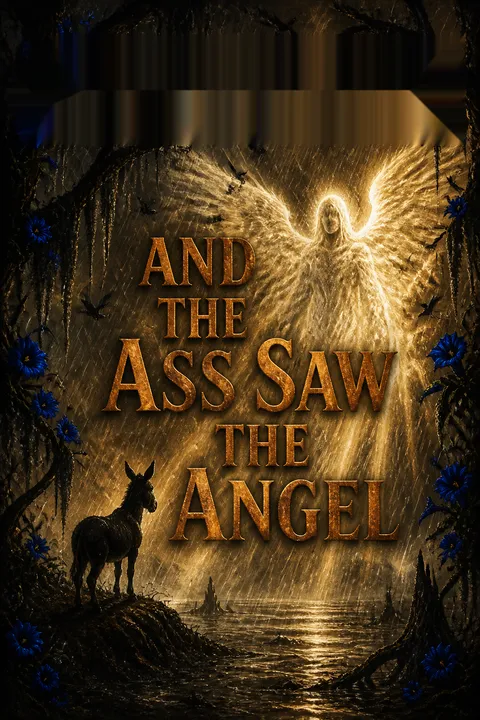
Beneath bruised skies, crows circle above a valley both lush and damned. The story unfurls in Ukulore Valley, a cloistered world under the grip of myth, poverty, and superstition. Its soil is soaked with history and secret violence; the living and the dead share its haunted alleys. Here, beginnings are marred by loss as Euchrid Eucrow is born unwanted, following the violent, drunken unraveling of his family. Overhead, the birds are both witness and omen, mirroring the pervasive sense of doom that will define his life. The valley is introduced not merely as setting, but as a living character: conspiratorial, choking, and marked forever by the blood of its founders, by the silent suffering of its outcasts.
2. A Prophet, A Sect Divides
The roots of Ukulore Valley's relentless malice are sunk deep in religious division and fanaticism. The Ukulites, a zealous and insulated sect founded by Jonas Ukulore, clutch to a history of persecution and martyrdom that festers into cruelty. Their prophet's murder is venerated, his relics and monuments rising like accusations over every injustice that follows. The majority outside the fold struggle for dignity, but within the Ukulite ranks, piety and paranoia blur. Surrounded by poverty and odd rituals, figures like Sardus Swift emerge, caught between their role as protectors and tyrants. Power—spiritual and economic—corrupts, and the boundaries between ritual and vengeance fade with each season.
3. Born in Silence, Raised in Violence
Euchrid is born voiceless, wrung from his mother's alcoholism and cruelty, delivered into a home defined by neglect, filth, and violence. His father, Ezra, carries the inherited curses and incestuous madness of the Morton clan; his mother, Crow Jane, is scarred by her own history of abandonment and humiliation. Euchrid's first experiences are of hunger, silence, and confusion—he is not merely mute, but emotionally isolated, forced to observe his parents' cycles of depravity and rage. The home becomes a microcosm of the valley's brutality: every lesson learned through pain, every memory inscribed with trauma and loss.
4. Outcasts, Swamp, and Signs
With parents absent and trust destroyed, Euchrid is drawn to the swampland—a forbidden, rumor-haunted island of wildness and rot where only the truly desperate go. As the valley ostracizes him, the swamp becomes an ambiguous sanctuary, a place of refuge and hallucination where the demonic and divine intermingle. In its shadows, Euchrid hears the whispered voice of an angel, experiences visions that fuse torment and hope. The swamp is both external landscape and the territory of his mind, mirroring his descent into madness, and forecasting the violence waiting to consume him.
5. Angels, Saints, and Suffering
The outside world churns with spiritual strife, famine, and weather gone mad—a "curse" the Ukulites believe is God's wrath. Suffering for them is not only punishment but proof of sanctity: acts of violent contrition, self-mutilation, and denial become community rituals. Euchrid, excluded for his strangeness, is a scapegoat but also witness—a silent chronicler of the valley's hypocrisy and collective self-destruction. The town is haunted by betrayals: walls built to keep out the "unclean," churches left half-finished in shame, leaders like Sardus Swift broken by personal and public failings. Faith twists into monstrous justification for violence and exile.
6. Rains of Punishment
The valley is consumed by three years' unending rain—a physical expression of their collective guilt and hidden rot. Crops rot, homes flood, bodies and minds decay. The deaths mount, matching the "rain children" miraculously born within the maelstrom. The curse draws out old wounds and new madness: suicides, betrayals, every domestic fissure widened. Rebecca Swift's suicide epitomizes the destructive cycle: grief, childlessness, loss spiraling into communal hysteria. The people's rituals—parades, monuments, corporal demonstrations of piety—grow more desperate, echoing the unchecked violence quietly breeding at the margins.
7. Madness, Death, and Malediction
Within the drowning world, the central families and outcasts spiral further. Sardus Swift's loss and the death of leadership lead to social breakdown; the town is lost to gambling, ruin, and whoredom. Euchrid's family history—ridden with incest, cannibalism, and murder—becomes a prophetic echo of the valley's collapse. Death never brings peace: bodies are unearthed or misplaced, the graveyard grows wild with toxic blue trumpet flowers, and the lines between victim, scapegoat, and savior blur. Each new act of violence—public or private—is justified by the delusion of atonement or chosen-ness, accelerating their course toward catastrophe.
8. Prophet's Child, Saints' Hope
Out of flood and mayhem emerges Beth, the foundling child left swaddled in the circumference of the Prophet's robe, her presence linked with the end of the curse. Instantly, she's seized upon by the Ukulites as proof of divine favor—a living icon to be adored, inspected, and, eventually, sacrificed to their mania for purity. Beth is both spoiled and suffocated by her role: tutored, guarded, offered to the rituals of the elders and the repressed desires of the valley. For Sardus, she is redemption; for the valley, hope. For Euchrid, she becomes obsession, symbol, and an angel made flesh—his private reason for both joy and doom.
9. The Spiral of Persecution
Euchrid grows from mute observer to participant in a cycle of violence and voyeurism. Abused by his mother, hated by schoolchildren, shunned for his oddities, he survives through silent, obsessive watching—God's "snitch." He learns cruelty from his father's traps and the mob's brutality, finds ambiguous comfort in the swamp and secret rooms. His love for Beth—mixing worship, lust, and envy—becomes another wound, a double-edged motivation. As the valley's violence becomes internalized, Euchrid begins to believe in his own holy mission: visions and voices blend into a prophetic mania, the boundaries between angel, harlot, scapegoat, and sinner splinter.
10. Beth, the Living Miracle
Beth's childhood becomes ritualized, her individuality erased beneath waves of observance and expectation. She's subject to medical inspections, watched for signs of saintliness or sin, kept in pure ignorance by those who adore her. Behind closed doors, she's fearful, lonely, and manipulated. Her beauty, her obedience, become weapons in the hands of the women who secretly resent and prepare her for sacrifice. Sardus, her adoptive father, cannot protect her from the predatory rituals or the collective projection of hope and hate. As Beth is primed as the valley's redeemer, Euchrid's obsession and the valley's violence spiral toward murderous convergence.
11. The Mute's Vigil and Vengeance
Euchrid, increasingly isolated and hallucinating, constructs his own fortress—Doghead—a junkyard castle haunted by wounded beasts and booby traps, obsessed with boundaries and retribution. Believing himself both chosen and persecuted, he both fears and welcomes his destroyers. The past, and the valley's encroaching violence, drive him to ritual sacrifices and vindictive "divine" justice. His life as voyeur gives way to a brief, feverish fantasy of kingship, before paranoia and vengeance overtake him. His obsession with Beth fuses longing, hatred, and warped faith, channeling every injury suffered into a master plan for final reckoning.
12. Rage, Sacrifice, and the Carnival
A festival day—ostensibly a celebration of harvest and divine mercy—erupts into chaos, as Euchrid's violence finally breaches the valley. As Beth waits, expectant and strange, Euchrid approaches to fulfill both prophecy and private mission. The sacrificial mood infects all: the town is a landscape of fire, shouting, and smoke. As the square fills with townsfolk, Euchrid's moment of contact with Beth turns grotesquely fatal. He stabs her, performing a warped "atonement" interlaced with his own suffering and imagined ascent. The violence tips from private wound to public slaughter, as a mob forms to hunt him down.
13. The Death-Call and the Wall
Pursued by a mob, Euchrid barricades himself within Doghead, then flees into the swamp. The valley's rage—once turned on itself, now seeks a scapegoat. Euchrid's mental state frays: visions and voices overlap with fever, wounds, and exhaustion. Believing himself both martyr and monster, pursued by angels and crows, he enacts a last ceremony: surrender to mud, death, and oblivion. The valley itself consumes him; the mob, prevented only by the swamp's forbidden boundaries, watches as their hatred drowns him. The violence that defined the valley's beginning swallows its last outcast.
14. Doghead—Kingdom of Wound
Euchrid's Doghead is both literal and psychic fort: a kingdom built of trash, suffering beasts, and paranoia. Within, he becomes both tyrant and captive, performing rituals of justice, torture, and sacrifice. The castle's booby traps, caged mongrels, and scavenged flags are both defense and confession—relics of a childhood overwhelmed by violence and muteness. Neighbours' pets become trophies; the boundaries between man, animal, and divinity disappear. Doghead is the kingdom of those maimed by the valley—its last desperate holdouts doomed by the same brutality they inherit. When invaded, Doghead collapses with its master, consumed by fire and remembered only as a local legend of madness.
15. Madness Unleashed—The Last Descent
Bleeding from every wound—physical, familial, spiritual—Euchrid's final days are consumed with hallucination and reenactment of all the story's major symbols: flesh, mud, angels, crows, knives, and prophecy. Haunted by the ghosts of his parents and the entire valley's shared violence, he enacts a final communion with both his imaginary angel and Cosey Mo, the lost harlot. As the mob approaches, images of sacrifice, birth, and death run together. The story's most primal themes—innocence violated, longing denied, hope destroyed—find their last expression in Euchrid's broken body and mind as he is literally swallowed by the land, an end that is both retribution and escape.
16. Blood, Storm, and Divine Reckoning
As violence peaks, so does Biblical imagery: storms break, the townsfolk surge into the swamp, and the narrative's voices—angelic and damnable—reach a frenzy. Euchrid is found, but their retribution comes too late to solve or atone for anything. The land itself—crumbling, overgrown, flooded—remains the ultimate victor: indifferent and punitive. The final acts are as much nature's as man's, and the distinctions between sacred and obscene, angelic and bestial, dissolve. Euchrid's death, unremarkable to those who pursued him, marks the closing of a cycle; the violence of prophecy is fulfilled but not completed, and the wounds the valley owns remain unhealed.
17. Epilogue: Sacrifice and Continuance
The story ends with a clinical sacrifice: as Beth dies from Euchrid's attack, her child is born, traded for her life. The valley's women, undiminished by the horrors past, accept the cycle: the "prophecy" is fulfilled, a male child is born as the true product of pain and blood. The sorrow and violence that began the tale simply renew themselves in new flesh, as the tragedy's lessons are unlearned and the roots of doom burrow deeper. The book closes with rain—cleansing or punitive, ambiguous as always—leaving the community unchanged, still chained to its maledictions.
Analysis
Nick Cave's And the Ass Saw the Angel is a southern gothic symphony of violence, isolation, and fatal prophecy—a sustained meditation on the way trauma becomes woven into the very language and rituals of a people, passing from generation to generation until it can only be purged with blood. Through the mutilated consciousness of Euchrid Eucrow, Cave unearths the devastating consequences of being born outside society's grace: the outcast, looking for divinity, finds only a mirror of the community's own malice, and is alternately scapegoated and despised by those whose salvation depends on him. The valley's cycles of faith, violence, and guilt—embodied in rain, disease, and the vigilantism of the mob—mirror the relentless repetition of trauma in families and societies. Euchrid's fortress, Doghead, is both a last defense against and an ultimate product of the world that destroyed him, while Beth's burden as miracle child-cum-victim signals the ongoing failure to break the cycle. Cave's language—rich, fevered, Biblical—renders madness as poetry and solitude as a cosmic curse. The novel ultimately asks: Can redemption exist where every prophecy is merely an excuse for more violence? Its answer, unflinching and dark, is that in places like Ukulore, suffering is not only inherited but holy—and so, the only hope for peace lies in seeing what the valley itself cannot: the wounds it refuses to acknowledge, and the angels it ignores.
Review Summary
Reviews of And the Ass Saw the Angel are polarizing but lean positive, averaging 3.84/5. Admirers praise Cave's visceral, lyrical prose, rich Southern Gothic atmosphere, and the haunting portrayal of protagonist Euchrid Eucrow, drawing comparisons to Faulkner, McCarthy, and Flannery O'Connor. Critics argue the novel is overwritten, poorly edited, and excessively indulgent, with some finding the dense dialect and invented vocabulary exhausting. Most agree it is an unforgettable, deeply dark experience exploring madness, religious fanaticism, and outcasts, though decidedly not for every reader.

Characters
Euchrid Eucrow
Euchrid is the stunted offspring of incest, violence, and neglect. Born mute, marked as an outsider, he is shaped entirely by abuse—physical from his mother, emotional absence from his father, and psychic rejection from the valley. Euchrid's muteness is at first a defense, then a crucible for inward vision: he becomes an obsessive watcher, collecting tokens, stories, and wounds. As he matures, his isolation blossoms into hallucination, self-mythology, and violent erotic obsession—first for the angel of the swamp, then for Beth. Legally and spiritually, he is both scapegoat and avenger, unable to find comfort in love, religion, or community. Through Doghead and his final acts, he becomes both the valley's monster and its final mirror—his fate the inevitable product of a community that sanctifies suffering but punishes difference harshly.
Beth
Left as an infant during the worst of the valley's rain, Beth is seized as hope incarnate by a community in existential crisis. She is adored, inspected, suffocated—crafted into an unknowing vessel for collective anxieties, pieties, and hopes. Despite gentleness and beauty, her own subjectivity is denied by the expectations of the adults around her: she must remain pure, must "save" everyone. Her vulnerability makes her the ultimate sacrificial lamb: her destruction by Euchrid is both personal (the product of his obsession) and communal, as every valley ritual primes her for this fatality. Even in death, she becomes commodity—her child replaces her, the prophecy's cycle continuing.
Sardus Swift
Sardus is the melancholic, conflicted leader of the Ukulite sect. Caught between dogma, pride, and the agony of personal loss, he is both the community's shepherd and a failed protector. The suicide of his wife Rebecca (destroyed by infertility and melancholia) shatters his ability to lead, and he retreats into bitterness and isolation. Yet, through his adoption of Beth, Sardus receives a brief, redemptive flicker: loving fatherhood. His inability to shield Beth from the valley's machinations, or to prevent her fate, cements his tragedy. Sardus is always acting from damage—a mixture of duty, rage, and confusion that paralyzes action precisely when most needed.
Ezra Eucrow
Born to the notorious Morton clan—a tangled knot of violence and insanity—Ezra brings inherited trauma to his parenthood. After killing Euchrid's mother and assisting in her grim disposal, Ezra drifts toward a form of camaraderie with his son. Yet, their closeness is founded on mutual damage and silence, not healing. Ezra cycles between cruelty and confession, teaching Euchrid both survival mechanics and fatal self-isolation. In death, he becomes just another ghost haunting Euchrid's psyche, another father-god to whom one prays in vain.
Crow Jane (Euchrid's Mother)
A parodic, monstrous version of the nurturing mother, Crow Jane is shaped by her own marginalization and addiction. Her cycles of drunkenness, violence, and neglect ensure Euchrid is exposed to brutality from his first breath. Her presence in the novel is both oppressive and spectral: even after her murder, her role as "original whore of Babylon" haunts her son. Her squalor and cruelty symbolize the unconscious poison passed down through generations.
Cosey Mo
Cosey Mo is the town harlot, a figure both desired and despised. For Euchrid, she is both lost mother, object of sexual obsession, and angelic apparition—a symbol of the valley's secret lusts and cruelties. Marked, assaulted, and finally murdered by the collective, her relics become Euchrid's fetish objects, feeding his fantasies and retributions. Her fate is cyclical: desired, violated, erased, she is the female double of Euchrid and Beth, sacrificed to the valley's prophecies of shame and purity.
Rebecca Swift
Sardus Swift's wife, Rebecca, is destroyed by infertility and spiritual longing: her inability to bear a child during the years of rain is felt as personal and communal failure. Her suicide—silent, furtive, and macabre—triggers the collapse of both her husband and the last shreds of communal hope. Posthumously, she becomes a figure of both regret and unwashed blame, her final note transformed from grief into public spectacle.
Doghead (Euchrid's Kingdom)
Not a character but an extension of Euchrid: the junkyard kingdom he builds as both defense and testament to his long cultivation of wounds. Filled with cages, refuse, and traps, Doghead is a symbolic wasteland where the boundary between bestiality and humanity dissolves. It is the valley's subconscious made manifest—a place of cruelty, faith, and the hopeless longing for sovereignty.
The Angel
Whether hallucinated or real, this angel haunts Euchrid from the swamp: sometimes judging, sometimes comforting, always ambiguous. In Euchrid's unraveling psyche, she becomes a synthesis of mother, harlot, and saint—her messages cryptic, leading him alternately toward destruction and transcendence. She is not a redeemer, but a catalyst for reflection, prophecy, and catastrophe.
The Mob / Community
The citizens of Ukulore Valley are characters in aggregate: their rituals, superstitions, and collective cruelties both shape and doom their outcasts. The mob that finally hunts Euchrid is responsible for the valley's deepest tragedies. Whether in the guise of pious worshippers, violent men, or self-mortifying women, they ensure the bleakness of the cycles perpetuates itself.
Plot Devices
Cyclical Violence and Sacrifice
The novel's structure is anchored by cycles of punishment, atonement, and the expulsion of scapegoats: violence is never resolved but merely reborn into new forms. From the opening prophecy (And the ass saw the angel) through generations of the Morton, Eucrow, and Ukulite clans, the pattern remains—each act of brutality is justified as redemptive or divine. Beth, Euchrid, and Cosey are sequentially marked for sacrifice, while the rain, the monument, and the festivals become rehearsals for communal purification and renewed violence.
Multiple Narrative Perspectives and Unreliable Narration
The story is divided between Euchrid's intensely subjective, unreliable, first-person accounts—delivered in a southern gothic idiom of fever, violence, and hallucination—and third-person sections chronicling the valley's collective actions. This device exposes the gap between public narrative and private suffering. Euchrid's voice, oscillating between childlike longing and prophetic rage, forces readers to experience his reality even as his grip on reality frays.
Symbolic Repetition and Biblical Allusion
Throughout, the novel employs quotations, prophecy, and ritual: crows, blood, angels, prophets, and martyrs returning as haunted images. The text is constantly interspersed with scriptural fragments, hymn-like mantras, and recycled parables, underscoring the cyclical, trapping nature of faith as practiced in the valley. Characters are caught in reenactments—each generation unable to escape the patterns established by their forebears.
The Swamp and Doghead as Jungian Shadow-Territories
Swampland and Doghead are not merely settings, but spaces where psychological boundaries dissolve: trauma is externalized, wounds made architecture. Their "otherness"—beyond the ordinary valley, ringed by rumor and threat—signals the domains where the valley's repressed violence, sexuality, and sorrow are played out and made visible.
Voyeurism, Collecting, and Fetishization
Euchrid's muteness is matched by his obsessive watching and collecting: shoes, hair, tokens, discarded objects. The novel's narrative circulates through these acts as plot devices—fetishistic objects both connect and replace lost emotional bonds, while the acts of surveillance and keeping secrets drive both redemption and revenge.
Foreshadowing and Prophecy Fulfillment
The text is heavy with foreshadowing: dreams, hallucinations, symbolic animals, and the fevered warnings of both saints and madmen. The communal fixation on prophecy ensures each event is interpreted and reenacted as preordained. This endless repetition of doom, expectation, and fulfillment is mirrored in the recursive, almost musical structure of the prose.

Download PDF
Download EPUB
.epub digital book format is ideal for reading ebooks on phones, tablets, and e-readers.








































