

Key Takeaways
1. The American Healthcare System is Fundamentally Broken and Profit-Driven
In the past quarter century, the American medical system has stopped focusing on health or even science. Instead it attends more or less single-mindedly to its own profits.
A Profound Shift. The core complaint is unaffordable healthcare, a system that has veered away from its original mission of health and science to prioritize profits. This transformation has led to bewilderingly high costs and often worse health outcomes compared to other developed nations. The U.S. spends nearly 20% of its GDP on healthcare—over $3 trillion annually—yet delivers inferior results.
Market Dysfunction. Unlike any other industry, healthcare prices are often unknowable, unpredictable, and vary wildly, sometimes by a factor of ten for the same service. There's little genuine competition, scant information on quality, and patients often lack the power to choose. This deeply flawed market design means financial incentives, not scientific guidelines, drive much of healthcare, defaulting to the most expensive options.
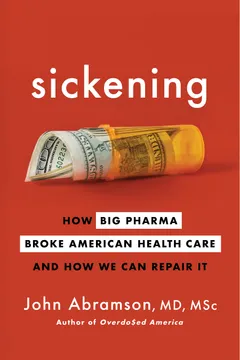
A Call to Action. This book serves as a "history and physical" of American medicine, diagnosing its ills and prescribing treatments. It argues that patients have become complacent, allowing this "slow-moving heist" to occur. Understanding the convoluted logic behind extravagant prices is the first step toward taking back control, both personally and politically, to demand a more affordable and equitable system.
2. Insurance: From Protection to a Profit-Maximizing Engine
The very idea of health insurance is in some ways the original sin that catalyzed the evolution of today’s medical-industrial complex.
Noble Origins. Health insurance began nearly a century ago with the benevolent aim of protecting patients from financial ruin due to serious illness, exemplified by Baylor University's $6-a-year plan for teachers covering catastrophic hospital stays. Early Blue Cross plans were non-profit, accepting all members at the same rates, embodying a mission to protect savings and keep hospitals afloat.
The Shift to Profit. A quirk of history—wage freezes during WWII leading companies to offer health benefits—cemented employer-based insurance. For-profit insurers like Aetna and Cigna entered, cherry-picking healthier patients and charging varied rates. By the 1990s, even the Blue Cross plans, hemorrhaging money covering the sickest, converted to for-profit models, prioritizing shareholders over patients.
Perverse Incentives. Today, insurers tolerate exorbitant hospital charges because:
- It's less trouble than fighting large clients like NYU.
- They can compensate by raising premiums, co-payments, or deductibles.
- ACA's "medical loss ratio" (80-85% of premiums on care) perversely incentivizes higher payouts, as 15% of a larger sum is more profitable.
This system ensures costs are passed to consumers, fueling runaway spending.
3. Hospitals: Non-Profits Acting Like For-Profits, Exploiting Market Power
Because most hospitals are nonprofit institutions, they have no shareholders to answer to and cannot legally show a “profit”; therefore, they spend excess income on executive compensation and building Zen gardens and marble lobbies.
Cost Escalation. Hospital service costs have surged 149% from 1997 to 2012, far outpacing physician services. The average hospital day in the U.S. costs $4,300, ten times that of Spain. This is because, with few market restraints, hospitals maximize prices, channeling "operating surpluses" into lavish amenities and executive salaries rather than patient care.
Strategic Billing & Tax Abuse. Hospitals, many with religious charity roots, now employ "strategic pricing" consultants to optimize revenue. They:
- "Unbundle" services, billing separately for items once included in a day rate.
- Use "upcoding" to charge for higher-level services than provided.
- Impose "facility fees" for outpatient care, even in rebranded doctors' offices.
Despite billions in tax exemptions for "charity care," many provide far less, leading to legal battles with cities like Pittsburgh over unpaid taxes.
Exploiting Training & Patients. Hospitals exploit medical residents as cheap labor, receiving billions in government subsidies for training while residents perform essential services. They also manipulate "observation status" for Medicare patients, classifying them as outpatients to avoid bundled inpatient rates, leading to higher patient co-pays and denying coverage for post-discharge nursing home stays.
4. Doctors: Incentivized to Do More, Not Necessarily Better
There is a bizarre martyr complex that permeates medicine—people think they are working harder and longer for less money than everyone else in America.
Escalating Compensation. U.S. doctors, especially specialists, earn significantly more than their international peers, with salaries consistently rising since 2009. Medical school debt influences specialty choices, pushing students towards lucrative fields like dermatology or radiology over lower-paying, but often more critical, primary care.
Gaming the System. The "resource-based relative value scale" (RBRVS), intended to standardize Medicare payments, became a tool for manipulation. The AMA's Relative Value Scale Update Committee (RUC), dominated by specialists, inflates the "work value" of procedures, leading to:
- Overvalued surgical times, despite technological advances.
- New procedures valued against highly lucrative existing ones.
- A bias towards procedures over "cognitive skills" (e.g., neurology).
Doctor-Entrepreneur-Owners. Physicians increasingly become entrepreneurs, owning:
- Ambulatory surgery centers (ASCs) to charge "facility fees."
- Limited liability companies (LLCs) for "no patient contact" specialists (pathologists, anesthesiologists, radiologists, ER doctors) who then bill out-of-network.
- "Physician-owned distributors" (PODs) for devices, marking up implants sold to their own hospitals.
These strategies prioritize profit over patient welfare, leading to unnecessary procedures and inflated bills.
5. Pharma & Devices: Patent Games, Advertising, and Unchecked Pricing
America pays double, sometimes triple, what other developed countries spend on drugs but takes comfort in getting new treatments and cures first. That’s often true: drugmakers like to introduce novel products in the United States, where the sky’s the limit for setting an initial price point.
Patent Manipulation. Pharmaceutical companies exploit patent law and FDA policies to extend monopolies and inflate prices. Strategies include:
- "Product hopping": introducing minor reformulations (e.g., chewable pills) to gain new patents and remove older, cheaper generics from the market.
- Filing weak patents and litigating to trigger automatic 30-month delays for generic entry.
- "Pay for delay" settlements with generic manufacturers to postpone competition.
This ensures high prices for decades-old drugs, like mesalamine, even as they become cheaper elsewhere.
Lax Device Regulation. Medical devices face less scrutiny than drugs, often gaining market approval via the "510(k) pathway" by claiming "substantial equivalence" to existing products, even if those products were recalled. This laxity has led to:
- High-risk devices, like vaginal mesh, entering the market without human trials.
- Recalls and patient injuries, with manufacturers facing little accountability.
- Exorbitant prices for basic implants (e.g., hip/knee replacements costing tens of thousands for parts costing hundreds to manufacture).
Marketing & Middlemen. Direct-to-consumer advertising, allowed only in the U.S. and New Zealand, drives demand for expensive, often marginally effective drugs. Pharmacy Benefit Managers (PBMs) act as powerful middlemen, negotiating drug purchases but prioritizing their own profit margins, leading to:
- Perpetual churning of covered drugs on formularies.
- Generic drug shortages when manufacturers exit less lucrative markets.
- Price gouging on essential generics, like albendazole, when competition dwindles.
6. Ancillary Services & Contractors: The Hidden Layers of Cost
Testing, medical equipment, and what doctors call “ancillary services” (for example, a physical therapy session) were long considered to be the stepchildren of medical care. For the most part, these incidentals generated modest income. But to hospitals and doctors resentful of insurers’ trying to trim their rates and in search of fresh lines of business, they offered new revenue streams.
Profit Centers. Tests, medical equipment, and ancillary services have transformed into high-profit-margin items, often costing more than the core medical consultation. This is driven by:
- Patient demand for immediate diagnosis and treatment.
- Doctors' fears of malpractice lawsuits, leading to excessive ordering.
- Lucrative billing opportunities for hospitals and clinics.
Examples include MRIs, EEGs, and extensive preoperative testing, often detecting "junk" findings that lead to further, unnecessary interventions.
Unbundling and Upcoding. Services once included in a single charge are now meticulously unbundled and upcoded for maximum revenue. For instance:
- An electrolyte panel, a single blood test, is billed as seven separate tests.
- Pathology services, once hospital-based, are now outsourced to commercial labs or physician-owned practices, leading to multiple bills for one biopsy.
- Ambulance services, once free or low-cost, now unbundle charges for base rates, mileage, waiting time, and even individual bandages.
The Billing Industrial Complex. A new industry of medical coders, billers, and collection agencies has emerged, adding layers of bureaucracy and cost. Coders specialize in maximizing revenue by using specific, often complex, numerical codes. Precertification, managed by proxy companies, creates hurdles for necessary care, saving insurers money by making access difficult or denying care outright.
7. Consolidation & Technology: Market Power Over Patient Care
At a certain point, the major effect of consolidation was simply a huge rise in prices, economic research has now shown, because hospital conglomerates that have driven out competition can raise prices with abandon.
Hospital Conglomerates. The healthcare landscape is dominated by massive hospital systems like Sutter Health and Northwell Health, formed through aggressive mergers. While ostensibly for "seamless, coordinated care," the primary effect is:
- Inordinate market power to demand high rates from insurers and employers.
- Smaller hospitals and practices absorbed as "feeders" for patients.
- Price increases of 40-50% in concentrated markets, with little benefit to quality.
Antitrust regulators have been slow to act, allowing these behemoths to accumulate near-monopolies.
EMRs as Business Weapons. Electronic Medical Record (EMR) systems, heavily subsidized by taxpayers, were meant to improve communication and patient care. Instead, they often become tools for market control:
- Defaulting orders to hospital-owned labs and radiology offices, even if more expensive.
- Creating barriers for outside providers to input results, hindering competition.
- Disjointed systems between competing hospitals, forcing repeated tests and hindering data sharing.
This subverts the original intent of EMRs, prioritizing market share over patient benefit.
The "Critical Access" Loophole. Small, rural hospitals can convert to "critical access hospital" status, allowing them to bill Medicare at higher rates. However, this is often manipulated by larger systems to:
- Downsize facilities while maintaining high payments.
- Fill beds with elective admissions or rehabilitation patients.
- Generate massive bills for emergency transfers to larger, affiliated hospitals.
This further inflates costs and compromises local care, as seen with Sutter Coast Hospital.
8. Patient Complacency Fuels the Sickness
We hate our healthcare system. And yet we’ve come to accept it as an inevitable burden of being American. But we patients have allowed this heist of our healthcare by commercial forces. More precisely, we didn’t see it happening.
Acceptance of the Unacceptable. Americans have grown numb to exorbitant medical bills, viewing high prices as an inescapable burden. This complacency has allowed the "medical-industrial complex" to flourish, prioritizing profits over health and science. The system is rigged, leaving even insured individuals vulnerable to financial disaster.
Ignorance is Not Bliss. Patients often lack the information or courage to question costs and necessity of care. This "don't ask, don't tell" approach until the bill arrives is too late. The healthcare industry actively encourages this by:
- Obfuscating prices and billing practices.
- Bombarding consumers with advertising that promotes worry and expensive treatments.
- Creating a culture where questioning doctors is seen as "difficult."
The Global Contrast. Americans often realize the dysfunction of their system only after experiencing healthcare abroad. Countries like Japan, Turkey, and Singapore deliver high-quality care for a fraction of the U.S. cost, using various models:
- National fee schedules and price negotiations.
- Single-payer systems.
- Market-based transparency and strategic competition.
These examples demonstrate that affordable, effective healthcare is achievable, but requires active patient engagement and systemic change.
9. Empower Yourself: Practical Strategies for Patients
Every patient can help to ward off unwanted healthcare costs by asking questions about care and its price tag beforehand.
Be a "Difficult" Patient. Challenge the traditional doctor-patient dynamic by actively questioning care and costs. Do not wait until you are vulnerable in a pre-op suite. Key questions to ask your doctor:
- How much will this test/surgery/exam cost, and how will it change my treatment?
- Are there cheaper, equally effective alternatives?
- Where will this be performed, and how does that impact the price?
- Who else will be involved, and are they in my insurance network?
Vet Your Providers. Before illness strikes, research hospitals and doctors:
- Check safety records (e.g., Leapfrog Group, Hospital Compare).
- Review pricing data (e.g., Medicare's Provider Utilization and Payment Data, online calculators).
- Examine IRS Form 990 for non-profit hospitals to scrutinize executive pay and "charity care."
Choose providers based on objective quality and cost, not just reputation or amenities.
Navigate Bills and Insurance. Be proactive in managing costs:
- Negotiate outrageous bills; clerks often have authority for major discounts.
- Demand complete itemization of hospital bills and check for errors.
- Protest surprise out-of-network bills in writing, citing lack of informed consent.
- Understand your insurance plan's premiums, deductibles, co-pays, out-of-pocket maximums, and network limitations before you need care.
10. Systemic Reform: What We Must Demand from Regulators and Industry
The U.S. healthcare system gradually evolved sector by sector, hospital by hospital, doctor by doctor. What the players are doing is, technically speaking, perfectly legal. Participants in the marketplace respond to the incentives and opportunities a market allows.
Demand Price Transparency. Lobby state regulators to mandate standardized, easy-to-understand price disclosure for all medical services, including chargemasters. Hospitals should be required to guarantee that all doctors treating patients in their facilities are in-network. This would eliminate "surprise bills" and foster genuine competition.
Reign in Industry Power.
- Insurance: State insurance commissioners must be proactive in regulating policies, ensuring network adequacy, and denying unjustified premium hikes. Employers should demand "reference pricing" and "bundled payments" from insurers to incentivize cost-effective care.
- Pharma & Devices: Allow drug importation from vetted overseas pharmacies. Reform the FDA patent process to reward true innovation, not minor modifications. Empower Medicare to negotiate drug prices nationally, as other developed countries do.
- Hospitals: Challenge hospitals' tax-exempt status if they fail to provide commensurate community benefit. Aggressively apply antitrust laws to break up oversized hospital conglomerates that stifle competition and inflate prices.
Prioritize Patient Health. Shift the focus from profit to patient-centered, evidence-based care:
- Integrate cost-effectiveness into medical education and drug/device approval processes.
- Create a national body to assess the value of new treatments, like the UK's NICE.
- Demand that medical charities and professional organizations ally with patients, not pharmaceutical companies, by refusing industry funding and promoting unbiased information.
- Leverage digital technology to provide patients with universal access to their medical data and connected systems for transparent pricing and scheduling.
People Also Read






Download PDF
Download EPUB
.epub digital book format is ideal for reading ebooks on phones, tablets, and e-readers.








































