
Key Takeaways
1. Slavery, Not Liberty, Shaped Early American Taxation
The anti-government rhetoric that continues to saturate our political life is rooted in slavery rather than liberty.
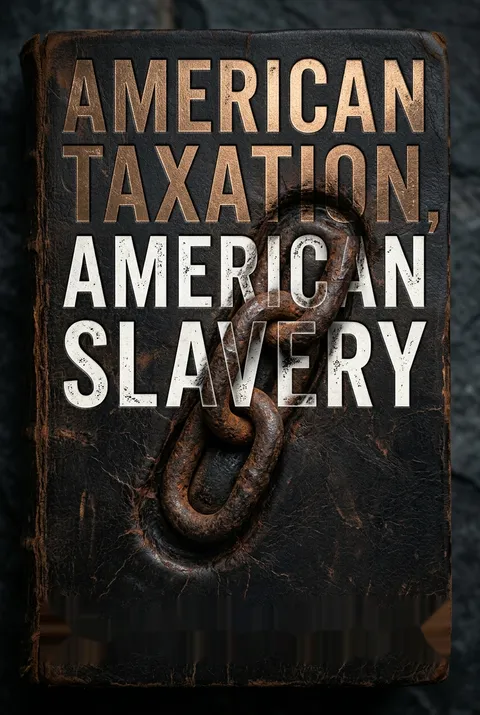
Challenging narratives. The conventional story of American taxation often begins with a tax revolt against British tyranny, leading to a small, frugal republican government. This book argues that this narrative is misleading. Instead, the fundamental structure of American taxation, particularly before the Civil War, was profoundly shaped by the institution of slavery. The pervasive mistrust of government, often celebrated as a democratic heritage, actually originated from slaveholding elites.
Slaveholder fears. These elites, accustomed to ruling their plantations as "sovereigns" over human property, viewed strong, competent, and democratic governments as direct threats to their economic and social order. They feared that majoritarian rule could lead to policies, especially taxation, that would undermine or even abolish slavery. This fear drove their political actions and rhetoric, framing government intervention as an infringement on "liberty" and "property rights"—terms that, for them, often encompassed the right to own human beings.
Undermining democracy. By embracing slaveholders as champions of liberty, American history has often promoted a cynical despair about its democratic traditions. The reality is that slavery actively undermined the development of robust democratic institutions and equitable tax systems. The nation's political struggles were not merely about class conflicts between rich and poor or merchants and farmers; they were fundamentally about the sectional geography of slavery and the constant need to accommodate slaveholding interests.
2. Colonial Tax Systems: A Tale of Two Americas
From the beginning of the colonial era, American governments were more democratic, stronger, and more competent where slavery was a marginal institution.
Northern sophistication. In colonies like Massachusetts and Pennsylvania, where slavery was rare, governments developed sophisticated tax systems. These systems relied on:
- Property valuation: Local officials, often elected, assessed the value of real and personal estates.
- Poll taxes: Levied on free adult males, but often with caps or exemptions for the very poor.
- Local autonomy: Town meetings and elected officials managed complex administrative tasks and negotiated tax burdens, fostering a tradition of democratic political engagement.
This allowed for more progressive taxation and effective public services, even when facing war costs.
Southern primitivism. In contrast, southern colonies like Virginia and South Carolina, with large enslaved populations, had primitive tax systems. Virginia, for instance, relied on:
- Poll taxes on "tithables": Levied on free men and enslaved men and women, functioning as a tax on labor power rather than wealth.
- Flat rates: Taxes on exported tobacco, liquor, and imported slaves, avoiding complex valuations.
- Administrative weakness: Local officials (often appointed elites) were prone to corruption and lacked the capacity for complex assessments.
The culture of "sovereign mastership" made property valuation intrusive and politically unfeasible, as it would require officials to inquire about the value of human property.
Revolutionary divergence. The Revolutionary War exposed these deep-seated differences. Northern states, with their established administrative capacity and democratic local institutions, could adapt their tax systems to meet wartime demands, albeit with political friction (e.g., Shays's Rebellion). Southern states, however, struggled to implement drastic reforms, often failing to assess property values effectively due to their primitive institutions and slaveholding culture.
3. The Impost: A National Tax Designed to Sidestep Slavery
The impost was the only tax Congress could adopt without talking about slavery.
The apportionment dilemma. During the Revolutionary War, the Continental Congress faced an intractable problem: how to apportion national tax burdens among the states. Any formula based on population or wealth inevitably led to contentious debates about how to count enslaved African Americans—as persons or as property—pitting northern and southern interests against each other. These discussions were fraught with moral implications and threatened the fragile unity of the nascent nation.
The impost as a solution. The proposed "impost," a flat 5% ad valorem duty on imported goods, offered a way out. Its key advantage was its automatic and opaque nature:
- No apportionment needed: Merchants paid the tax, which was then shifted to consumers through higher prices, making its ultimate incidence unclear.
- Administrative simplicity: It required only small customs establishments at ports, avoiding the need for complex national censuses or property valuations.
- Political neutrality: By obscuring who ultimately paid the tax, it allowed Congress to raise revenue without directly confronting the divisive issue of slavery.
A panacea for political peace. Despite its economic uncertainties, the impost was widely favored by delegates as a "political catholicon" because it offered a path to national finance without reigniting the explosive debates about slavery. Its defeat under the Articles of Confederation, due to individual state vetoes, highlighted the need for a stronger national government capable of enacting such a crucial, yet politically sensitive, revenue source.
4. The Three-Fifths Clause: A Tax Compromise, Not Just Representation
The real estate apportionment, as James Wilson (Pennsylvania) recalled, was “the effect of the impossibility of compromising the different ideas of the Eastern and Southern states as to the value of Slaves compared with the Whites.”
Origins in tax debates. The infamous three-fifths clause, which counted enslaved persons as three-fifths of a person for purposes of representation and direct taxation, is often understood primarily as a compromise over political power. However, its origins are deeply rooted in earlier tax debates during the Confederation era. In 1776 and 1783, when Congress tried to apportion war costs, the question of how to count slaves for taxation was fiercely contested.
Southern demands for tax breaks. Southerners argued that slaves were "wealth" but also an "incumbrance" to society, demanding lower tax quotas to compensate for their "unproductive" labor. They claimed that slaves consumed less and worked less efficiently than free laborers, justifying a reduced tax burden on slaveholding states. This argument, often cloaked in pious anti-slavery rhetoric, was a strategic maneuver to secure economic advantage.
Northern concessions. Northerners, while often pointing out the hypocrisy of these arguments (e.g., slaves were forced to underconsume, making them more profitable), ultimately conceded to the three-fifths ratio. This was a pragmatic decision to preserve the Union and secure southern ratification of the Articles of Confederation and later the Constitution. The compromise effectively meant that northern states would bear a disproportionately higher tax burden to subsidize southern slaveholding interests.
5. "Direct Taxes" Became a Constitutional Straitjacket for Federal Power
As all direct taxes must be apportioned, it is evident that the Constitution contemplated none as direct but such as could be apportioned.
An undefined limitation. The U.S. Constitution's requirement that "direct taxes" be apportioned among the states by population (using the three-fifths rule) was a significant limitation on federal power. However, the Constitution famously left the term "direct tax" undefined. This ambiguity, combined with the perverse effects of apportionment (higher tax rates in states with fewer of the taxed items), made direct taxes an impractical and politically fraught tool for the federal government.
Hylton v. U.S. (1796). The Supreme Court's first interpretation of "direct tax" in Hylton v. U.S. (1796) ruled that a tax on pleasure carriages was not a direct tax. The Court reasoned that if it were, apportionment would lead to absurdly unequal rates across states (e.g., a much higher tax per carriage in states with fewer carriages). This ruling effectively narrowed the scope of "direct taxes" to primarily land and poll taxes, reinforcing the federal government's reliance on tariffs.
Blocking future taxation. The direct tax clauses, initially intended to preempt debates about slavery and protect slaveholding states from prohibitive taxes, later became a constitutional barrier to other forms of federal taxation. Most notably, the Supreme Court's ruling in Pollock v. Farmers' Loan and Trust Company (1895) declared a federal income tax unconstitutional because it was deemed a "direct tax" and thus subject to apportionment. This decision necessitated the Sixteenth Amendment in 1913 to allow for a federal income tax without apportionment.
6. Partisan Politics Exploited Direct Taxes to Divide and Conquer
It was a very extraordinary thing . . . that gentlemen who represented States where there were no slaves, should oppose a tax on that species of property, and that the Southern States where slavery existed, should be advocating that tax.
A new political context. The emergence of national political parties—Federalists and Republicans—in the 1790s transformed the debate over direct taxes. No longer just about state quotas or the practicality of assessment, direct taxes became a tool for partisan advantage, revealing how the apportionment rule could be manipulated to benefit specific constituencies within states.
Gallatin's strategy. Republican leader Albert Gallatin, a master of finance, advocated for a national land tax, not out of a belief in its administrative ease, but to strategically alienate northern farmers from their Federalist loyalties. He argued that such a tax would disproportionately burden northern farmers (due to higher populations and fewer artisans) while appearing to be a fair tax on wealth.
The 1798 Direct Tax. When Federalists finally levied a direct tax in 1798, they outmaneuvered the Republicans. Treasury Secretary Oliver Wolcott designed a tax on land, houses, and slaves that included:
- Progressive house tax: Targeted urban elites (often Federalists) by taxing expensive houses at higher rates.
- Flat slave tax: Appeared to make southern planters (often Republicans) pay their share.
- Residual land tax: Levied on land only after house and slave taxes, reducing the burden on small farmers.
This design aimed to mute class conflict in the South and court northern farmers, demonstrating a sophisticated understanding of the apportionment rule's within-state effects.
7. Uniformity Clauses: A Southern Shield for Slaveholder Wealth
No one species of property from which a tax may be collected . . . shall be taxed higher than any other species of property of equal value.
Constitutionalizing tax design. While northern states developed general property taxes through legislative reforms, southern states pioneered the constitutionalization of tax design through "uniformity clauses." These clauses, appearing in state constitutions from Maryland (1776) to Louisiana (1845), mandated that different forms of property be taxed at the same ad valorem rates.
Protecting slaveholders. The primary purpose of these early southern uniformity clauses was to protect slaveholding elites from discriminatory taxation by non-slaveholding majorities. As yeoman farmers gained political power and demanded more equitable representation, slaveholders feared that legislatures would impose heavy or prohibitive taxes on slaves. Uniformity clauses ensured that slaves, as a "species of property," could not be taxed at a higher rate than other property, such as the land and livestock owned by yeomen.
A political bargain. These clauses were often the result of intense political bargains during constitutional conventions. In states like Tennessee (1834) and North Carolina (1835), slaveholders conceded to broader suffrage and legislative reapportionment in exchange for constitutional guarantees that their human property would not be singled out for excessive taxation. This demonstrated a deep-seated fear of democratic majorities and a determination to safeguard the institution of slavery through constitutional means.
8. The Northwest's Misguided Pursuit of "Equality" in Taxation
Unless the people are willing to trust themselves in financial matters, they must always expect to be worsted in contests with these opponents.
Misinterpreting "uniformity." As the uniformity clause movement spread from the South to the Northwest (Ohio, Michigan, Wisconsin, etc.) in the 1840s and 1850s, its original intent was largely misunderstood. Northwestern delegates, driven by a "radical democratic spirit" and a desire for "equal taxation," adopted these clauses believing they would prevent tax exemptions for elites and ensure that "all property in the state, whatever its description, [should] be taxed alike."
Unintended consequences. These northern uniformity clauses, however, had unintended and ultimately detrimental consequences. While intended to increase the tax burden on wealthy owners of financial and corporate assets, they actually provided a constitutional shield against such progressive taxation. The clauses were interpreted by courts to mean that no "species of property" could be taxed at a higher rate than another, effectively preventing legislatures from targeting specific forms of elite wealth.
A "fossilization of laws." Richard T. Ely, a prominent Progressive Era economist, criticized these clauses as a "fossilization of laws and institutions." He argued that they reflected a naive distrust of legislative power and ultimately condemned the "vast majority of the people" to be "ruled by a small but determined minority which finds profit in governmental imperfections." The northwesterners, in their zeal for equality, inadvertently adopted a mechanism originally designed to protect slaveholders, which then served to protect their own industrial and financial elites.
9. Madison's Twisted Logic: Slaveholder Power as a Benefit to Slaves
It may be, and I think it has been suggested, that those who have themselves no interest in this species of property, are apt to sympathise with the slaves, more than may be the case with their masters; and would, therefore, be disposed, when they had the ascendancy [in the house of delegates], to protect them from laws of an oppressive character, whilst the masters, who have a common interest with the slaves, against undue taxation, which must be paid out of their labour, will be their protectors when they have the ascendancy [in the senate].
A defense of slave representation. In the 1829-30 Virginia constitutional convention, James Madison, at 78, made an astonishing argument to defend slave representation in the legislature. He claimed that granting slaveholders disproportionate political power actually benefited enslaved African Americans. His logic was that masters, having a "common interest" with their slaves against "undue taxation," would protect them from oppressive laws.
Trickle-down oppression. This was a perverse form of "trickle-down" economics. Madison implied that if slaveholders were taxed heavily, they would simply shift the burden onto their slaves by forcing them to work harder, reducing their living standards, or selling them. Therefore, low taxes on slaveholders were supposedly in the slaves' best interest. This argument completely ignored the inherent conflict of interest in slavery and the brutal reality of slave life.
Silencing dissent. Madison's sophisticated rhetoric aimed to silence western yeomen who, while not abolitionists, resented slaveholder dominance and the disproportionate tax burdens they bore. By framing slaveholder power as a form of protection for slaves, Madison deflected criticism and reinforced the idea that any challenge to the slave system, even on tax matters, was a threat to the social order and the well-being of all, including the enslaved. This demonstrated the lengths to which slaveholding elites would go to justify their power and protect their "property."
10. The Enduring Legacy of Anti-Democratic Tax Structures
Constitutional limitations are suited to protect minority rights, whether the “minorities” are the socially disadvantaged groups of today or the elites of classical political thought.
A persistent pattern. The constitutional limitations on taxation, born from the compromises and fears surrounding slavery, cast a long shadow over American public finance. The direct tax clauses in the U.S. Constitution and the uniformity clauses in state constitutions, initially designed to protect slaveholding elites, continued to serve as legal shields for other wealthy minorities well into the 20th century.
Judicial activism. Courts, particularly in the late 19th century, aggressively interpreted these clauses to strike down progressive tax reforms, such as income and inheritance taxes, and to discipline local assessors who attempted to tax corporate wealth more effectively. This judicial activism, often framed as protecting "minority rights" (meaning property rights of the wealthy), effectively stifled democratic majorities' ability to shape equitable tax policies.
The cost of distrust. The book concludes that the "fossilization" of these anti-democratic demands, rooted in slaveholders' distrust of popular majorities, ultimately undermined the capacity for democratic self-government. The mistaken belief by some northern reformers that these constitutional shackles promoted "equality" rather than protected elites highlights a critical misunderstanding of American political history. The legacy is a system where determined minorities can exploit governmental imperfections, hindering the ability of the people to collectively decide how to fund their society.
Download PDF
Download EPUB
.epub digital book format is ideal for reading ebooks on phones, tablets, and e-readers.








































