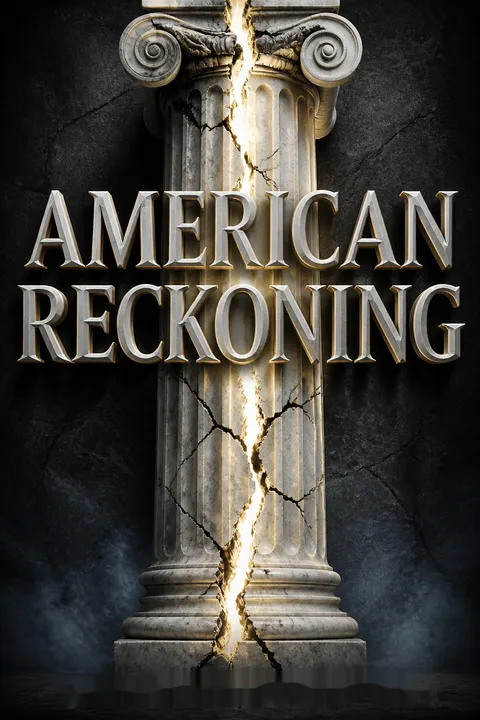

Key Takeaways
1. A Journalist's Personal Reckoning with Democracy
I’m still idealistic but it turns out I had more illusions about this country than I thought I did.
Challenged ideals. Jonathan Alter, a seasoned journalist and historian, found his lifelong faith in American democracy profoundly shaken by Donald Trump's presidency. Having grown up in a politically active family and revered the office of the president, Trump's actions forced Alter to confront his own "illusions" about the nation's commitment to decency and the rule of law. This personal "reckoning" became a central theme, intertwining with the legal reckoning Trump faced.
Loss of faith. The author's disillusionment stemmed from witnessing Trump "desecrate the presidency and other democratic institutions." He questioned the common sense and good judgment of roughly half the American people who continued to support a "convicted felon, serial liar, and malignant narcissist." This struggle to reconcile his ideals with political reality fueled his determination to bear witness and advocate for democratic accountability.
Civic duty. Despite his anxieties, Alter felt a "tugging duty to serve—to be the eyes and ears of anyone who appreciates journalism and history and still loves this infuriating country." He believed that democracy is a "muscle that needs exercise" and that institutions must be protected from criminals, regardless of political fallout. This conviction propelled him to cover Trump's trial, seeking justice in a "dangerous and dispiriting time."
2. The "Greatest Generation" vs. Trump's Contempt
When I recall the Greatest Generation nowadays, I think about Trump calling veterans and dead soldiers “losers” and “suckers.”
Sacrifice for ideals. Alter draws a stark contrast between his father, a World War II veteran, and George H.W. Bush, both members of the "Greatest Generation" who risked their lives to defend democracy. These men shared core beliefs: appeasing enemies fails, alliances matter, and America's greatness stems from its goodness. Their service was driven by an idea—the defense of freedom and constitutional principles.
Trump's disdain. This profound sense of duty and sacrifice stands in direct opposition to Trump's reported contempt for veterans and fallen soldiers, whom he allegedly called "losers" and "suckers." Such remarks, coupled with his draft deferments, highlight a fundamental divergence in values. Alter questions how anyone connected to the military could support a man who shows such disrespect for those who serve.
Moral cowardice. The author laments the moral cowardice of Republican leaders who, despite knowing better, support Trump. He contrasts this with the principled stand of figures like Liz Cheney and Mitt Romney. This failure to uphold character and conscience, especially when faced with Trump's attacks on democratic institutions, represents a betrayal of the values embodied by previous generations who fought for the nation's ideals.
3. Trump's Erosion of Democratic Norms
Trump doesn’t believe in this creed. He and J. D. Vance are classic nationalists, who believe not in the power of ideas but in the idea of power.
Assault on institutions. Trump's presidency and political career are characterized by a systematic assault on democratic norms and institutions. From calling the press "the enemy of the people"—a phrase used by dictators—to his "unAmerican election denialism," he consistently undermined the foundations of a free society. His disrespect for the Constitution and the presidency itself was a direct challenge to Alter's core assumptions about the nation.
Demagoguery and lies. Trump's reliance on Joseph Goebbels's "Big Lie" technique, incessantly pushing outlandish falsehoods, poisoned public discourse. His lies, from the birther conspiracy against Obama to claims of a "rigged" trial, aimed to confuse and numb Americans into complacency. This demagoguery, coupled with his "blood and soil, divide and conquer, might makes right" philosophy, mirrors historical despots.
Constitutional subversion. The author highlights Trump's promise to seek "retribution" against political enemies and "suspend the Constitution" if reelected. This, combined with his pardons for January 6th insurrectionists and attacks on the judiciary, reveals a clear intent to dismantle checks and balances. Alter sees this as a dangerous trajectory towards authoritarianism, where power, not ideas, is the ultimate goal.
4. The Significance of the Hush Money Trial
My aim here is to show how a tawdry trial about hush money payments to a porn star became an inspiring if provisional locus of democratic accountability—a place where, for the first time since his father died twenty-five years ago, Donald Trump was forced to sit down, shut up, and face the consequences of his actions.
A crucial turning point. Despite its "tawdry" nature, the hush money trial in Manhattan became the unexpected "locus of democratic accountability" for Donald Trump. With other, more serious federal cases delayed, this "runt of the litter" prosecution gained immense historical significance. It was the first time a former American president faced a criminal trial, forcing him to confront the legal consequences of his actions.
Accountability achieved. The trial, centered on falsifying business records to conceal a hush money payment to Stormy Daniels, transcended its salacious details. The prosecution successfully argued that Trump's actions constituted a "Trump Tower conspiracy" aimed at illegally influencing the 2016 election. This elevated the case from a mere tabloid dispute to a monumental question of whether Trump poisoned American elections.
Symbolic justice. The verdict—"Guilty" thirty-four times—was a "dramatic public moment" that provided a cathartic sense of justice. For Alter, it represented a crucial step in upholding the rule of law, demonstrating that even the most powerful individuals are not above it. This accountability, though provisional, offered a measure of hope in a dispiriting political landscape.
5. The Peril of Demagoguery and Unchecked Power
Demagoguery is dangerous. A dictator’s first move is to dehumanize.
Dehumanizing rhetoric. Trump's rhetoric, particularly his 2023 Veterans Day speech calling opponents "communists, Marxists, fascists, and the radical left thugs that live like vermin within the confines of our country," exemplifies dangerous demagoguery. Alter notes that dehumanization is a dictator's first move, and Trump's use of terms like "vermin" and "poisoning the blood" directly echoes Hitler's language.
Attacks on the justice system. Trump's consistent attacks on the judge, prosecutor, and jury as "corrupt," "crooked," and "biased" are a direct assault on the integrity of the judicial system. This strategy, aimed at delegitimizing any legal challenge against him, is a hallmark of authoritarians worldwide. He seeks to replace impartial judges with loyal "Aileen Cannon types."
The "idea of power." Alter argues that Trump and his allies, like J.D. Vance, are "classic nationalists" who believe "not in the power of ideas but in the idea of power." Their "blood and soil, divide and conquer, might makes right" philosophy is a dangerous departure from democratic principles. This pursuit of unchecked power, unconstrained by law or ethics, poses an existential threat to the American republic.
6. The Media's Evolving Role in a Fragmented World
There’s a big difference between a fact-checked 1988 Newsweek cover story and “I read it somewhere online—can’t remember where—but it must be true and it really pissed me off!”
Erosion of influence. Alter laments the fragmentation of the news business, which has "dramatically curbed the influence of people like me." In an era where readers seek news that validates their worldview and algorithms reinforce echo chambers, fact-checked journalism struggles to gain traction. This shift makes it harder to hold powerful figures accountable, as misinformation spreads unchecked.
The "enemy of the people." Trump's consistent labeling of the press as "the enemy of the people" directly attacks the Fourth Estate, a cornerstone of democracy. This rhetoric, reminiscent of totalitarian regimes, aims to delegitimize critical reporting and foster distrust in credible news sources. Alter argues that the press, protected by the Constitution, actually "represent the people."
Tabloidization of politics. The trial itself highlighted the blurred lines between journalism and sensationalism, particularly with the testimony of David Pecker from the National Enquirer. Alter views Pecker as being "in the trash business," not journalism, for his "checkbook journalism" and "catch and kill" schemes. This normalization of making up stories to influence elections represents a dangerous innovation in American politics, far beyond traditional "oppo research."
7. The Character Test of Presidential Leadership
What is the motive for a president’s struggle to win and wield power? Trump’s fight is entirely about himself—his battle to stay out of jail, bolster his ego and political position by mobilizing resentments against “the other.”
Temperament as a separator. Drawing on Richard Neustadt's observation that "temperament is the great separator" in presidential leadership, Alter contrasts Trump with past presidents. While figures like FDR and Biden possessed "first class temperament" despite varying intellects, Trump's "exclusively transactional and self-interested" nature breaks this mold entirely. His motivation is purely personal: to avoid jail, boost his ego, and consolidate power.
Decency and judgment. Alter reflects on presidents like Jimmy Carter, who, despite a "prickly personality," possessed "decency, good judgment, and... much-maligned attention to detail." These qualities, along with the "coolest-kid-in-school magnetism" of Obama or Clinton's "superior political intelligence," represent a stark contrast to Trump's lack of interest in policy and his "temperamentally unfit" character. The author argues that character is paramount for the highest office.
Self-serving leadership. Trump's actions, such as his alleged willingness to "ditch" Melania for a "hot new wife number four" if he lost the election, reveal a profound self-absorption. This transactional approach extends to his political relationships, where loyalty is demanded but rarely reciprocated. Alter concludes that Trump's leadership is driven solely by personal gain, making him a unique and dangerous figure in American presidential history.
8. The Black Swan Events of 2024
Both Donald Trump’s felony conviction and Joe Biden’s late withdrawal in favor of a dynamic Kamala Harris will be seen as Black Swans if Harris goes on to win the election.
Unforeseen shifts. The year 2024 witnessed two "Black Swan" events—highly improbable, impactful, and retrospectively predictable occurrences—that reshaped the political landscape. Trump's felony conviction, the first for an American president, and Joe Biden's unexpected withdrawal from the presidential race, paving the way for Kamala Harris, created a summer of unprecedented political upheaval. These events, if Harris wins, will be seen as pivotal.
Biden's withdrawal. Biden's "fiasco" at the June CNN debate, where his age and performance raised widespread alarm, triggered an intense, behind-the-scenes effort by Democratic leaders, notably Nancy Pelosi, to convince him to step aside. Despite his initial denial and desire to run, the mounting pressure from polls, party leaders, and even a COVID-19 diagnosis ultimately led him to withdraw, passing the torch to Harris. This "gentle cajoling" and "hard push" was a brutal but necessary act for the party.
Harris's rebirth. Kamala Harris experienced a political "rebirth," transforming from a "maligned vice president to thrilling presidential candidate overnight." Her "impressive speed" in uniting the Democratic Party and her "We're not going back" message offered a compelling vision for the future. These dramatic shifts, from Trump's legal downfall to the Democratic Party's generational change, represent a potential "stabilization" for American politics, or, if Trump wins, a further descent into chaos.
9. The Supreme Court's Role in Empowering the Executive
With fear for our democracy, I dissent.
Judicial power grab. Alter expresses deep concern over the "poisonous majority opinions" of Trump's Supreme Court, particularly two decisions issued in the summer of 2024. The reversal of the Chevron case (Loper Bright Enterprises v. Raimondo) is seen as an "astonishing judicial power grab," unraveling the administrative state and shifting regulatory authority from experts to judges. This decision has far-reaching consequences for health, safety, and corporate power.
Presidential immunity. The "disastrous" Supreme Court decision in the Trump immunity case, which delayed Jack Smith's coup trial and complicated the hush money case, is a major blow to accountability. Justice Sonia Sotomayor's powerful dissent, warning that a president could "assassinate a political rival? Immune. Organizes a military coup to hold onto power? Immune. Takes a bribe in exchange for a pardon? Immune. Immune, immune, immune," highlights the profound threat to democracy.
Undermining the Constitution. Alter criticizes the "originalist" justices for ignoring Alexander Hamilton's Federalist No. 69, which stated that presidents would be "liable to prosecution and punishment in the ordinary course of law" after leaving office. This judicial overreach, granting near-monarchical powers to the executive, creates a dangerous precedent where a president could act with impunity, effectively placing them above the law.
10. Project 2025: A Blueprint for Authoritarianism
In Trump, Vance, and Vought’s government, all power would be centered in the Oval Office and the person of the president.
Authoritarian vision. Alter highlights Project 2025, a Heritage Foundation report, as Trump's "blueprint for a second term," which Kamala Harris effectively used against him. This plan, driven by figures like J.D. Vance and Christian nationalist Russell Vought, envisions a "radical constitutionalism" where all power is centralized in the Oval Office. Trump's own words—"I have an Article II [of the Constitution], where I have the right to do whatever I want as president"—underscore this authoritarian ambition.
Dismantling the state. The project outlines plans to:
- Wreck the FBI and revive it as Trump's personal fiefdom.
- Smash the "deep state" by replacing career civil servants with political loyalists.
- Sabotage NATO and allow Russia to conquer Ukraine.
- Militarize American society through mass deportations of 15-20 million immigrants.
Stoking violence. Trump's rhetoric, including blaming liberals for his near-assassination and calling January 6th insurrectionists "hostages," consistently stokes violence and division. His history of sanctioning violence against opponents and making light of attacks on political figures demonstrates a dangerous disregard for civil order. This pattern, combined with Project 2025, paints a chilling picture of a potential second term.
11. The Enduring Necessity of Accountability
The question is whether we’re comfortable doing nothing when we have evidence that a former president of the United States broke the law.
Beyond political optics. Alter challenges the notion that prosecuting a politician is inherently "political" or that the "repercussions" might be worse than inaction. He argues that the fundamental question is whether society is "comfortable doing nothing" when a former president has broken the law. Upholding the rule of law, even for seemingly minor offenses, is essential for deterring corruption and maintaining democratic integrity.
A pattern of criminality. Trump's felony conviction, while significant, is presented as merely the first time he was "caught" in a long history of offenses. Alter recaps a litany of past transgressions:
- Illegal discrimination against Black renters.
- Collusion with mob-affiliated unions.
- Massive tax fraud schemes.
- Collusion with foreign powers in elections.
- Accusations of sexual abuse and improprieties.
- Shutting down his "foundation," "university," and business as frauds.
The path forward. The author emphasizes that even if Trump is reelected and federal cases disappear, state-level convictions like New York's will remain. This ongoing legal accountability, coupled with the democratic process, is the "old-fashioned Athenian way" to address threats to democracy. Alter's hope lies in a return to norms where presidents do not need immunity because they do not break the law, ensuring that "policy that remains—programs and ideas with the potential to be harmful or transformational."
Review Summary
American Reckoning by Jonathan Alter receives mixed reviews (3.8/5 stars). Most readers praise Alter's firsthand courtroom account of Trump's criminal trial, appreciating the behind-the-scenes details and vivid storytelling since cameras were banned. Many found the memoir elements and political insights compelling, though some felt Alter made himself too central to the story. Critics note his clear liberal bias and dated references. Several reviewers valued the book as an important historical document, while Trump supporters dismissed it as partisan. The book covers events through Kamala Harris's nomination.
People Also Read


Download PDF
Download EPUB
.epub digital book format is ideal for reading ebooks on phones, tablets, and e-readers.








































