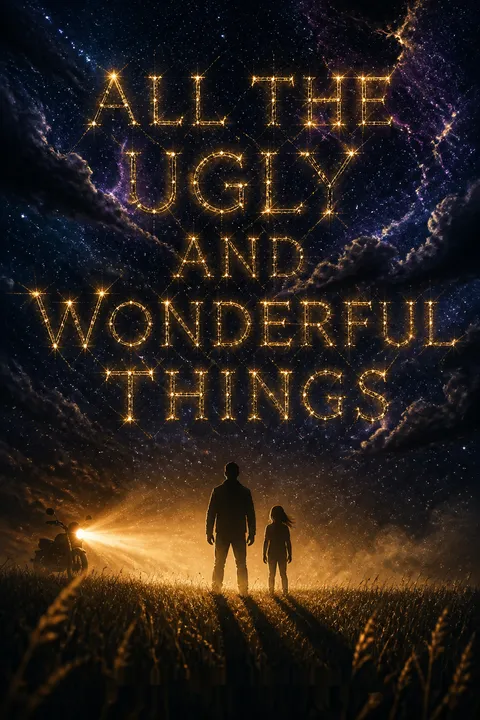

Plot Summary
Born Under Broken Stars
Wavy Quinn enters the world in the backseat of a stranger's car, the daughter of drug-addicted, homeless parents. Her earliest years are marked by instability, neglect, and trauma, setting the stage for a life where trust is rare and love is complicated. Passed between relatives and foster care, Wavy's silence and odd behaviors—her refusal to eat, her obsession with cleanliness, her need for control—are misunderstood by the adults around her. She is a child shaped by the absence of safety, learning to navigate a world that is both dangerous and indifferent, her only comfort found in the stars she names each night, searching for order in the chaos.
Unraveling in Silence
Wavy's silence is her shield, a way to survive in a world that constantly threatens her. Living with her grandmother after her parents' arrests, she is seen as strange, possibly damaged, by those who try to help her. Her refusal to speak, eat, or be touched is met with suspicion and frustration, but beneath her oddness is a fierce intelligence and a desperate need for control. She finds solace in small rituals—naming constellations, collecting treasures, unraveling dresses—while the adults around her argue about what's best for her. Wavy's silence is not emptiness, but a language of survival, a way to keep herself safe when words and touch have always brought pain.
The Giant in the Meadow
When Jesse Joe Kellen—Kellen, a gentle giant and ex-con—crashes his motorcycle near Wavy's home, their lives intersect in a moment of need. Wavy, only eight, helps the injured Kellen, and a bond forms between them, rooted in mutual recognition of pain and difference. Kellen, used to being dismissed for his size and past, sees Wavy's intelligence and resilience. Wavy, used to being invisible, finds in Kellen someone who leaves space for her to exist as she is. Their connection is immediate, wordless, and profound, setting in motion a relationship that will challenge every boundary and expectation around them.
Strange Family, Stranger Love
As Wavy's mother, Val, cycles through addiction and instability, Kellen becomes a fixture in Wavy's life, helping her care for her baby brother Donal and maintain a semblance of order in their chaotic home. Their relationship, though innocent at first, is marked by a deep emotional intimacy that others find unsettling. Kellen is the only adult who respects Wavy's boundaries, who listens without judgment, and who helps her feel safe. Together, they create a fragile family, finding moments of joy and normalcy amid neglect and violence. Their love, unconventional and misunderstood, becomes both their refuge and their greatest risk.
Learning to Survive
Wavy learns to survive not just through silence, but through action—stealing food, caring for Donal, and managing the household when her mother is incapacitated. Kellen supports her, teaching her practical skills and offering steady, nonjudgmental presence. School is both a challenge and a respite, with teachers unsure how to reach her. The outside world remains suspicious of Kellen's role in Wavy's life, but for her, he is the only constant. Their bond deepens, blurring the lines between protector and companion, as Wavy grows into adolescence, her need for love and safety ever more acute.
The Unlikely Protector
Kellen's presence in Wavy's life is both salvation and scandal. He shields her from her parents' chaos, helps her navigate school, and gives her the tools to care for herself and Donal. Their relationship, though chaste, is intimate—built on trust, shared secrets, and small acts of kindness. As Wavy matures, the nature of their bond shifts, drawing scrutiny from neighbors, teachers, and social workers. Kellen, aware of the risks, tries to maintain boundaries, but the world's suspicion grows. For Wavy, Kellen is the only person who sees her, who loves her without trying to change her, and she clings to him as her world unravels.
Love in the Shadows
As Wavy enters her teens, her feelings for Kellen intensify, and their relationship becomes the subject of gossip and concern. The line between protector and lover blurs, especially in the eyes of outsiders. Wavy, desperate for connection, initiates physical intimacy, while Kellen struggles with guilt and fear of crossing boundaries. Their love, genuine and mutual, is shadowed by the world's judgment and the threat of intervention. When tragedy strikes—her mother's death, her family's disintegration—Wavy and Kellen's bond is both their solace and their undoing, forcing them to confront the consequences of a love that defies convention.
The World Against Them
The discovery of Wavy and Kellen's relationship leads to scandal, legal action, and separation. Kellen is arrested and imprisoned for statutory rape, despite Wavy's insistence that their love was consensual and sustaining. Wavy is sent to live with her aunt, stripped of agency and voice, her letters to Kellen returned unopened. The world's judgment is swift and unforgiving, painting Kellen as a predator and Wavy as a victim, erasing the complexity of their bond. Both are forced into exile—Kellen behind bars, Wavy in a home where she is watched and controlled, her pain and longing dismissed as delusion.
Shattered and Scattered
Separated from Kellen and Donal, Wavy endures years of isolation and longing. Her aunt's well-meaning but misguided attempts to "save" her only deepen her sense of alienation. Wavy survives by retreating into herself, excelling academically but remaining emotionally distant. She writes letters to Kellen and Donal, most of which go unanswered. The world moves on, but Wavy remains tethered to the past, her love for Kellen undiminished by time or distance. The pain of loss is constant, but so is her determination to endure, to hold on to the memory of love in a world that insists it was only harm.
The Price of Secrets
As Wavy comes of age, the secrets of her family's past unravel. The truth about her parents' deaths, Donal's paternity, and the circumstances of Kellen's conviction come to light, forcing Wavy and those around her to confront the cost of silence and shame. Wavy's struggle to reclaim her story—to be seen as more than a victim, to assert her love for Kellen as real and valid—brings her into conflict with her aunt, the legal system, and her own fears. The price of secrets is high, but Wavy refuses to let others define her life or her love.
Exile and Endurance
While Kellen serves his sentence, Wavy builds a life in exile—attending college, forming tentative friendships, and searching for Donal. Her love for Kellen remains a quiet constant, shaping her choices and sustaining her through loneliness. Letters never sent, dreams deferred, and the ache of absence define these years. Both Wavy and Kellen endure, changed by suffering but not destroyed. The world insists on their separation, but hope persists, a stubborn ember that refuses to die.
Letters Never Sent
Wavy pours her longing and love into letters to Kellen, most of which are returned unopened. She writes to lawyers, judges, and anyone who might help her reunite with him. The act of writing becomes both a lifeline and a torment, a way to keep hope alive in the face of relentless rejection. Each letter is a testament to her refusal to forget, to let go, or to accept the world's version of her story. The years pass, marked by unanswered words and the slow, grinding work of survival.
The Long Wait
Kellen is released on parole, but the conditions of his freedom forbid any contact with Wavy. Both struggle with the pain of proximity without reunion, haunted by the possibility that time and distance have changed them irreparably. Wavy, now an adult, fights to have the no-contact order lifted, navigating the legal system with determination and ingenuity. Their love, tested by years of separation and the weight of the past, endures in memory and longing, each waiting for the moment when they can finally be together.
Reunion and Reckoning
When Wavy and Kellen finally reunite, the moment is fraught with joy, pain, and the scars of all they have endured. Their first night together is both a consummation and a reckoning, as they confront the realities of their past and the challenges of building a future. The world's judgment lingers, and the law still threatens to tear them apart. Yet, in each other's arms, they find a measure of healing, a sense of home that has eluded them for so long. Their love, battered but unbroken, is both a defiance and a promise.
The Cost of Freedom
Wavy's fight to have the no-contact order lifted brings her face-to-face with the legal system's indifference and the lingering suspicion of those around her. She must prove that her love for Kellen is not a symptom of trauma, but a choice—one she makes freely and fiercely. The cost of freedom is high: the risk of losing Kellen again, the pain of confronting her family, and the challenge of forging a life together in a world that still sees them as aberrant. Yet, Wavy persists, determined to claim her own story and her own happiness.
The Law and the Heart
Wavy's meeting with the judge who sentenced Kellen is a battle of wills, a confrontation between the law's cold logic and the messy, persistent reality of love. Wavy refuses to be seen as a victim, insisting on her right to choose, to forgive, and to love. The judge, moved by Wavy's determination and humanity, finally relents, lifting the order that has kept them apart. The law, for once, bends to the heart, and Wavy and Kellen are free to build a life together—not as fugitives or outcasts, but as partners.
Coming Home
Wavy and Kellen return to the world, not as the broken people they once were, but as survivors who have claimed their right to love and be loved. They reunite with Donal, now a troubled teenager, and begin the work of healing old wounds and building new bonds. Their family, unconventional and scarred, is nonetheless real—a testament to the power of love to endure, to forgive, and to create beauty from pain. In the face of lingering suspicion and the ghosts of the past, they choose each other, again and again.
All the Ugly, All the Wonderful
In the end, Wavy and Kellen's story is not one of simple triumph or tragedy, but of survival, resilience, and the messy, complicated beauty of love. They have endured the world's judgment, the violence of their origins, and the pain of separation, emerging not unscathed, but unbroken. Their love, forged in darkness, is both ugly and wonderful—a reminder that life is rarely simple, and that the most beautiful things are often born from the most difficult circumstances. Together, they choose to embrace all of it: the ugly, the wonderful, and everything in between.
Analysis
All the Ugly and Wonderful Things is a provocative, deeply unsettling exploration of love, trauma, and survival at the margins of society. Bryn Greenwood's novel refuses easy answers, instead immersing the reader in the messy, contradictory realities of its characters' lives. At its core, the book is about the search for safety and belonging in a world that is often indifferent or hostile. Wavy's journey—from a silent, traumatized child to a woman who claims her right to love and be loved—is both harrowing and inspiring, a testament to the resilience of the human spirit. The novel challenges readers to question their assumptions about agency, consent, and the nature of love, especially when it defies social norms. It asks: Who gets to decide what is ugly and what is wonderful? Through its fragmented narrative, shifting perspectives, and refusal to flinch from pain or beauty, the book insists that life is always both—that the most beautiful things are often born from the ugliest circumstances, and that survival itself is an act of defiance and grace. In the end, Greenwood offers no easy redemption, but she does offer hope: that love, however imperfect, can be a force for healing, and that even the most broken people can find their way home.
Review Summary
All the Ugly and Wonderful Things by Bryn Greenwood receives deeply polarized reviews on Goodreads, averaging 3.98 stars. The novel tells the controversial story of Wavy, a neglected eight-year-old daughter of meth dealers, who forms a bond with Kellen, a tattooed ex-con in his twenties. Their relationship evolves over fifteen years into a romantic one when she's a teenager. Five-star reviewers praise the skillful writing, emotional depth, and compelling storytelling that challenges readers' moral boundaries. One-star reviewers condemn the book for romanticizing pedophilia and inappropriate relationships between adults and minors, finding it disturbing regardless of writing quality.
People Also Read







Characters
Wavy Quinn
Wavy is the heart of the novel—a girl born into chaos, marked by trauma, and misunderstood by nearly everyone around her. Her silence, odd rituals, and refusal to be touched are not symptoms of pathology, but strategies for survival in a world that has always been unsafe. Wavy's intelligence and sensitivity set her apart, but also isolate her, making her an object of suspicion and concern. Her relationship with Kellen is both her salvation and her greatest risk, offering her the love and safety she has never known, but also exposing her to judgment and loss. Over the course of the story, Wavy grows from a wounded child into a determined, self-possessed woman, fighting for her right to define her own life and love.
Jesse Joe Kellen
Kellen is a man shaped by hardship—abuse, poverty, and a criminal past—but defined by his kindness and loyalty. Dismissed by most as a brute or a loser, he finds purpose and redemption in caring for Wavy and Donal. His relationship with Wavy is complicated by the world's suspicion and his own sense of guilt, but his love for her is unwavering. Kellen is both protector and outcast, struggling to do right in a world that sees him as irredeemable. His journey is one of self-forgiveness, as he learns to accept love and to fight for a future he never believed he deserved.
Val Quinn
Val is Wavy's mother, a woman undone by addiction, mental illness, and her own history of trauma. Her love for Wavy is real but inconsistent, often overwhelmed by her need for control and her fear of contamination. Val's rules—about cleanliness, food, and touch—shape Wavy's world, teaching her both caution and resilience. Val's death is both a tragedy and a release, forcing Wavy to confront the legacy of pain and survival she has inherited.
Donal Quinn
Donal is Wavy's younger brother, a child caught in the crossfire of his family's dysfunction. Cared for by Wavy and Kellen, he is both a source of joy and a reminder of all that is at stake. Donal's own journey is marked by loss, displacement, and the struggle to find belonging. His eventual reunion with Wavy and Kellen is a testament to the enduring bonds of chosen family, even in the face of overwhelming adversity.
Brenda Newling
Brenda is Wavy's aunt, a woman who tries to do right by her niece and nephew, but is limited by her own fears and the expectations of society. Her attempts to "save" Wavy often result in further alienation, as she fails to see the complexity of Wavy's needs and the reality of her love for Kellen. Brenda's journey is one of gradual understanding and reluctant acceptance, as she learns to let go of control and trust Wavy to make her own choices.
Liam Quinn
Liam is Wavy's father, a drug dealer and addict whose presence is more threat than comfort. His violence, neglect, and criminality shape the landscape of Wavy's childhood, teaching her to be wary of men and to rely on herself. Liam's death is both a mystery and a turning point, forcing the family's secrets into the open and setting the stage for Wavy's fight for autonomy.
Amy Newling
Amy is Wavy's cousin, a girl from a more stable, conventional background. She is both fascinated and unsettled by Wavy's strangeness, but ultimately becomes one of her few true allies. Amy's perspective offers a window into the ways Wavy is perceived by the outside world, and her loyalty is a quiet but important source of support.
Butch
Butch is one of Liam's associates, a man who sees more than he lets on. He is both complicit in the family's criminal activities and a reluctant protector, offering insight into the world that has shaped Wavy and Kellen. Butch's perspective highlights the moral ambiguity of the novel, as he navigates loyalty, guilt, and survival.
Renee
Renee is Wavy's college roommate, a talkative, outgoing woman who becomes both friend and confidante. Her perspective offers a contrast to Wavy's silence and reserve, and her support is instrumental in helping Wavy navigate adulthood and the legal system. Renee's own struggles with love and self-worth mirror Wavy's in unexpected ways, underscoring the universality of longing and loss.
Judge Maber
Judge Maber is the legal authority who holds the power to keep Wavy and Kellen apart. Her perspective is shaped by years of seeing women return to abusive men, and she is initially unmoved by Wavy's pleas. However, Wavy's determination and humanity force the judge to reconsider her assumptions, ultimately leading to a rare moment of compassion and understanding.
Plot Devices
Multiple Perspectives and Fragmented Narrative
The novel employs a shifting, multi-perspective narrative, allowing the story to unfold through the eyes of Wavy, Kellen, Amy, Brenda, and others. This structure mirrors the fragmented, chaotic nature of Wavy's life, and underscores the subjectivity of truth. Each character brings their own biases, fears, and hopes to the story, complicating the reader's understanding of events and relationships. The use of short, episodic chapters and time jumps creates a sense of dislocation, echoing Wavy's experience of the world. This narrative device also allows for moments of dramatic irony, as the reader is often privy to information that the characters themselves lack.
Symbolism of Stars and Silence
Stars and constellations are recurring symbols throughout the novel, representing Wavy's search for order and meaning in a chaotic world. Naming the stars is both a comfort and a way to assert control, a private language that connects her to Kellen and to the possibility of something larger than herself. Silence, too, is a powerful motif—at once a shield, a weapon, and a form of communication. Wavy's refusal to speak is not a deficit, but a strategy, a way to protect herself and to assert agency in a world that constantly tries to define her.
Taboo Love and Societal Judgment
The central relationship between Wavy and Kellen is both the novel's greatest risk and its most powerful engine. Their love, taboo because of age and circumstance, is depicted with nuance and complexity, challenging the reader to question easy assumptions about victimhood, agency, and consent. The world's judgment—embodied in the law, in family, in the gaze of neighbors and teachers—is a constant threat, shaping the characters' choices and the trajectory of their lives. The novel uses this tension to explore the limits of empathy, the dangers of moral certainty, and the possibility of redemption.
Letters, Legal Documents, and Unsent Words
Letters—sent, unsent, returned—are a key plot device, serving as both lifelines and barriers. Wavy's letters to Kellen, most of which are never read, are acts of hope and resistance, a way to keep love alive in the face of silence and separation. Legal documents—court orders, depositions, parole conditions—are both weapons and obstacles, shaping the characters' fates in ways that are often arbitrary and cruel. The act of writing, whether in letters or legal forms, becomes a way for Wavy to assert agency, to tell her own story, and to fight for her right to love and be loved.
Foreshadowing and Circularity
The novel is rich with foreshadowing—early scenes of violence, neglect, and survival echo throughout the story, shaping the characters' choices and the unfolding of events. The circular structure—beginning and ending with Wavy's search for home and belonging—underscores the persistence of trauma, but also the possibility of healing. The return to the farmhouse, the reunion with Donal, and the final embrace between Wavy and Kellen all serve to close the circle, offering a measure of closure without denying the scars of the past.
About the Author

Download PDF
Download EPUB
.epub digital book format is ideal for reading ebooks on phones, tablets, and e-readers.








































