
Key Takeaways
1. Housing Crisis: A Disaster Born of Inequality
If people hoarded food on the basis that its value was sure to go up when others began to starve and would pay anything, we would stop their hoarding. But hoarding is now happening with shelter in the most unequal and affluent parts of the world.
Fundamental problem. The UK's housing crisis isn't a simple supply-and-demand issue, but a direct consequence of extreme and growing economic inequality. Housing has been transformed from a basic human need into a speculative asset, allowing a wealthy minority to hoard property and profit from others' desperation. This mirrors historical periods of high inequality, like the 1920s, where financiers' pay soared.
Wealth concentration. Housing equity represents an astonishing 61% or more of the UK's national wealth, estimated at £4-5.5 trillion. This over-reliance on housing for financial security makes the market incredibly volatile and susceptible to manipulation. The richest 1% in the UK are taking an ever-increasing share of national income, last seen over seventy years ago, fueling this speculative environment.
Disaster capitalism. This phenomenon, where profit is extracted from crisis, defines our times. Banks and large landlords make huge profits from housing insecurity, often with taxpayer-backed guarantees. This system, where profits are privatized and risks nationalized, prevents a necessary readjustment of housing values and exacerbates the divide between the securely housed and the growing "precariat."
2. The Myth of Scarcity: We Have Enough Homes, Just Poorly Shared
Ultimately it is about the need to control greed. Housing has been transformed into a very badly regulated market, and this lack of regulation inevitably allows some to take advantage.
Abundance of space. Contrary to popular belief, Britain has more homes and more rooms per person than ever before. The 2011 census revealed 66 million bedrooms for 55 million people in England and Wales, meaning at least a third of bedrooms are empty nightly. This surplus is largely due to:
- Extensions and loft conversions in existing properties.
- Smaller households occupying larger homes.
- Second and holiday homes.
Inefficient distribution. The real problem is not an absolute shortage, but a grossly inefficient and unequal distribution of housing space. Since 1981, housing inequality has risen dramatically, with the wealthiest 10% of households now having access to over five times as many rooms per person as the poorest 10%. This exacerbates overcrowding for some while others have vast unused space.
Hoarding for profit. Landlords and wealthy individuals hoard properties, often leaving them vacant or under-occupied, waiting for values to rise. This speculative behavior, unchecked by adequate taxation or regulation, artificially inflates prices and rents. The government's decision to extend the period for which properties can remain empty before local authorities can intervene (from six months to two years) further encourages this hoarding.
3. Government Fuels Greed: Policies That Harm the Majority
The coalition government says it is up to lenders to ensure that such transgressions do not take place, but it gave them little time to prepare. Then, at the end of September 2013, the Prime Minister brought forward the start date of ‘help-to-buy’ to the first week of October.
Perverse incentives. Government policies, rather than alleviating the crisis, actively encourage speculation and benefit the wealthy. The "help-to-buy" scheme, a massive £12 billion taxpayer-backed guarantee for mortgages, aims to prop up house prices, not make them affordable. This scheme encourages buyers to take on huge risks, as the government covers up to 20% of potential bank losses.
Subsidizing landlords. The state also heavily subsidizes private landlords through the housing benefit bill, which soared to £35 billion by 2012-14. This money, paid directly to landlords, keeps rents artificially high. Additionally, £10 billion in loan guarantees has been offered to private landlords building new rental properties, effectively nationalizing their risks while privatizing their profits.
Deregulation's impact. The repeal of rent controls in the late 1980s and the deregulation of the financial sector ("Big Bang" in 1986) paved the way for unchecked greed. This created a market where landlords can profit excessively, and banks can lend recklessly, leading to cycles of boom and bust. The government's reluctance to reintroduce effective regulation stems from powerful lobbying by financial interests.
4. "Generation Rent": A Deliberate Shift to Insecurity
The stark drop in younger people owning a home presents a long-term challenge for all political parties but especially the Conservatives. Research shows that private renters and people living in social housing are less likely to vote Tory.
Forced renting. Projections indicate that 1.5 million more young people will be forced into private renting by 2020 due to a lack of social housing and unaffordable mortgages. This growing "Generation Rent" faces precarious short-hold tenancies, rising rents, and little protection, making it difficult to settle down or plan for the future.
Social housing decline. Social housing, once a stable option, is shrinking and becoming increasingly stigmatized. Policies like the "Bedroom Tax" (a reduction in housing benefit for those deemed to have "spare" rooms) disproportionately affect disabled people and families, forcing them into smaller, often non-existent, properties or deeper poverty. This pushes social housing towards becoming a temporary, dormitory-style provision for the most vulnerable.
Profiteering from need. Private insurers and investment firms are actively buying up properties to become landlords, seeing "Generation Rent" as a lucrative market. This shift is not accidental; it's a managed process where the state encourages private entities to take over housing provision, often at the expense of tenant security and affordability.
5. London's Bubble: A Microcosm of National Madness
Every city has its rich and poor areas, but London can combine extremes of both in the same streets. When property prices are high enough, only two groups can afford to move in: the rich, and migrants who are prepared to cram several people into each room.
Extreme polarization. London exemplifies the housing crisis, with property values spiraling out of control. Average property prices reached £398,000 by early 2013, with luxury homes selling for hundreds of millions. This creates a profound social and spatial segregation, pushing poorer residents out of the city or into slum-like conditions, including illegal "beds in sheds."
Foreign investment and tax loopholes. London's property boom is heavily fueled by international, super-rich buyers who often benefit from tax breaks like "non-dom" status and offshore company structures to avoid stamp duty, capital gains, and inheritance taxes. This makes London a "safe haven" for global wealth, but a deeply unaffordable city for its working residents.
Social cleansing. Government policies, such as the housing benefit cap, are effectively driving low-income families out of London boroughs, leading to "Kosovo-style social cleansing." This enforced relocation to distant, cheaper towns breaks up communities and exacerbates existing inequalities, transforming London into an exclusive playground for the wealthy.
6. The Devastating Human Toll: Health, Debt, and Despair
When our housing feels insecure, we feel insecure. That insecurity can range from feeling a little bit less wealthy, as at some point in the near future the value of your Notting Hill townhouse (once subdivided into flats) falls, to despairing about being forcibly relocated away from where you grew up because there is apparently no longer any space for you in Newham.
Erosion of well-being. Housing insecurity profoundly impacts mental and physical health. Studies in the US show that rising foreclosures lead to increased urgent hospital visits, even for those not directly affected. In the UK, rising mortality rates among the elderly and increased suicides in Spain are linked to financial and housing stress.
Debt trap. Many Britons are caught in a debt spiral, with nearly a million using payday loans to cover rent or mortgages by 2012. Mortgage arrears rose significantly after 2008, and while low interest rates temporarily masked the problem, the underlying debt mountain remains. This precariousness is a direct legacy of Thatcher-era deindustrialization and financial deregulation.
Homelessness surge. Homelessness is rapidly increasing, with one British family with children becoming homeless every fifteen minutes. The Localism Act of 2011 removed councils' legal obligation to provide secure social housing, pushing homeless families into short-term, often unsuitable, private lets. This creates a visible and growing social problem, with children disproportionately affected.
7. Lessons from Abroad: How Other Nations Manage Housing Better
In more equitable affluent countries the well-off have a smaller share of national wealth, but they tend to do better than their richer counterparts in more inequitable countries in terms of their mental health; they also receive other, less immediate benefits from living in a much more social environment.
European models. Countries like Germany, Japan, the Netherlands, Austria, and the Nordic nations offer models of more equitable and stable housing systems. They feature:
- Stricter rent controls and rent ceilings.
- Longer, more secure tenancy agreements (e.g., indefinite leases in Sweden).
- Lower income inequality, reducing the pressure on housing prices.
- Less reliance on housing as a primary source of wealth accumulation.
Crisis responses. Even countries hit hard by the 2008 crash, like Ireland and Iceland, have explored or implemented more progressive solutions. Iceland allowed its major banks to fail and provided debt relief to households. Ireland considered massive mortgage write-downs, though this was later reversed by international creditors. These examples show that alternatives to unchecked market forces exist.
The "Right-to-Stay". Greece introduced a law allowing mortgage-holders with negative equity to remain in their primary residence as tenants, with banks absorbing losses. This "right-to-stay" concept, a counterbalance to "right-to-buy," offers a path to security for those facing foreclosure, preventing mass evictions and the social decay that follows.
8. Reclaiming Our Homes: A Call for Collective Action
All that is solid melts into air, all that is holy is profaned, and man is at last compelled to face with sober senses, his real conditions of life, and his relations with his kind.
Beyond individual aspiration. The current housing crisis demands collective action, not just individual striving. The belief that personal wealth accumulation through property benefits all is a dangerous myth. When a few hoard wealth and housing, it creates widespread insecurity and makes housing unaffordable for the majority.
Policy proposals: A multi-faceted approach is needed to transform housing into a social good:
- Progressive taxation: Replace council tax with a national land and property value tax, extending bands to cover high-value properties and discouraging hoarding.
- Tenant rights: Reintroduce rent controls, using Local Housing Allowances as maximum fair rents, and extend tenancy security.
- Housing access: Criminalize illegal landlord actions, make squatting a civil offense, and implement compulsory purchase of persistently empty properties.
- Balanced development: Prioritize renovation of existing stock, build new homes where genuinely needed, and shift economic activity away from overheated regions.
A new consensus. The public overwhelmingly believes the government has a responsibility to provide decent housing. This widespread sentiment, coupled with the growing realization that the current economic model no longer works for most, creates an opportunity for change. We must resist the temptation to applaud those who blindly pursue wealth and instead demand policies that prioritize shelter, community, and environmental sustainability over profit.
Review Summary
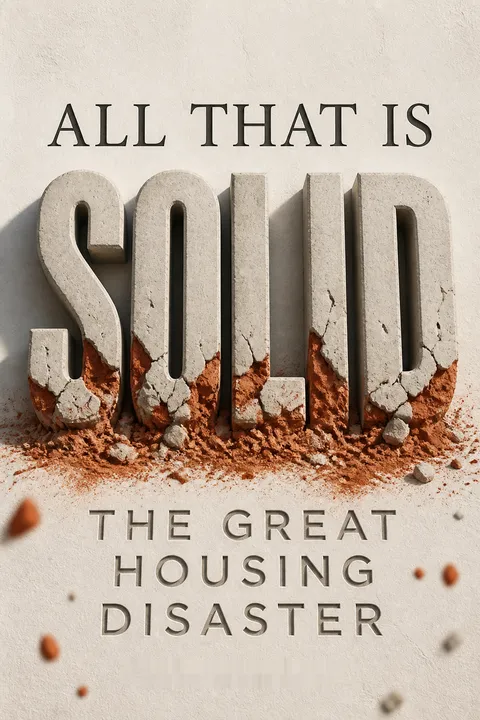
All That Is Solid by Danny Dorling examines the UK housing crisis, arguing the problem stems from unequal distribution rather than housing shortage. Reviews praise its comprehensive research and policy recommendations, including rent control, council tax reform, and land value taxation. However, many criticize the book's repetitive structure, excessive statistics, and rambling presentation. While readers appreciate Dorling's exposure of inequality and challenges to the "under-supply myth," some question his evidence quality and find the moral arguments about greed less persuasive than structural economic analysis.
People Also Read



About the Author
Other books by Danny Dorling


Download PDF
Download EPUB
.epub digital book format is ideal for reading ebooks on phones, tablets, and e-readers.








































