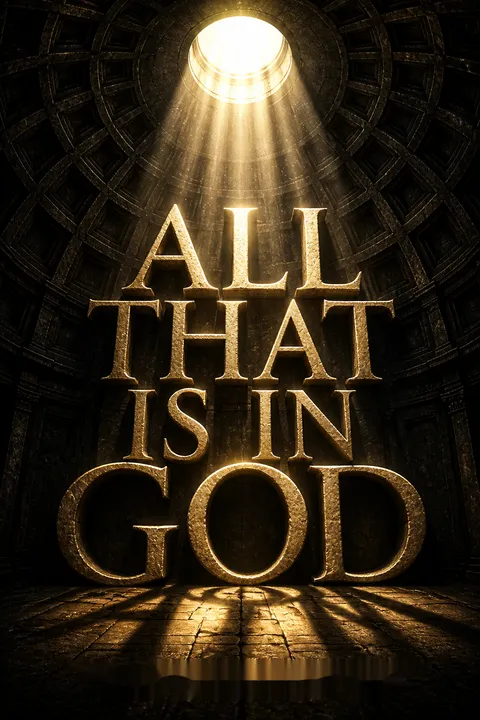

Key Takeaways
1. Two Models of God: Classical Theism vs. Theistic Mutualism
"All That Is in God: Evangelical Theology and the Challenge of Classical Christian Theism offers an exceptionally clear, concise, and compelling presentation of what, until recently, catholic Christians have believed and confessed regarding the being and perfection of the triune God."
A Fundamental Divide. Contemporary evangelical Christianity is grappling with two fundamentally different understandings of God: classical Christian theism and theistic mutualism. Classical theism, rooted in ancient and Reformation traditions, emphasizes God's absolute independence, immutability, impassibility, simplicity, and timeless eternity. It posits a God who is entirely self-sufficient and unchangeable in His being.
A Relatable God. In contrast, theistic mutualism, often driven by a desire for a more "relatable" or "personal" God, insists on a genuine give-and-take relationship between God and His creatures. This view suggests that God can be affected by, and even change in response to, human actions and historical events. While some versions are "harder" (like open theism), "softer" versions still allow for ontological becoming and process in God, distinct from His essence.
The Core Conflict. The central tension lies in whether God's being can acquire or shed actuality. Classical theism argues that any such change implies imperfection or dependence, undermining God's absolute nature. Mutualism, however, believes such changes are necessary for authentic divine-human interaction, often leading to a dualistic "both/and" approach where God is both unchanging in essence and mutable in relation.
2. God's Absolute Independence: The Foundation of Aseity and Pure Actuality
"God is of himself, from no other…. God hath no original; he hath no defect because he was not made of nothing: he hath no increase because he had no beginning."
God's Self-Sufficiency. Classical Christian theism begins with God's aseity, meaning He exists "of Himself" and is utterly independent of anything outside Himself. This implies God is the ultimate source of all being, not deriving His existence, essence, or attributes from any other. He is not caused, nor can anything be added to or subtracted from His infinite fullness.
Pure Actuality. This independence leads to the doctrine of pure actuality (actus purus). God is not merely a being with potential to become more or other than He is; He is pure act, dynamic and utterly full of being and life. Therefore, He cannot be moved to some further actuality, as this would suggest a prior imperfection or lack in His being.
- Job 22:2–3, 35:6–7: Man cannot profit God; God gains nothing from human righteousness or sin.
- Job 41:11: No one has "preceded" God to make Him indebted.
- Acts 17:25: God "is not worshiped with men’s hands, as though He needed anything, since He gives to all life, breath, and all things."
Unwavering Blessedness. God's aseity means His perfect blessedness is intrinsic and complete, incapable of being enhanced or diminished by creation. Our worship and service do not "enrich" God, but rather acknowledge His inherent glory and our utter reliance on Him. Any notion of God "receiving" from creatures, even if self-willed, contradicts this foundational truth.
3. Divine Immutability: God's Unchanging Being, Not Just His Promises
"If God doth change it must be either to a greater perfection than he had before, or to a less…. If to the better, he was not perfect, and so was not God; if to the worse, he will not be perfect, and so be no longer God after that change."
Unchangeable Perfection. God's immutability means He cannot change in any respect—neither for the better nor for the worse. Change implies a transition from potentiality to actuality, or from one state of being to another, which is impossible for a God who is already pure act and infinitely perfect. Any change would signify a lack or imperfection in His being.
Anthropomorphic Language. The Bible frequently uses "mutabilist" language, depicting God as changing His mind, experiencing anger or grief, or entering new relations. Classical theism interprets these as anthropomorphisms or anthropopathisms—figurative expressions accommodated to human understanding. They convey truths about God's consistent character (e.g., His opposition to sin, His compassion) but do not imply ontological change in God Himself.
- Numbers 23:19: "God is not a man, that He should lie, nor a son of man, that He should repent."
- Malachi 3:6: "For I am the LORD, I do not change."
- James 1:17: God is "the Father of lights, with whom there is no variation or shadow of turning."
- Hebrews 6:18: God's unchangeable being guarantees the surety of His promises.
Relational Mutability's Flaw. Theistic mutualists, like Bruce Ware, propose "relational mutability," where God changes in relation to creatures (e.g., from anger to mercy) without affecting His "intrinsic nature." However, this distinction between nature and relation implies that God acquires new, non-essential actualities of being. This is still an ontological change, making God composed of essence and accidents, and thus not truly immutable in the classical sense.
4. Divine Simplicity: God is Without Parts, All That Is in God Is God
"Whatever is in God, is his essence, and all that he is, he is by essence."
God's Non-Compositeness. Divine simplicity is the bedrock of classical Christian theism, asserting that God is not composed of parts. Any composite being depends on its parts and a composer, which would contradict God's absolute independence. Therefore, "all that is in God is God"—His existence, essence, and attributes are not distinct components but are identical with His singular, undivided being.
Identity of Attributes. This means God's attributes are not merely a bundle of distinct properties, but are identical with each other and with His essence. His power is His wisdom, which is His goodness, and so on. When we say "God is good," we mean He is goodness itself, not that goodness is a quality added to His being.
- God's existence and essence are identical (He is being, not merely has being).
- Each attribute is identical with His essence.
- All attributes are identical with each other.
Biblical and Logical Necessity. Simplicity is not explicitly stated in one verse but is a necessary consequence of other biblical doctrines. God's independence, infinity, and role as Creator demand that He cannot be built from more basic parts or principles. A composite God would be dependent, finite, and not the ultimate source of all being. Simplicity safeguards God's absolute uniqueness and transcendence.
5. The Peril of Compromising Simplicity: A Relativized God
"Simplicity…is the doctrine that challenges us out of these idolatrous assumptions."
The Erosion of Absoluteness. Disregarding, denying, or distorting divine simplicity inevitably leads to a relativization of God's being. Without simplicity, God can be conceived as having distinct attributes or accidental properties that are not identical with His essence. This implies that some aspects of God's existence are accounted for by something other than His divinity, making Him dependent and less than absolutely perfect.
Language and Ontology. Many modern theologians, like Ronald Nash and John Frame, reject simplicity because they believe it makes God unknowable or renders His attributes synonymous. They assume that human language, with its subject-predicate structure, must directly map onto God's being. However, classical theism argues that our complex language about God is an accommodation to our finite minds, reflecting God's perfections as refracted through creation, not His simple, incomprehensible mode of being.
- Disregard: Assuming God has "dispositions" or "relational attributes" distinct from His unchanging nature (e.g., Bruce Ware, Rob Lister).
- Denial: Arguing simplicity makes God an abstract property or contradicts distinct attributes (e.g., Ronald Nash, John Feinberg).
- Distortion: Reinterpreting simplicity as a "complex unity" of distinct attributes within God's essence (e.g., John Frame, Kevin Vanhoozer).
The Idolatrous Implication. A God who is composed of parts, or whose essence is a sum of distinct properties, is ultimately dependent on those parts or properties for His fullness of being. Such a God is not the absolute, uncaused first cause, and thus, as E. L. Mascall warns, "Unless we are prepared to accept the God of classical theism, we may as well be content to do without a God at all."
6. God's Timeless Eternity: Beyond All Succession and Change
"God possesses his being in one indivisible point, having neither beginning, end, nor middle."
A Whole, Simultaneous Present. Classical Christian theism defines divine eternity not as an endless succession of moments ("everlastingness"), but as "the whole, simultaneous and perfect possession of boundless life." God exists in an indivisible present, without past or future, because He is pure act and cannot undergo any change or movement. Time, as the measure of change, is a characteristic of finite, created beings.
Interpreting Temporal Language. Biblical descriptions of God as "Ancient of Days" or having "years without end" are understood as anthropomorphic, accommodating human temporal experience. They convey God's enduring nature and priority over creation, not that His existence is parceled out in chronological units. God's actions in history, though sequential in their effects, do not imply a sequence of activity within God Himself.
- Eternity is the negation of:
- A term from which (terminus a quo)
- A term to which (terminus ad quem)
- The measure of movement between them
Dogmatic Interconnections. Timeless eternity is inextricably linked to other classical doctrines:
- Infinity: An infinite being cannot be limited by time, which implies measurement and finitude.
- Immutability: Change is inherent to temporality; an unchanging God must be timeless.
- Simplicity: A simple God has no parts, thus no distinct "before" and "after" states to constitute temporal succession.
7. The Eternal Creator: God's Unchanging Act of Bringing Forth Time
"The creation therefore brought about no change in God."
Creation Without Change. Theistic mutualists often argue that if creation is not eternal, God must have "become" Creator, implying a change from not-creating to creating, and thus entering into time. Classical theism counters that God is the eternal Creator. His act of creating is identical with His eternal, immutable will. The change is in the effect (the temporal world coming into being), not in the agent (God's timeless act).
God's Act vs. Created Work. The distinction is crucial: God's act of creation (actus) is eternal, while the created work (opus) is temporal. God's will to create is timeless, and His effective activity as Creator is likewise timeless. He does not acquire new properties or modes of being to interact with the world; rather, His unchanging being is the source of all temporal reality.
- God's act of creating is identical to His eternal will.
- No new will or activity enters God; only a new external work proceeds from His eternal will.
- Creation is not a change in God, but the bringing forth of being from the universal principle of being.
No Intermediary Properties. Classical theism rejects the idea that God needs to "take on" temporal properties or a "covenantal character" to act in time. Such intermediary properties would imply that God acts not as divine, but through something distinct from His divinity, undermining His absolute agency. God's presence to time is through His eternity, not by becoming temporal.
8. The Trinity's Monotheistic Anchor: One Simple, Undivided Substance
"The divine nature of the Father and of the Son and of the Holy Spirit is one…. Thus the Father is God, the Son is God, and the Holy Spirit is God; and nevertheless they are not three gods, but there is one God."
One God, Three Persons. The doctrine of the Trinity affirms one true God, yet identifies Father, Son, and Holy Spirit as distinct, coequal, and coeternal persons. The challenge is to explain this unity without falling into modalism (denying distinctions) or tritheism (positing three gods). Classical theism safeguards monotheism by confessing the "substantial unity" of the Godhead.
Simplicity Ensures Monotheism. The Father, Son, and Holy Spirit are one and the same being because they share one simple, undivided divine substance or essence. Divine simplicity ensures that God's nature cannot be a generic essence instantiated in multiple individuals (like human nature in many humans). To be God is to be this one, unique God. Therefore, there can only be one God.
- Deuteronomy 6:4: "The LORD our God, the LORD is one!"
- 1 Corinthians 8:4-6: "There is no God but one... one God, the Father... and one Lord Jesus Christ."
- Colossians 2:9: "the fullness of the Godhead [divine nature] dwells in Him bodily."
Persons as Subsistent Relations. The real distinctions among the persons are found in their unique relations: paternity (Father), filiation (Son), and spiration (Spirit). These relations are not accidents added to the divine substance but are the divine substance itself, subsisting in a particular manner. The Father is paternity, the Son is filiation, and the Spirit is procession. This avoids positing three distinct substances or three parts of God.
9. Social Trinitarianism's Challenge: Risks to Divine Unity and Simplicity
"Without a traditional doctrine of divine simplicity, the three divine persons become understood as 'three discrete beings.'"
A Composite Unity. Social trinitarianism, a prominent mutualist approach, often conceives divine unity as a "social unit" or "complex thing" formed by the perichoretic fellowship of three distinct persons. This model, by abandoning divine simplicity, risks undermining monotheism by making God's unity dependent on the aggregation or interaction of distinct centers of consciousness, will, and action.
The Problem of "Parts." Some social trinitarians, like Moreland and Craig, suggest the persons are "parts" of the Trinity, with the whole Trinity being God, but individual persons not being God unqualifiedly. This contradicts the Athanasian Creed's affirmation that "the Father is God, the Son is God, and the Holy Spirit is God." It also makes the divine being dependent on its constituent parts, violating aseity and simplicity.
- Social trinitarianism often posits:
- Three distinct centers of consciousness, knowledge, and will.
- Unity as a product of perichoretic fellowship, rather than its ground.
- The divine essence as a "generic" essence or a "family" rather than a singular, undivided substance.
Perichoresis and Simplicity. Classically, perichoresis (mutual indwelling) is an implicate of substantial unity, not its constituent. The persons indwell each other because they are the one same simple substance. Without simplicity, perichoresis alone cannot prevent the notion of three interpenetrating gods, as it lacks the mechanism to unite them as one simple being.
10. The Inadequacy of Human Language: Speaking of an Incomprehensible God
"Though we cannot comprehend him as he is, we must be careful not to fancy him to be what he is not."
The Limits of Human Cognition. God's infinite and simple nature means He is ultimately incomprehensible to finite human minds. Our language and concepts, derived from the complex, composite world of creation, are inherently inadequate to fully capture the manner of God's being. We can only speak of God analogically, through "finite symbols" and "shadows" that fall upon our understanding.
Truth Through Accommodation. The complexity of our propositions about God (e.g., "God is wise and powerful") does not directly mirror a corresponding complexity in God's being. Instead, God accommodates His revelation to our capacity, presenting His simple perfections as a spectrum of distinct virtues. The distinctions are in the manner of revelation and our apprehension, not in God's manner of being.
- Psalm 145:3: God's greatness is "unsearchable" or "unfathomable."
- Romans 11:33: God's judgments and ways are "unsearchable" and "inscrutable."
- 1 Kings 8:27: "the heaven of heavens cannot contain" God.
Preserving Divine Absoluteness. The classical theological grammar, centered on divine simplicity, serves to correct our natural tendency to project creaturely limitations onto God. It ensures that our God-talk, while imperfect, does not diminish His absolute independence, immutability, or infinite fullness. To abandon this grammar is to risk worshipping a God who is, in some respect, a product of our own finite imagination.
People Also Read
Download PDF
Download EPUB
.epub digital book format is ideal for reading ebooks on phones, tablets, and e-readers.








































