
Plot Summary
Sudden Loss, Shattered Routine
Maggie's world is abruptly torn apart when her brother Ariel calls to say their mother, Iris, has died in a car accident. The news arrives in the middle of an intimate moment with her girlfriend Lucia, highlighting the jarring intrusion of tragedy into daily life. Maggie's immediate reaction is practical, not emotional—she books flights, plans logistics, and tries to maintain control. The shock is numbing, and she finds herself unable to process the loss, instead focusing on the tasks ahead. The chapter sets the tone of disorientation and emotional distance, as Maggie prepares to return home, uncertain of what grief will feel like or how her family will cope. The suddenness of death leaves her suspended between the life she's built and the unresolved tensions with her mother.
Homecoming and Unspoken Grief
Maggie's arrival in California is marked by a sense of unreality. The family home is unchanged, but the absence of Iris is palpable. Ariel is angry and brittle, Peter is catatonic with grief, and Maggie is thrust into the role of caretaker. The siblings struggle to communicate, each processing loss differently. Maggie's memories of her mother are complicated—she recalls both warmth and distance, love and judgment. The practicalities of death—funeral arrangements, shiva, legal matters—dominate, leaving little space for mourning. Maggie's relationship with Lucia is strained by distance and uncertainty, and she feels isolated even among family. The chapter explores the awkwardness of grief, the way it exposes old wounds, and the difficulty of finding comfort when the person you need is gone.
Iris's Secret Life
As Maggie sorts through Iris's belongings, she discovers evidence of a life she never knew: a will with mysterious letters addressed to men she's never heard of. Flashbacks reveal Iris's own perspective—her dissatisfaction, her longing for connection, and her compartmentalized existence. Iris's work, her affairs, and her emotional complexity are laid bare. The narrative shifts between past and present, showing Iris's struggles with marriage, motherhood, and selfhood. Maggie is forced to confront the reality that her mother was not just a parent, but a woman with desires, regrets, and secrets. The discovery of the letters becomes a catalyst for Maggie's journey, as she seeks to understand who Iris really was and what she left behind.
The Will and the Letters
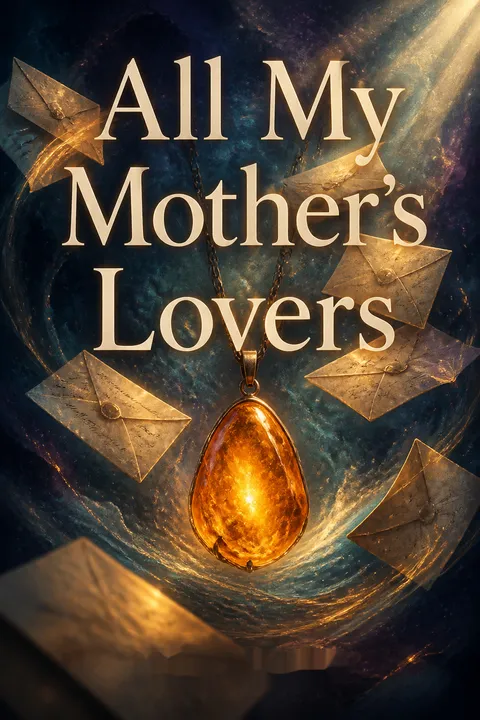
The reading of Iris's will is both a formality and a revelation. Maggie is left her mother's amber necklace, while Ariel receives the wedding and engagement rings—a gesture that stings, given Iris's discomfort with Maggie's sexuality. More confounding are the letters Iris left for five men, with instructions that they be delivered after her death. Maggie is consumed by curiosity and resentment: Why these men? What did they mean to Iris? The letters represent unfinished business, and Maggie decides to deliver them herself, hoping for answers. The will, the letters, and the distribution of heirlooms become symbols of Iris's unresolved relationships and the ways in which she failed to fully see or accept her daughter.
The Lovers' Trail Begins
Maggie embarks on a journey across California and beyond, tracking down the recipients of Iris's letters. Each encounter is fraught with anticipation and dread. She meets Abe, a former lover who reveals a long-term affair; Liam, a trans man whose relationship with Iris challenges Maggie's assumptions; and others whose connections to Iris are more ambiguous. Through these meetings, Maggie learns about her mother's capacity for love, her need for secrecy, and the boundaries she maintained between her family and her lovers. The road trip is both literal and metaphorical—a quest for understanding, closure, and perhaps forgiveness. Along the way, Maggie confronts her own patterns of avoidance, intimacy, and self-doubt.
Unraveling Parental Myths
As Maggie delves deeper into Iris's history, she uncovers painful truths: Iris's first marriage to an abusive rabbi, her struggles with identity, and her ambivalence about motherhood. Conversations with relatives and old friends reveal a woman shaped by trauma, resilience, and a fierce desire for autonomy. Maggie's idealized image of her parents' marriage is shattered, replaced by a more nuanced understanding of compromise, longing, and the limits of love. The siblings grapple with the possibility that Ariel's paternity is uncertain, and Maggie is forced to reconsider what it means to belong, to be chosen, and to be loved. The chapter explores the ways in which family narratives are constructed, revised, and sometimes broken.
Encounters with the Past
Each letter delivered brings Maggie face-to-face with a different version of her mother. Abe shares memories of tenderness and regret; Liam offers insight into Iris's capacity for acceptance and her limitations; Karl's letter, read posthumously, reveals a relationship marked by addiction and loss. Not all recipients are lovers—some are friends, confidants, or people Iris helped or hurt in other ways. Through these encounters, Maggie sees the ripple effects of Iris's choices, the pain and joy she brought to others, and the complexity of her emotional life. The process is cathartic but also destabilizing, as Maggie must reconcile the mother she knew with the woman she's discovering.
The Truth About Iris
The cumulative effect of Maggie's journey is a portrait of Iris as both deeply flawed and deeply human. Iris loved her children fiercely but was often unable to express it in ways they needed. She sought fulfillment outside her marriage, not out of malice but out of a hunger for connection and selfhood. Her affairs were not betrayals of Peter so much as attempts to claim a part of herself that motherhood and marriage could not satisfy. The letters are apologies, explanations, and sometimes confessions. Maggie is left with more questions than answers, but also with a sense of empathy for her mother's struggles. The chapter grapples with the impossibility of fully knowing another person, even a parent.
Siblings in the Aftermath
Back home, Maggie and Ariel must navigate the new reality of their family without Iris. Old resentments flare, but there is also a growing sense of solidarity. They share the burden of caring for Peter, managing the shiva, and dealing with the practicalities of loss. The siblings argue about what to tell Peter, what to keep secret, and how to move forward. Maggie's relationship with Lucia becomes a lifeline, offering comfort and perspective. The chapter explores the ways in which grief can both divide and unite, and the importance of chosen family in the aftermath of loss.
Peter's Revelation
In a pivotal conversation, Peter reveals that he always knew about Iris's affairs—and that their marriage was built on honesty, trust, and an unconventional arrangement. Peter is asexual, and he and Iris agreed early on that she could seek intimacy elsewhere. Far from being a victim, Peter was Iris's anchor, her home, and her greatest love. This revelation reframes everything Maggie thought she knew about her parents, their marriage, and her own expectations of love. Peter's acceptance and wisdom offer Maggie a new model for forgiveness and understanding, and she begins to see her mother's choices in a different light.
The Weight of Forgiveness
Armed with new knowledge, Maggie must decide what to do with her feelings of betrayal, resentment, and grief. She struggles to forgive Iris for her failures as a mother, for her inability to fully accept Maggie's sexuality, and for the secrets she kept. But she also recognizes the ways in which Iris tried—imperfectly—to love and protect her children. The process of forgiveness is not linear or complete, but Maggie begins to release some of the anger that has weighed her down. She finds solace in the connections she's made, the stories she's heard, and the love that persists despite loss.
Healing, Love, and Letting Go
As the shiva ends and the family begins to settle into a new normal, Maggie allows herself to grieve, to heal, and to hope. Lucia's arrival brings comfort and the promise of a future together. Maggie and Ariel reach a tentative peace, and Peter begins to reengage with life. The inheritance of the necklace and the wedding ring becomes symbolic—a link to the past and a gesture toward the future. Maggie realizes that she does not have to repeat her mother's mistakes, but she can honor her complexity. The chapter is suffused with a sense of possibility, as Maggie embraces love, vulnerability, and the messy work of living.
The Future, Reimagined
In the aftermath of loss, Maggie reimagines what family, love, and identity can mean. She is no longer bound by the myths of her parents' marriage or the limitations of her mother's approval. Instead, she claims her own story, shaped by pain but also by resilience and hope. The final chapter is a meditation on the ways in which we carry our parents with us—through memory, through inheritance, through the choices we make. Maggie's journey is unfinished, but she is no longer running from the past. She is ready to build a future on her own terms, with Lucia by her side and her mother's lessons—both good and bad—woven into her life.
Analysis
Ilana Masad's All My Mother's Lovers is a profound meditation on grief, identity, and the impossibility of fully knowing those we love. Through Maggie's quest to deliver her mother's posthumous letters, the novel interrogates the myths we build around family, the secrets we keep, and the ways in which love is both sustaining and fraught. Masad deftly subverts traditional narratives of coming out, fidelity, and parental approval, offering instead a tapestry of flawed, deeply human characters negotiating the boundaries of intimacy and autonomy. The nonlinear structure and shifting perspectives invite readers to empathize with both Maggie and Iris, revealing the generational echoes of trauma, desire, and resilience. The novel's central lesson is that forgiveness—of others and of oneself—is an ongoing process, not a destination. In the end, Maggie's journey is not about resolving every question or healing every wound, but about learning to live with ambiguity, to claim her own story, and to move forward with compassion. All My Mother's Lovers is a testament to the power of vulnerability, the necessity of chosen family, and the enduring hope that, even in the wake of loss, love can be reimagined and renewed.
Review Summary
All My Mother's Lovers receives mixed reviews (3.56/5 average). Readers appreciate the emotionally powerful exploration of grief, family dynamics, and sexuality, with many praising the dual narrative between Maggie and her mother Iris. However, common criticisms include slow pacing, stereotypical characters, excessive "telling" rather than "showing," and a universally disliked final line. Some found Maggie unsympathetic and immature, while others valued her relatability. The novel's handling of LGBTQ+ themes drew both praise and criticism. Many noted the book's literary quality and quotable writing, though some felt it tried too hard to be diverse and relevant.
People Also Read




Characters
Maggie Krause
Maggie is the novel's protagonist, a queer woman in her late twenties whose life is upended by her mother's sudden death. Her relationship with Iris is fraught—marked by love, disappointment, and a longing for acceptance. Maggie is practical, emotionally guarded, and prone to avoidance, but her journey to deliver Iris's letters forces her to confront her own vulnerabilities. Her relationship with Lucia is a source of both comfort and anxiety, as Maggie fears repeating her mother's mistakes. Throughout the novel, Maggie evolves from a woman defined by resentment and self-doubt to someone capable of empathy, forgiveness, and hope. Her quest to understand Iris becomes a journey of self-discovery, as she learns to accept the messiness of love and family.
Iris Krause
Iris is at the heart of the novel, both in life and in death. She is ambitious, fiercely independent, and deeply private. Her marriage to Peter is unconventional, shaped by honesty and compromise, but she also seeks fulfillment through affairs and emotional connections outside the family. Iris's relationship with Maggie is complicated by generational and cultural divides, as well as her own unresolved traumas. She is both loving and judgmental, supportive and withholding. The letters she leaves behind are attempts at closure, apology, and explanation, but they also reveal her inability to fully bridge the gap between her inner life and her family. Iris is a study in complexity—a woman who loved deeply but imperfectly, and whose legacy is both a burden and a gift.
Peter Krause
Peter is Maggie's father, a graphic designer and the emotional center of the family. He is nurturing, patient, and quietly wise. His asexuality and the open arrangement with Iris are revealed late in the novel, reframing his role from passive victim to active participant in the family's dynamics. Peter's grief is profound, but he ultimately emerges as a model of acceptance and resilience. His relationship with Maggie is warm and supportive, and his ability to forgive and understand Iris offers Maggie a new perspective on love and partnership. Peter's presence is a reminder that family can be chosen, negotiated, and sustained through honesty and care.
Ariel Krause
Ariel is Maggie's younger brother, sensitive and struggling to process their mother's death. He is more emotionally open than Maggie, but also more volatile—prone to anger, withdrawal, and self-doubt. Ariel's relationship with Maggie is marked by sibling rivalry, but also by deep loyalty. The possibility that his paternity is uncertain adds another layer of complexity to his grief. Ariel's journey is one of coming to terms with loss, redefining family, and learning to trust his sister. His development mirrors Maggie's, as both siblings move from isolation to connection.
Lucia
Lucia is Maggie's girlfriend, an artist whose warmth, maturity, and emotional intelligence provide a counterpoint to Maggie's anxiety and self-sabotage. Lucia is patient, supportive, and unafraid to challenge Maggie's assumptions. Her own experiences with loss and family give her insight into Maggie's struggles, and her presence is a source of healing and hope. Lucia represents the possibility of a different kind of love—one built on communication, trust, and mutual care. Her relationship with Maggie is tested by distance and crisis, but ultimately endures, offering a vision of a future not defined by the past.
Abe Okafor
Abe is one of Iris's former lovers, a scientist and single father. His relationship with Iris is characterized by emotional intimacy, intellectual connection, and the pain of unfulfilled desire. Abe's need for more than Iris could give leads to the end of their affair, but his memories of her are tender and bittersweet. Through Abe, Maggie learns about her mother's capacity for love and the limits she imposed on her relationships. Abe's presence in the novel is a reminder of the ways in which love can be both sustaining and wounding.
Liam
Liam is another of Iris's lovers, a blackjack dealer in Las Vegas. His relationship with Iris is marked by acceptance, secrecy, and the negotiation of identity. Liam's presence forces Maggie to confront her own biases and to reconsider what she thought she knew about her mother's capacity for understanding. Liam is both gruff and compassionate, offering Maggie a model of queer resilience and community. His story expands the novel's exploration of gender, sexuality, and the ways in which we seek connection.
Karl Jelen
Karl is a former lover of Iris's whose letter is read posthumously. Their relationship was shaped by addiction, betrayal, and the struggle for redemption. Karl's absence is a reminder of the costs of secrecy and the ways in which the past can haunt the present. Through Karl's letter, Maggie glimpses a side of her mother marked by risk, vulnerability, and the desire to make amends. Karl's story is a cautionary tale, but also a testament to the possibility of forgiveness.
Harold Lake Brooks
Harold is Iris's earliest extramarital lover, a psychologist and later a resident in an assisted living facility. Their relationship is rekindled late in life, offering both comfort and a sense of closure. Harold's presence at the shiva and his interactions with Maggie and Peter highlight the enduring impact of past relationships. He embodies the themes of aging, memory, and the persistence of desire. Harold's story is both a link to Iris's past and a mirror for Maggie's own search for meaning.
Eric Baishan / Mac Lòpez
Eric, also known as Mac Lòpez, is a famous actor and one of the recipients of Iris's letters. His connection to Iris is not romantic, but rooted in friendship and mutual support. His presence in the novel complicates Maggie's assumptions about her mother's relationships and serves as a reminder that not all secrets are betrayals. Eric's story is a testament to the power of chosen family and the ways in which we touch each other's lives in unexpected ways.
Plot Devices
Nonlinear Narrative and Multiple Perspectives
The novel employs a nonlinear structure, alternating between Maggie's present-day journey and flashbacks to Iris's life. This device allows the reader to see events from multiple angles, deepening the emotional resonance and complicating easy judgments. Iris's perspective is revealed through memories, letters, and third-person vignettes, offering insight into her motivations and regrets. The nonlinear approach mirrors the process of grief and discovery, as Maggie pieces together her mother's story in fragments.
The Letters as a Narrative Catalyst
The letters Iris leaves behind are both MacGuffins and emotional touchstones. They propel Maggie's journey, structure the plot, and serve as windows into Iris's hidden life. Each letter is a mystery to be solved, a story to be uncovered, and a confrontation with the past. The act of delivering the letters becomes a ritual of mourning, a way for Maggie to process her loss and seek closure.
Foreshadowing and Symbolism
The novel is rich with foreshadowing—early references to Iris's absences, her discomfort with Maggie's sexuality, and her attachment to certain objects (the amber necklace, the rings) all point to later revelations. Symbolism abounds: the necklace represents inheritance and connection; the rings, the complexities of marriage and legitimacy; the letters, the unfinished business of love and loss. The recurring motif of driving and travel underscores the themes of movement, escape, and the search for home.
Subversion of Family and Queer Narratives
The novel deliberately subverts the myth of the perfect family and the coming-out narrative. Maggie's queerness is not a source of trauma so much as a lens through which she interrogates her family's secrets. The revelation of Peter and Iris's open marriage, Peter's asexuality, and the diversity of Iris's lovers complicate notions of fidelity, love, and what constitutes a "good" parent or partner. The story resists easy moralizing, instead embracing ambiguity and the messiness of real lives.
The Road Trip as Emotional Journey
Maggie's journey to deliver the letters is both a literal and metaphorical road trip. Each stop brings her closer to understanding her mother, herself, and the nature of forgiveness. The encounters with Iris's lovers are structured as episodic revelations, each peeling back another layer of the family's history. The road trip device allows for encounters with strangers, moments of introspection, and the gradual accumulation of wisdom.
Download PDF
Download EPUB
.epub digital book format is ideal for reading ebooks on phones, tablets, and e-readers.








































