
Plot Summary
Gardens and Family Ghosts
The story opens in an imaginary North American landscape that echoes both Russia and America, among a patchwork of noble families whose genealogies entangle in confusion and scandal. The Veen family history is dense with obscure relationships, twin sisters (Aqua and Marina), and a nimbus of dead relatives haunting the living. The estate Ardis Hall, where much of the narrative will unfold, is introduced as a storied mansion set among flowering trees and fields, standing as a symbol of continuity and secrecy. The child protagonists, Van and Ada, cousins who will soon learn they are siblings, are children of two Veens—in a family already famous for duplicities and substitutions. Early chapters intertwine generational histories, odd customs, embellished recollections, and the first hints of forbidden desire, as Van finds himself drawn close to Ada in this lush, haunted garden.
A Forbidden Summer's Fire
The Veens come together for a radiant, youthful summer at Ardis. The country estate becomes a paradise of sunlight, sprawling lawns, secret nooks, and sleepy afternoon games. Van, a young aristocrat newly arrived, is drawn meticulously into Ada's orbit. Together, they explore the house, attic, and gardens—inventing games, sharing knowledge of language, nature, and literature. Their fascination grows, mixing innocence with a tense and erotic undercurrent. As the days pass, shared jokes and adolescent touch mark the slow evolution from familial play to burgeoning awareness, culminating in shy, stolen caresses and an unspoken pact. The heat of the summer becomes the crucible of their mutual seduction, glimmering with the thrill of first sexual passion and the dread of taboos.
Secret Games and Growing Pains
Ada and Van, joined by Ada's younger sister Lucette, continue to navigate the thin boundary between innocence and forbidden knowledge. Elaborate invented games—shadow outlines, secret codes, mirrored words—fill their days, always laced with a sense of impending transgression. As scientific as their natural history collections and as poetic as their language play, their rituals become ever more intimate. Tension mounts; their kisses deepen, hands stray, and adolescence accelerates awakening. Lucette, a child, idolizes both and begins to sense exclusion and jealousy. The air is ripe with unpredictable emotion: curiosity, desire, guilt, and the excitement of trespass. The trio's dynamic, viewed through Van's increasingly adult consciousness, signals the complexity to come.
Lessons in Language and Ardor
Ardis is a hive of multilingual play, cross-cultural puns, and botanical lectures. Over luncheons and teas, Ada draws Van into debates about translation, poetry, and the muddied waters of Franco-Russian-English culture. Both children exhibit prodigious intellect, and their bond deepens as they exchange literary allusions and in-jokes incomprehensible to adults. Meanwhile, their secret—sexual liaisons—takes root even as idle conversation keeps up appearances. All is set against the farcical backdrop of adults distracted by nostalgia or their own faded passions, unable to comprehend the magnitude or risk of the children's new intimacy. Language becomes the means by which the children both reveal and conceal their extraordinary, taboo love.
Letters, Losses, and Entrances
The idyllic summer ends as Van is forced to leave for school, promising contact through coded letters. Their separation opens wounds—both for Ada and for Lucette, who lingers in the shadow of their love. The narrative shifts toward the loneliness of exile, explorations in city life, and the temptation of new sexual experiences. Letters become the lifeline sustaining Van and Ada's bond through the enforced distance; however, misunderstandings and betrayals loom, threatening the fragile foundation of their clandestine passion. The attic, once a place of childhood curiosity, morphs into the archive of memory and loss, as Ada and Van both seek meaning and solace in relics of the past.
Knowledge, Touch, and Discovery
Adolescence brings new experiences at school for Van and Ada; both encounter the freedoms and cruelties of broader society—including sexual initiation, fleeting lovers, and the challenges of keeping secrets. Enter the decadent world: philosophical salons, urban affairs, forbidden brothels, and coded letters exchanged under threat of discovery. Each character learns the danger and necessity of knowledge—how the intellect can serve both as shield and as instrument of further transgression. The siblings' love evolves beyond physicality, tested by jealousy, longing, and the evolving understanding of guilt, time, and distance. Lucette, maturing in the periphery, grows ever more obsessed with Van, her own passions becoming a source of pain.
Burning Barns, Shattered Innocence
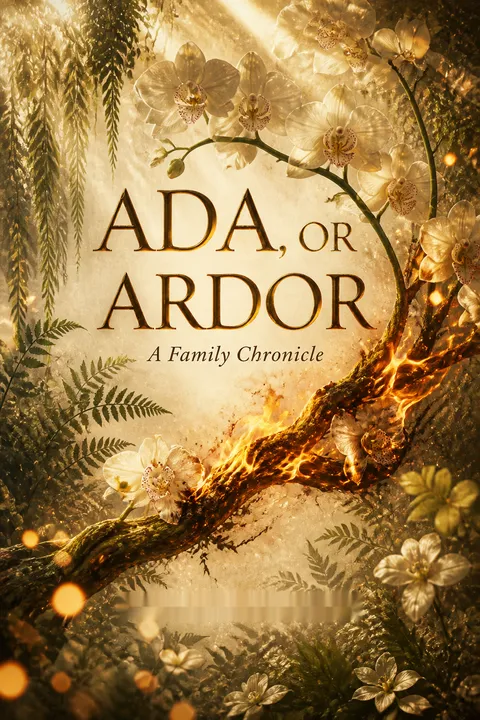
In one electrifying night, the family's barn burns—an event both literal and metaphorical. Ada and Van, together amid the chaos, consummate their love for the first time. The barn's fiery destruction signals an irreversible crossing: the conflagration sears away the last vestiges of innocence, and their intimacy gains an intensity and desperation that cannot be contained. Everything from this moment is marked by the awareness of consequence—estrangement from childhood, fear of exposure, and the unbearable knowledge that the world outside will never permit what they have found in each other. The siblings' adoration, once airy and all-embracing, becomes urgent, consuming, and condensing into memory.
The Hidden Death, The Hidden Love
As Van and Ada's affair unfolds, the hidden toll in their family percolates. Aqua, Van's supposed aunt but actual mother, succumbs to madness—broken by loneliness, delusional obsessions about alternate worlds, and sickness of the soul. Her suicide, described with brutal empathy, is emblematic of the casualties resulting from family secrets and illicit loves. Meanwhile, other adults (Demon, Marina, Daniel) circle the periphery with their own ignoble passions and jealousies. The pain of concealment is mirrored in sorrowful events and fractured relationships. The siblings, grown older, must reckon not only with their isolation, but with the consequences their ardor has for the others caught in their family's web—especially Lucette.
Castles, Crossroads, and Exile
The siblings' forbidden affair is uncovered, triggering separation by the family elders. Van journeys away—through city, country, and the halls of learning—while Ada is sequestered abroad and later married off to another man, Andrey Vinelander. Both suffer in their estrangement, chasing after memories and sometimes substituting new affairs. The world outside Ardis is increasingly cold and foreign; the freedom of childhood is lost, replaced by the iron rules of inheritance, reputation, and law. Their correspondence, encrypted, continues, but is marked with longing, bitterness, and the imprint of grown-up disappointments. The echo of their lost summer in the gardens turns every environment after into a kind of exile, even as both remain haunted by hope.
Letters from Terra Burn
As Van becomes a philosopher and writer, his obsession with time, memory, and the possibility of alternate realities emerges. He writes "Letters from Terra," a novel within the novel, weaving together science fiction, parody, and philosophical treatise, all reflecting his yearning for a world where forbidden love might escape shame. The fictional letters recall the coded messages Van and Ada once shared. Meanwhile, multiple betrayals and deaths—including tragedy for Lucette, who cannot endure the siblings' reunification—underscore the costs of a life lived in the margins of propriety. Terra, as both a literal and symbolic place, becomes the zone of longing for what might have been.
Inheritance, Villa Venus, and Solitude
The narrative detours through Van's inheritance and excess—his wealth, his dalliance with libertinism, the creation of the perverse brothel-palace "Villa Venus." Years of loneliness and sexual license ensue, punctuated by moments of emptiness and the knowledge that all pleasures are ephemeral. Relationship after relationship crumbles, and Van sees himself more as an observer (alienist, philosopher) than participant in life's meaning. The collapse of Villa Venus mirrors both the decay of an epoch and the impossibility of sustaining joy stripped of innocence and connection. Solitude—the price of forbidden love denied—defines Van's mature years even as he strives to reconnect with his sister and rekindle lost intimacy.
Return of Desire, Return of Doubt
Van and Ada's paths cross again and again: at Mont Roux, in lecture halls, and villas across Europe and America. Each meeting is shadowed by the years spent apart—a mixture of rapturous passion and regret. The impossibility of full reunion (Andrey Vinelander's prolonged illness, Ada's obligations, death and disappointment) stalls their happiness even as feelings revive. Old age approaches, and the reality of suffering, time's irreversibility, and mortality frame their moments together. Meanwhile, Van's philosophical inquiries into time and consciousness (in works like "The Texture of Time") become both distraction and consolation. Yet, nostalgia is always tinged by the griefs of everything lost—by choice, by fate, or by fear.
The Deaths of the Siblings
The family's tangled passions reach their nadir with Lucette's suicide—a tragic, heartbreaking act aboard a transatlantic liner after another failed romantic overture to Van. Her death is both a reflection of her longing and an indictment of the family's inability to nurture the innocent. The entire clan—Daniel, Marina, Demon, Lucette—disperses into death by old age, misfortune, or despair. Only Van and Ada, battered and made wise by suffering, remain, their final years spent together in deliberate seclusion, tending to each other and their shared past. The wreckage of the Veen legacy persists in memory, archives, and fleeting moments of beauty.
Mont Roux: Time's Redemption
In the final act, Van and Ada, both aged and battered, effect a final, enduring reunion in Europe, at Mont Roux. Their love, though bloodied by time and guilt, becomes a rare, precious thing—transcending shame even as it is grounded in the hard-won honesty of acceptance. The garden, once a site of innocence and danger, is now one of reflection and mutual understanding. Together, they work on the chronicle of their life—an act that redeems the past by giving it sense and form. Time, which had once only brought loss, is now harnessed by memory and reconciliation; their ardor, tempered in the heat of a lifetime, becomes their lasting gift.
The Texture of Time
Van, now an old professor and philosopher, spends his days writing and meditating on the nature of time. His works probe the boundaries between memory, perception, and existence, always circling back to the central paradox of how consciousness inscribes a fleeting present with the gold of meaning. Time, he argues, is neither a river nor a clock but the setting for all that is loved and lost. The past is always unfinished, the future is an illusion, and only memory—attended by art and love—can raise ramshackle life to a kind of eternity. In their declining years, Van and Ada live among stacks of books, reminiscing, finally at peace with a love that, though unsanctioned, outlasted all forms and failures.
Closing Arbors: Love's Aftermath
The chronicle closes in an Alpine sanctuary—a final, wintry garden echoing the Eden of Ardis. The aged lovers, surrounded by memorabilia, artifacts, and transformative memories, review the long arc of their affair. Violet Knox, their last loyal helper, preserves their story as typist and surrogate child. The outside world recedes; loss, pain, and isolation abound, but love—rebellious, refined—remains. They are both grateful and spent, aware that the labors of reflection, and the books they create, will be their true immortality. Time, myth, and family dissolve together as they hold fast to each other in the last glimmers of memory's dusk.
Myth, Memory, and Immortality
The narrative closes with Van and Ada reflecting on death, immortality, and the possibility of reunion—whether in myth, memory, or a future life. Replaying the queries of childhood, they now speak as a couple so intertwined that loss and continuation are indistinguishable. They ponder whether, in death as in life, they might be together as lovers and siblings, carrying forward the double guarantee of union. Yet, they recognize that time, memory, and identity are fragile, always threatening to dissolve. The fate of their story is left suspended—caught between myth and mortality, word and oblivion, longing and peace—a final embrace among the arbors and ardors that have made their life both ecstatic and doomed.
Analysis
Ada, or Ardor is a masterwork of postmodern fiction, blending the lush lyricism and intellectual pyrotechnics of Vladimir Nabokov into a weaving, mosaic-like meditation on forbidden love, memory, and mortality. Beneath the scandalous plot of incest lies an inquiry into the nature of time—How does duration feel? How do memory and guilt shape experience?—and into the doomed longing for a paradise lost to age, propriety, and the shifting sands of recollection. The novel critiques and parodies the conventions of the family saga and the philosophical treatise, using a dazzling array of narrative devices to reassert the primacy of individual experience: the only truth that endures is the brief, luminous now. Nabokov's text is bracingly self-aware, mocking its own desires for redemption even as it affirms the grandeur and cost of passionate love. At its heart, Ada is both a celebration and an elegy—a reckoning with the alchemy by which language, memory, and art may briefly, bravely restore what time inevitably claims. In a world where all arbors must burn, the compulsion to relive, rewrite, and forgive is both the means of survival and the final form of ardor.
Review Summary
Reviews of Ada, or Ardor are overwhelmingly positive, praising Nabokov's extraordinary linguistic virtuosity, multilingual wordplay, and structural complexity. Readers marvel at its richness as a parody of literature, meditation on time and memory, and daring exploration of incestuous love set on the alternate world of Antiterra. Many consider it Nabokov's masterpiece, surpassing even Lolita in ambition. Common criticisms include its notoriously difficult opening chapters, overwhelming density of obscure references, and emotionally distant characters. Most agree it rewards persistent readers enormously, though it demands significant cultural and linguistic knowledge.
Characters
Van Veen
As both narrator and protagonist, Van is a prodigiously intelligent, fiercely proud, and compulsively sensual man whose core identity is shaped by his forbidden love for his sister, Ada. From precocious youth—through secret summer liaisons, urban exile, sexual experimentation, and philosophical inquiry—Van is restless and searching, grasping at meaning through science, literature, and eroticism. His brilliance is matched by impatience, arrogance, and crippling jealousy. Much of his adulthood is marked by flights from and returns to Ada; his relationships with others (Lucette, various lovers, friends) are often exploitative or cruel. Nevertheless, Van's introspective and analytical mind transforms pain and loss into dazzling self-exploration, culminating in late-life reflections on time, memory, and the value of love.
Ada Veen
Ada begins as a dazzling, precocious child: scholarly, witty, beautiful yet imperious. Her intellect and appetite for language, nature, and the arts make her an equal (and at times, superior) partner to Van. Their shared education—botany, philosophy, poetry—mirrors and amplifies their sexual bond, which evolves from childhood games to adult passion. Ada is fiercely independent, quick to defend her desires but tormented by guilt, jealousy, and family obligation. Her later marriage to Vinelander is an act of necessity, not affection; her reunion with Van is bittersweet, shaped by nostalgia and resignation. In old age, Ada becomes both muse and co-author, her memory and sensibility ensuring that their chronicle persists beyond decay.
Lucette Veen
Lucette, the younger half-sister, grows up idolizing and longing for both Van and Ada. She is characterized by her sensitivity, emotional transparency, and inability to compete with their incestuous union. As she matures, Lucette's unrequited love for Van festers into obsession, culminating in an attempted seduction and eventual suicide. Her presence is a haunting counterpoint—embodying innocence destroyed by the passions, secrecy, and betrayals of the older siblings. Lucette's fate underscores the cost of forbidden love, the collateral damage wrought by the selfishness and blindness of her elders. Her death marks the family's moral horizon and lingers, unresolved, in the memories of Van and Ada.
Demon Veen
Van's true father (and Ada's biological father as well), Demon is a wealthy, cosmopolitan womanizer with a taste for luxury and excess. He is a figure of both awe and bewilderment—emotionally extravagant, physically imposing, but absent or unreliable as a parent. His dalliances with Marina and others set the pattern for the Veen children's complicated emotional lives, and his own attempts at advice or condemnation are often too late or self-serving. Yet, Demon's larger-than-life presence inscribes in Van a dual inheritance of aesthetic appreciation and ethical recklessness. His eventual death in an airplane disaster draws the curtain on a generation of heedless pleasure and familial avoidance.
Marina Durmanov Veen
Marina, Ada and Lucette's mother (and Van's adopted mother), is a former stage beauty whose glamorous past is eclipsed by domestic chaos, romantic disappointment, and mental decline. Riven by guilt over her own adulterous beginnings and failures as a mother, Marina processes the world through half-remembered theatrical roles and increasingly fragile self-delusion. Her relationship with Demon is tempestuous and ultimately defeated by her inability to affect her children's destinies. She is both tragic and farcical—a woman whose attempts at control or intervention are either ignored or futile.
Daniel (Dan) Veen
Dan is Demon's cousin, uncle to Ada, Marina's husband, and Van's supposed uncle. He is genial, wealthy, and emotionally distant—a specter of gentility whose inability to control his household keynotes the chaos that engulfs the Veen family. Dan's passivity renders him incapable of protecting the children from each other or from the selfishness of the adults, but his death cements the dissolution of the old order. He is a background figure whose naivete, though at odds with the swirling desires around him, offers a poignant reminder of lost innocence.
Aqua Veen
Demon's rejected wife, Aqua is Van's true mother (and Ada's aunt), driven to madness by unrequited love, displacement, and her awareness of her family's duplicities. Her profound sensitivity and spiritual delusions—centered on a mythical place called Terra—mark her as both visionary and madwoman in the attic. Aqua's tragic suicide marks the irreversible cost of generational secrets and forbidden love, prefiguring the later fate of Lucette and casting an aura of loss over the surviving siblings. Through Aqua, the narrative explores themes of mental illness, duplicity, and the brutality of social constraints.
Andrey Vinelander
Ada's lawful husband—a practical Arizona rancher—serves as both shield and obstacle to Van and Ada's reunion. Lacking the sophistication or appetites of the Veen family, Andrey is portrayed as gentle and dignified, yet ultimately powerless. His illness and eventual death are treated with a mixture of pity and impatience. In life, he is more a circumstance than a presence; his significance lies in the necessity for Ada to choose between the duties of marriage and the call of forbidden passion.
Demon's Circle and Lucette's Shadows
Threads branch to side characters—Cordula, Grace, Blanche, various servants and lovers—who serve as witnesses, rivals, or sympathetic victims in the drama of Van and Ada's love. Cordula, a childhood friend and sometime lover of Van, represents both an alternative to Ada and a means of escaping pain. Grace Erminin, Blanche the maid, and the succession of other girls and women, each cast light or shadow on the central affair—highlighting the costs, temptations, and self-deceptions of living outside society's bounds. These characters reveal fundamental truths about isolation, longing, and the paper-thin separation between delight and disaster.
Violet Knox and Dr. Lagosse
In the closing decades, these figures bring solace, structure, and the echo of family to the aged Van and Ada. Violet Knox, their devoted typist and surrogate child, and Dr. Lagosse, the wise doctor, help the couple shape and preserve their story. They represent a gentle, forgiving posterity—the hope that memory and love, even if flawed, may be transmitted with care into the future.
Plot Devices
Nonlinear Narrative and Multiple Perspectives
The narrative structure is a tour de force of temporal play—jumping between past and present, narrated first by Van as memoir and then as a collaborative enterprise between Van and Ada. Memory is both unreliable and kaleidoscopic, as the story returns again and again to the same events from new vantage points. The book's "chronicle" is rewritten, commented on, fragmented, and remade as themes of time, longing, and revision come to dominate. The fractured structure mirrors both the characters' obsession with recovering paradise and their inability to escape loss.
Codes, Games, and Intertextuality
Throughout, Van and Ada employ secret codes—ciphers for letters, invented words, allusions to past readings and family lore. Games, both botanical and linguistic, become a way to encode desire and evade detection. The book is a hall of mirrors: literary parody, philosophical treatise, erotic confession, and pastiche swirl together, hiding the real truth in playful ambiguity. The device of the chronicle-within-the-story, coupled with digression, parody, and self-reflexive commentary, creates a text that interrogates its own nature.
Motifs of Gardens, Flames, and the Double
The recurring motifs of gardens and arbors evoke both the childhood Eden and the site of temptation and loss. The burning barn becomes a symbol of irrevocable transformation; fire is both passion and destruction. Doubles—twins, siblings, alternate worlds (Terra, Antiterra)—recur: each love mirrors another, each loss another's echo, as the family is riven and reflected in endless repetition. The interweaving of real and imagined worlds underscores the fantasy and tragedy of the siblings' love: the longing for an impossible reunion and the impossibility of escape from fate.
Philosophical Discourse and Metafiction
Van's philosophical works, incorporated as narrative strands, frame the action with ruminations on the nature of time, memory, and the future. The book repeatedly draws attention to its own artifice: Van and Ada as co-authors, the (fictitious) references to similarly-themed works on Terra, the actual composition of the chronicle as a creative act in old age. The distinction between lived event and written memory blurs, as the retelling of the story becomes the means of its redemption or preservation. Recursion, uncertainty, and reflection are central devices, allowing for both irony and deep emotional resonance.
Foreshadowing, Circularity, and Recurrence
Early images and incidents foreshadow later revelations: the attic explorations prefigure both passionate discovery and tragedy; games of shadow anticipate later losses; Lucette's childhood exclusion leads inexorably to her death. The narrative is circular—events and phrasing return, memories are revised, and the ending folds back onto the beginning, as if to suggest eternity lies within the embrace of recollection. The desire to recapture or relive a vanished moment is doomed, but the act of telling, rewriting, and "caressing Time" is the closest the characters, or the reader, can come to solace.
About the Author

Download PDF
Download EPUB
.epub digital book format is ideal for reading ebooks on phones, tablets, and e-readers.








































