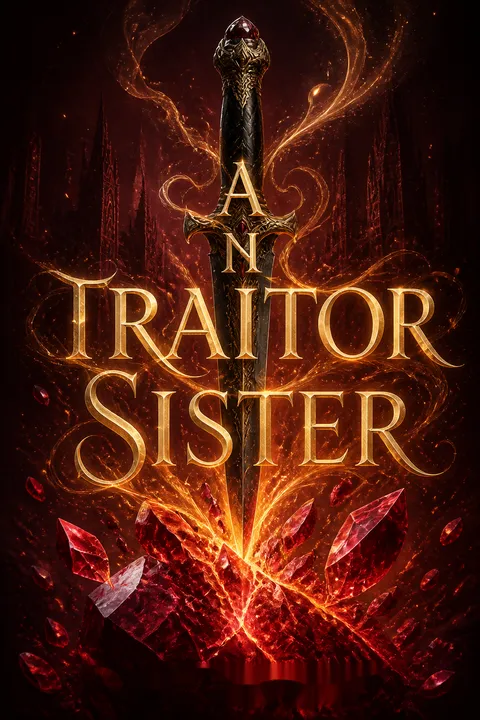

Plot Summary
Bonds Broken, Fates Entwined
Marlak's capture and Astra's separation ignite a chain of betrayals and desperate bargains. Marlak, imprisoned in the Desert Keep, faces his brother Renel's cold manipulations, while Astra, torn between fury and longing, plots her own escape. Tarlia and Ziven, traveling through fae lands, confront their own tangled feelings and the ever-present threat of assassination. As alliances shift and old wounds resurface, the siblings' fractured trust is mirrored in the magical bonds that both protect and imprison them. The story's emotional core is set: love and loyalty are tested by the cruel logic of survival, and every promise comes with a price.
Shadows of Betrayal
Astra's return to Otavio's control is fraught with suspicion and manipulation. Otavio's fatherly facade cracks, revealing a master who sees Astra as a tool, not a daughter. Meanwhile, Marlak's brotherly bond is revealed as a web of threats and bargains, with Renel's power resting on the fragile foundation of magical deals. Tarlia and Ziven's journey is shadowed by misunderstandings and unspoken desires, their friendship strained by jealousy and the ever-present threat of betrayal. The chapter explores how trust, once broken, is nearly impossible to restore, and how every character is haunted by the ghosts of their own choices.
The Price of Power
The true cost of power is revealed as Marlak's and Astra's magical abilities are both a blessing and a curse. Marlak's fire magic, once a source of pride, is now a reminder of tragedy and guilt. Astra's Tiurian heritage, long suppressed, becomes the key to breaking enchantments but also marks her as a target. The fae world's obsession with deals and magical bargains is shown to be a double-edged sword, offering protection at the cost of freedom. The characters are forced to confront the reality that power, in all its forms, is never freely given—it must be earned, stolen, or paid for in pain.
Webs of Deceit
Tarlia's infiltration of the Crystal Castle as Astra's double is a high-wire act of deception, aided by Lidiane's powerful glamours. The castle itself is a labyrinth of secrets, with enchanted servants, hidden alliances, and ever-shifting loyalties. Otavio's true motives remain shrouded, his manipulations extending far beyond Astra. Renel's court is a nest of vipers, where every word is a potential weapon and every alliance is temporary. The chapter delves into the psychological toll of living behind masks, and the way self-deception can be as deadly as any enemy.
The Substitute's Dilemma
Tarlia's role as Astra's substitute forces her to confront the limits of her own agency. Raised to be a pawn, she struggles to assert her own desires in a world that values her only as a tool. Her growing feelings for Renel complicate her mission, blurring the line between duty and desire. Meanwhile, Astra's own sense of self is challenged by revelations about her Tiurian heritage and the true nature of her magic. The chapter explores the pain of being seen as replaceable, and the courage required to claim one's own identity.
The Heart's True Magic
Astra's connection to Marlak, forged in dreams and sealed in suffering, becomes the catalyst for breaking ancient enchantments. The Sundering Dagger, activated by her Tiurian blood, is revealed as the key to freeing not only herself but countless others. The emotional climax is reached as Astra risks everything to save Marlak, breaking the bonds that have held them—and the fae world—captive. The chapter is a meditation on the transformative power of love, and the way true magic is born from vulnerability and trust.
Prisoners and Pretenders
As Marlak languishes in his cell and Tarlia navigates the dangers of the castle, both are forced to confront their own limitations. The physical and psychological toll of imprisonment is explored, as is the resilience required to survive. Astra's own captivity under Otavio is shown to be as much about psychological control as physical restraint. The chapter highlights the ways in which captivity can be both a crucible and a cage, forging new strengths even as it threatens to break the spirit.
The Castle's Curse
Renel's inability to control the Crystal Castle becomes a metaphor for the uncontrollable forces at work in the fae world. The castle's trajectory toward the Fiery Gorge is a ticking time bomb, threatening to unleash catastrophe on the Jewel City and beyond. The council's refusal to heed Renel's warnings is a study in denial and self-interest, while Azur's growing disillusionment with his role as bound guardian adds another layer of tension. The chapter explores the theme of fate versus free will, and the way even the most powerful are often powerless in the face of destiny.
Allies and Enemies
Old alliances are tested and new ones forged as the characters are forced to choose sides. Marlak and Ziven's uneasy partnership is a study in contrasts, while Lidiane and Azur's bond deepens in unexpected ways. The return of Mirella, Marlak's sister, adds another layer of complexity, as her own trauma and ambitions threaten to destabilize the fragile peace. The chapter is a meditation on the fluid nature of loyalty, and the way today's ally can become tomorrow's enemy.
The Unraveling Court
The breaking of enchantment bonds triggers a wave of upheaval, as the lower fae seize their freedom and the old order collapses. Renel's desperate attempts to avert disaster are met with indifference or hostility by the council, while Zorwal's return from the dead signals the rise of a new, more dangerous threat. The chapter explores the costs of revolution, the dangers of unchecked power, and the way even well-intentioned actions can have unforeseen consequences.
The Monster Within
Mirella's monstrous transformation is both literal and symbolic, a manifestation of the trauma inflicted by years of imprisonment and betrayal. Marlak's guilt and Renel's regret are brought to the fore, as the siblings are forced to confront the consequences of their actions. The chapter is a meditation on the nature of monstrosity, and the way the true monsters are often those closest to us.
The Amethyst Palace Calls
Astra's visions and the guidance of the Almighty Mother lead her to the long-lost Amethyst Palace, a place of both wonder and horror. The palace, shrouded in darkness and overrun by ghouls, is revealed as the heart of Tiurian magic—and the key to stopping the Witch King's return. The chapter is a journey into the unknown, a test of faith and courage, and a reckoning with the past.
The Witch King Awakens
The breaking of the enchantment bonds has unintended consequences, freeing not only the lower fae but also the Witch King from his underground prison. Astra and Azur, trapped in the Shadow Lands, must navigate a world turned upside down, where old enemies may become allies and the fate of the world hangs in the balance. The chapter is a study in unintended consequences, and the way every act of liberation carries the seeds of new dangers.
Sacrifice and Survival
Tarlia's self-sacrifice to save Renel, Lidiane's willingness to risk everything for her friends, and Astra's willingness to wield forbidden magic all speak to the theme of survival at any cost. The characters are forced to confront the limits of their own endurance, and the way true heroism often means choosing the lesser evil. The chapter is a meditation on the cost of survival, and the way every act of sacrifice leaves its mark.
The End of Enchantment
The breaking of the bonds that held the lower fae captive is both a triumph and a tragedy, unleashing a wave of chaos that threatens to consume the fae world. Old hierarchies collapse, new alliances are formed, and the future is more uncertain than ever. The chapter explores the double-edged nature of freedom, and the way every act of liberation is also an act of destruction.
The Last Escape
As the castle is moved and the Witch King rises, the characters are scattered—some fleeing, some pursuing, all caught in the whirlwind of fate. Astra and Azur's disappearance into the Shadow Lands, Tarlia and Lidiane's narrow escape from Otavio, and Mirella's flight with Zorwal set the stage for new conflicts and new beginnings. The chapter is a study in the unpredictability of destiny, and the way every ending is also a beginning.
The Cost of Freedom
The story's final movements are a reckoning with the costs of every choice made. Renel's abdication, Marlak's reluctant ascension, and the uncertain fates of Astra, Azur, and the others are all marked by loss and longing. The Witch King's return looms as a new threat, and the survivors are left to pick up the pieces of a world forever changed. The chapter is a meditation on the price of freedom, and the way every act of heroism is also an act of mourning.
Analysis
A Traitor Sister is a sweeping fantasy that interrogates the nature of power, agency, and the costs of freedom. At its core, the novel is a meditation on the ways in which trauma, love, and the longing for belonging shape identity and destiny. The story's intricate web of magical bargains, substitutions, and shifting alliances serves as both a literal and metaphorical exploration of the double-edged nature of power: every act of liberation unleashes new dangers, and every victory demands a sacrifice. The breaking of enchantment bonds is both a triumph and a tragedy, freeing the oppressed while unleashing chaos and awakening ancient evils. The novel's psychological depth lies in its refusal to offer easy answers: love is both a source of strength and vulnerability, power is both a blessing and a curse, and every act of heroism is also an act of mourning. In a world where every promise comes with a price, the true magic is found in the courage to claim one's own destiny—and the willingness to pay the cost.
Review Summary
A Traitor Sister receives overwhelmingly positive reviews (4.13/5), with readers praising its multiple POVs, expanded world-building, and complex character development. While Book 1 focused on Astra and Marlak, this sequel introduces compelling perspectives from Renel, Tarlia, Lidiane, and Azur. Reviewers highlight the emotional rollercoaster, jaw-dropping twists, and improved romance. Common criticisms include too many POVs causing confusion for some readers, and a slower middle section. Most readers found the cliffhanger ending exceptional and eagerly await Book 3, praising Day Leitao's intricate plotting and character work.
People Also Read
Characters
Astra
Astra is the emotional and magical heart of the story, a young woman raised as a substitute and weapon, whose Tiurian blood marks her as both a target and a potential liberator. Her journey is one of self-discovery, as she learns to trust her own power and break the bonds that have held her—and her world—captive. Her relationship with Marlak is both a source of strength and vulnerability, and her willingness to risk everything for love is what ultimately allows her to wield the Sundering Dagger and free the lower fae. Astra's arc is a meditation on the pain of being seen as replaceable, and the courage required to claim one's own destiny.
Marlak
Marlak is a study in contrasts: powerful yet haunted, loving yet consumed by regret. His fire magic, once a source of pride, is now a reminder of the tragedy that destroyed his family and exiled him from the throne. His relationship with Renel is defined by betrayal and longing, while his love for Astra is both redemptive and fraught with danger. Marlak's journey is one of atonement, as he seeks to rescue his sister, reclaim his birthright, and find a place where he can finally belong. His psychological complexity is rooted in trauma, survivor's guilt, and the desperate hope for forgiveness.
Renel
Renel is a tragic figure, a man whose power rests on fragile bargains and the approval of a corrupt council. His inability to control the Crystal Castle is both a literal and metaphorical representation of his impotence, and his reliance on Azur and Zorwal reveals a deep-seated insecurity. Renel's longing for love and recognition is constantly thwarted by his own self-doubt and the machinations of those around him. His arc is a meditation on the costs of power, the dangers of denial, and the way even the best intentions can lead to disaster.
Tarlia
Tarlia's journey is one of agency and self-assertion, as she struggles to escape the roles imposed on her by Otavio and the world. Her infiltration of the castle as Astra's double forces her to confront the limits of her own agency, while her growing feelings for Renel complicate her mission. Tarlia's psychological depth is rooted in trauma, anger, and the desperate need to be seen as more than a pawn. Her willingness to sacrifice herself for others is both her greatest strength and her greatest vulnerability.
Azur
Azur is both weapon and prisoner, his immense magical power shackled by a life bond to Renel. His outward arrogance and cruelty mask a deep well of pain, resentment, and longing for agency. His unexpected bond with Lidiane reveals a capacity for love and vulnerability, while his role in the story's climax—combining his magic with Astra's to move the castle—marks his transformation from tool to hero. Azur's arc is a meditation on the costs of servitude, the pain of unacknowledged suffering, and the possibility of redemption.
Lidiane
Lidiane is a lower fae whose mastery of glamours and illusions makes her both invaluable and vulnerable. Her alliance with Marlak and Astra is rooted in a desire for justice and freedom for her people, while her unexpected soulmate bond with Azur forces her to confront her own fears and desires. Lidiane's psychological complexity is rooted in the tension between self-preservation and self-sacrifice, and her journey is one of learning to trust, forgive, and claim her own happiness.
Ziven
Ziven is a survivor, his wit and self-deprecation masking a deep well of pain and longing for belonging. His friendship with Tarlia and Astra is both a lifeline and a source of conflict, as he struggles to reconcile his own desires with the expectations of others. Ziven's arc is one of reluctant heroism, as he is drawn into the story's central conflicts and forced to confront his own capacity for love and loyalty.
Mirella
Mirella is the story's most tragic figure, her monstrous transformation a manifestation of the trauma inflicted by years of imprisonment and betrayal. Her relationship with Marlak and Renel is fraught with pain, resentment, and longing for the innocence lost. Mirella's arc is a meditation on the nature of monstrosity, the costs of survival, and the possibility of healing.
Otavio
Otavio is the story's most enigmatic antagonist, his motives shrouded in secrecy and his methods defined by psychological manipulation. His relationship with Astra and Tarlia is one of control and exploitation, and his true goals remain hidden until the very end. Otavio's psychological complexity is rooted in a profound sense of superiority, a willingness to use anyone as a tool, and a chilling capacity for cruelty.
Zorwal
Zorwal is the embodiment of the story's darkest themes: the dangers of unchecked power, the costs of immortality, and the way even the best intentions can curdle into tyranny. His survival after beheading marks him as something other than fae, and his manipulations of Renel, Mirella, and others reveal a mind both brilliant and ruthless. Zorwal's arc is a meditation on the corrupting influence of power, the dangers of playing god, and the inevitability of reckoning.
Plot Devices
Magical Bonds and Deals
The fae world is governed by magical deals and life bonds, which both protect and imprison. These bargains are the currency of power, shaping relationships and determining who can act—and at what cost. The breaking of these bonds, whether through Astra's magic or the Sundering Dagger, is both a liberation and a source of chaos, unleashing unintended consequences and forcing characters to confront the true cost of freedom. The device is used to explore themes of agency, consent, and the double-edged nature of power.
Glamours, Masks, and Substitution
The use of glamours, disguises, and substitutions is central to the story's exploration of identity and agency. Characters are constantly forced to hide, pretend, or become someone else in order to survive. This device is used to explore the psychological toll of living behind masks, the pain of being seen as replaceable, and the courage required to claim one's own selfhood. It also serves as a metaphor for the ways in which trauma and societal expectations shape—and distort—identity.
The Moving Castle and Imminent Catastrophe
The Crystal Castle's uncontrollable movement toward the Fiery Gorge is both a literal and metaphorical representation of fate, destiny, and the uncontrollable forces that shape the characters' lives. The castle's trajectory is a source of mounting tension, driving the plot forward and forcing characters to confront the limits of their own power. The device is used to explore themes of fate versus free will, the dangers of denial, and the way even the most powerful are often powerless in the face of destiny.
Foreshadowing and Visions
Astra's visions, dreams, and the guidance of the Almighty Mother serve as both foreshadowing and a source of ambiguity. The line between prophecy and self-fulfilling destiny is blurred, and characters are often forced to act on incomplete or misleading information. This device is used to explore the tension between faith and doubt, the dangers of certainty, and the way every act of interpretation is also an act of creation.
The Breaking of Enchantment
The breaking of the bonds that hold the lower fae captive is both a triumph and a tragedy, unleashing a wave of chaos that threatens to consume the fae world. The device is used to explore the double-edged nature of freedom, the costs of revolution, and the way every act of liberation is also an act of destruction. It also serves as the catalyst for the Witch King's return, linking personal and political liberation to the rise of new dangers.
Download PDF
Download EPUB
.epub digital book format is ideal for reading ebooks on phones, tablets, and e-readers.








































