
Plot Summary
Return to Six Rivers
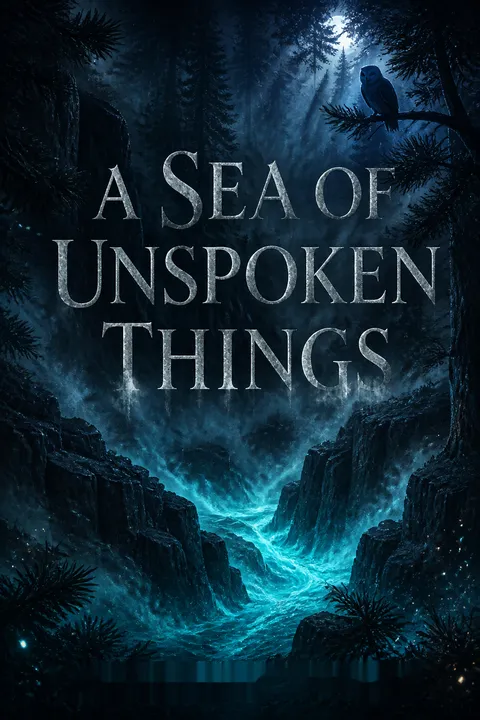
James Golden, a successful artist in San Francisco, is forced to return to her childhood home in Six Rivers after the sudden, violent death of her twin brother, Johnny. The drive through the dense, memory-laden forest is suffocating, and the cabin she once shared with Johnny and their absent parents is thick with his lingering presence. James is haunted by the psychic connection she always shared with her brother—a bond that now feels more like a wound than a comfort. The town, unchanged and insular, greets her with a mix of suspicion and nostalgia. As she steps into the cabin, the weight of her brother's absence and the secrets of their shared past press in, setting the stage for a reckoning with everything she tried to leave behind.
Haunted by Johnny's Absence
James is overwhelmed by the visceral sense that Johnny is still everywhere—in the cabin, the woods, and her own body. Their twin bond was always uncanny, sometimes bordering on supernatural, and now it manifests as phantom pain and vivid flashes of Johnny's final moments. She meets Micah, Johnny's childhood friend and James's old flame, whose presence stirs up unresolved feelings and old wounds. The town's ranger, Amelia, hands over Johnny's belongings and the official story: a hunting accident. But James's intuition screams that something is wrong. The forest, alive and watchful, seems to hold its own secrets, and James is compelled to dig deeper, unable to accept the simple explanation for her brother's death.
Old Ties, New Wounds
As James reconnects with Micah and other figures from her past—Sadie, Johnny's on-and-off girlfriend, and Olivia, her childhood friend—she is drawn back into the tangled web of relationships that defined her youth. The trio of James, Johnny, and Micah once formed an inseparable unit, but time and tragedy have left them fractured. The town's collective memory is long, and the shadow of a decades-old death—Griffin Walker, the golden boy who died under mysterious circumstances—still lingers. James's return stirs up gossip and suspicion, and she realizes that the past is not as buried as she hoped. The pain of what was left unsaid between her and Micah, and the secrets they both keep, threaten to surface.
The Forest Remembers
The Six Rivers forest is more than a backdrop; it is a living, breathing entity that remembers everything. James feels watched, as if the trees themselves are keeping score of every sin and secret. Johnny's work as a wildlife photographer and conservationist is revealed to be more than a job—it was his way of communing with the wild, of hiding from the world. As James sorts through his photographs, she uncovers evidence of Johnny's obsession with a particular owl, Subject 44, whose broken foot mirrors Johnny's own sense of being damaged. The forest, with its network of roots and silent communication, becomes a metaphor for the interconnectedness of the town's people and their histories.
Unraveling the Past
James's investigation into Johnny's death leads her to question the official story. She discovers a roll of undeveloped film in Johnny's jacket, marked with a date just before his death. In the darkroom at the high school, she develops the film and finds a photograph of a pink backpack—an object that doesn't belong to Johnny. The backpack is linked to Autumn Fischer, a talented student Johnny mentored. As James digs deeper, she learns that Autumn never arrived at the prestigious art school she was supposed to attend. The realization that Autumn is missing, and that Johnny may have been the last to see her, sends James spiraling into fear and doubt about her brother's true nature.
The Girl Who Vanished
The town is rocked by the revelation that Autumn Fischer is missing. James's search for answers leads her to Autumn's ex-boyfriend, Ben, and to Olivia, who was closer to Autumn than she let on. Rumors swirl about Johnny's relationship with Autumn, and James is forced to confront the possibility that her brother was involved in something inappropriate—or worse. The psychic connection between James and Johnny intensifies, manifesting as visions and sensations that blur the line between memory and haunting. The sense of dread grows as James realizes that the town's silence and complicity may have allowed something terrible to happen.
The Gorge's Dark Secret
James convinces Micah to take her to Trentham Gorge, the remote, wild place where Johnny died—and where, years earlier, Griffin Walker lost his life. The gorge is a place of both beauty and violence, a throat in the earth that swallows secrets. As James lies on the ground where Johnny's body was found, she is overwhelmed by a flood of sensory memories: the pain of the bullet, the fear, the presence of another person. She becomes convinced that Johnny was not alone when he died, and that the answer to both his death and Autumn's disappearance lies in the tangled history of the gorge and the people who keep returning to it.
Ghosts in the Darkroom
The darkroom becomes a liminal space where the boundaries between past and present, living and dead, are blurred. As James develops more of Johnny's film, she is visited by ghostly impressions—shadows, voices, and the overwhelming sense of Johnny's presence. The photographs reveal more than they should: glimpses of Autumn, evidence of Johnny's state of mind, and hints of other secrets. The act of creating art, once a source of escape, now becomes a way of communing with the dead. James is forced to confront her own complicity in the family's legacy of silence and the ways she has tried to rewrite her own story.
The Weight of Rumors
The small-town rumor mill is relentless, and as suspicion falls on Johnny, James, and even Ben, the community's true nature is revealed. Old alliances and enmities resurface, and the lines between victim and perpetrator blur. Sadie, desperate to protect her son, lashes out at James, while Amelia, the ranger, tries to maintain order and seek the truth. The town's collective memory is selective, and the stories people tell about themselves and each other are as much about survival as they are about justice. James realizes that the truth is not just hidden—it is actively suppressed by those who have the most to lose.
The Unspoken Pact
The central mystery of the novel is not just what happened to Johnny and Autumn, but the unspoken pact that has held the town together for decades. James, Micah, and Johnny were bound by a promise made the night Griffin Walker died—a promise to protect each other at all costs, even if it meant living with a lie. The cost of that silence is now coming due, as the next generation repeats the same patterns of secrecy and denial. James is forced to reckon with her own role in perpetuating the cycle, and to decide whether she can finally break free.
A Town of Shadows
As the investigation intensifies, the town's veneer of respectability crumbles. The search for Autumn's body becomes a communal act of penance, and the diner—once the heart of Six Rivers—becomes a stage for confrontation and confession. Sadie's desperation to protect Ben leads her to violence, and the revelation of her own actions shocks the community. The forest, once a place of refuge, is now a site of reckoning. James realizes that the only way to move forward is to bring everything into the light, no matter the cost.
The Truth in the Trees
The truth about Johnny's death and Autumn's disappearance is finally revealed: Sadie, believing she was protecting her son, killed Johnny to keep him from exposing what she thought Ben had done. Olivia, driven by envy and longing, was the last to see Autumn alive, and her accidental role in Autumn's death is uncovered. The web of secrets that has ensnared the town is torn apart, and the characters are left to grapple with the consequences of their actions. James, finally free from the burden of silence, is able to mourn her brother and begin to heal.
The Missing and the Dead
In the aftermath of the revelations, the town is left to pick up the pieces. Johnny's reputation is posthumously restored, but the scars of what happened will never fully heal. James and Micah, having confronted their own past and the ways they have hurt each other, find a tentative peace. The search for Autumn's body is called off, and the community is forced to accept that some mysteries will never be solved. The forest, ever watchful, continues to bear witness to the cycles of loss and renewal.
The Cost of Silence
James reflects on the legacy of silence that has shaped her family and her town. She realizes that the only way to honor Johnny's memory is to refuse to keep any more secrets. The act of telling the truth—no matter how painful—becomes an act of liberation. The community, too, is changed by the events, forced to confront the ways they have enabled harm by looking the other way. James's art, once a means of escape, becomes a way of bearing witness and creating meaning from tragedy.
The Last Confession
As James prepares to leave Six Rivers, she and Micah finally speak the words they have both been afraid to say. Their love, forged in the crucible of shared pain and loss, is both a comfort and a challenge. James decides to stay, choosing to build a life rooted in honesty and connection rather than fear and denial. The ashes of Johnny are scattered in the forest, and the act becomes a ritual of release and forgiveness. The past cannot be changed, but the future is still unwritten.
The Ashes We Scatter
The town gathers to say goodbye to Johnny, and the act of communal mourning becomes a moment of healing. James, Micah, and the others who loved Johnny are able to let go, even as they carry the memory of what was lost. The forest, once a place of secrets, is now a place of peace. James's art is transformed by her experiences, and she finds a new sense of purpose in creating beauty from pain. The cycles of loss and renewal continue, but now there is hope.
The Light We Make
In the final chapter, James reflects on the journey she has taken—from the darkness of grief and secrecy to the light of truth and love. She and Micah, expecting a child, look to the future with cautious optimism. The forest, the town, and the people who remain are forever changed, but there is a sense that healing is possible. The story ends with the promise that, even in a sea of unspoken things, it is possible to find connection, meaning, and light.
Analysis
A Sea of Unspoken Thingsis a haunting meditation on grief, memory, and the corrosive power of secrets. Adrienne Young crafts a narrative that is both a gripping mystery and a profound exploration of the ways in which silence—personal, familial, and communal—can both protect and destroy. The novel interrogates the myth of the idyllic small town, revealing the darkness that festers beneath the surface when people are unwilling or unable to confront the truth. Through James's journey, the story examines the cost of loyalty, the dangers of unchecked ambition and envy, and the possibility of redemption through honesty and connection. The psychic bond between James and Johnny serves as a metaphor for the inescapable ties of family and history, while the forest embodies the idea that nothing is ever truly forgotten. Ultimately, the novel suggests that healing is only possible when the unspoken is brought into the light, and that even in the aftermath of tragedy, it is possible to create meaning, beauty, and hope. The lessons are clear: secrets may protect us in the short term, but only truth can set us free.
Review Summary
Characters
James Golden
James is the novel's protagonist, a talented artist who escaped her small-town roots for the anonymity and opportunity of San Francisco. Her return to Six Rivers is both a homecoming and a confrontation with everything she tried to leave behind: grief, guilt, and the psychic bond with her twin brother, Johnny. James is deeply intuitive, often experiencing flashes of memory and sensation that blur the line between reality and haunting. Her relationships—with Johnny, Micah, and the town itself—are fraught with unspoken pain and longing. Over the course of the novel, James is forced to confront the legacy of silence and secrecy that has shaped her life, ultimately choosing honesty and connection over denial and escape.
Johnny Golden
Johnny is both absent and omnipresent, his death setting the story in motion and his presence lingering in every corner of Six Rivers. Sensitive, reclusive, and deeply connected to the natural world, Johnny is a photographer whose work is both a refuge and a form of communication. His psychic bond with James is central to the novel's emotional arc, and his secrets—about Autumn, about the past, about himself—drive the plot. Johnny is both victim and perpetrator, shaped by trauma and capable of both great tenderness and destructive impulsivity. His death is a mystery that forces everyone to confront their own complicity in the town's culture of silence.
Micah Rhodes
Micah is the third point in the triangle that defined James and Johnny's youth. Steadfast, grounded, and quietly passionate, Micah is both a source of comfort and a reminder of what James left behind. His relationship with James is marked by longing, regret, and the weight of unspoken words. Micah's own guilt over the past—particularly the events surrounding Griffin Walker's death—mirrors James's, and his loyalty to Johnny is both a strength and a vulnerability. As the novel unfolds, Micah is forced to choose between protecting the past and embracing a future with James.
Sadie Cross
Sadie is Johnny's former girlfriend and the owner of the town diner, a central gathering place in Six Rivers. Fiercely protective of her son, Ben, Sadie is both a victim of the town's expectations and a perpetrator of its darkest secrets. Her actions—motivated by love, fear, and desperation—ultimately lead to tragedy. Sadie embodies the novel's themes of maternal sacrifice, the cost of silence, and the ways in which good intentions can lead to devastating consequences. Her psychological complexity is revealed in her shifting roles as friend, lover, mother, and, ultimately, as the agent of Johnny's death.
Olivia Shaw
Olivia is James's childhood friend and the high school art teacher. She is both supportive and quietly resentful, her own unfulfilled ambitions mirrored in her relationship with Autumn Fischer. Olivia's longing for recognition and her envy of Autumn's talent lead her to a fateful decision, making her both a sympathetic and tragic figure. Her psychological arc explores the dangers of comparison, the hunger for validation, and the destructive power of envy. Olivia's confession is a turning point in the novel, forcing the community to confront the consequences of their collective silence.
Autumn Fischer
Autumn is the talented, enigmatic student whose disappearance becomes the novel's central mystery. Admired by many and envied by some, Autumn is both a symbol of hope and a victim of the town's inability to protect its most vulnerable. Her relationship with Johnny is ambiguous, and her fate is a mirror for the unresolved traumas of the past. Autumn's absence haunts the narrative, and her story forces the characters to confront the limits of their own understanding and the dangers of unchecked ambition and desire.
Ben Cross
Ben is Sadie's son and Autumn's ex-boyfriend, a young man struggling under the weight of expectation, heartbreak, and rumor. His fragility is both a source of sympathy and suspicion, as the town's gossip machine turns its attention to him. Ben's search for identity—particularly the question of whether Johnny is his father—parallels James's own quest for truth. His psychological journey is one of confusion, longing, and the desperate need for connection.
Amelia Travis
Amelia is the town's forest ranger and de facto law enforcement, an outsider trying to navigate the insular world of Six Rivers. Her commitment to uncovering the truth is both a strength and a liability, as she is met with suspicion and resistance. Amelia's role as investigator and confidante places her at the center of the novel's moral dilemmas, and her determination to break the cycle of silence is a catalyst for change.
Griffin Walker
Griffin's death, decades earlier, is the original trauma that haunts Six Rivers. His story is one of promise cut short, and the lies told to protect those responsible have shaped the lives of everyone left behind. Griffin is both a victim and a symbol—the embodiment of the town's inability to reckon with its own darkness. His memory is a constant presence, and the truth about his death is a key to understanding the present.
The Forest
The Six Rivers forest is more than a setting; it is a character in its own right. Alive, watchful, and deeply connected to the fates of the people who live within it, the forest remembers everything. It is both a place of refuge and a site of violence, a metaphor for the interconnectedness of all things and the impossibility of escaping the past. The forest's presence is felt in every moment of the novel, shaping the characters' actions and bearing silent witness to their secrets.
Plot Devices
Interwoven timelines and psychic connection
The novel employs a dual timeline structure, weaving together the present-day investigation into Johnny's death and Autumn's disappearance with flashbacks to the formative events of James's youth—most notably the night Griffin Walker died. This structure allows the reader to experience the slow unspooling of secrets alongside James, as each revelation in the present is mirrored by a memory from the past. The psychic connection between James and Johnny serves as both a literal and metaphorical device, blurring the boundaries between self and other, memory and haunting. The use of photographs, field notes, and art as narrative artifacts deepens the sense of mystery and provides tangible clues for both James and the reader. Foreshadowing is skillfully employed, with small details—such as the pink backpack, the missing note, and the recurring image of the owl—gaining significance as the story unfolds. The forest itself functions as a narrative device, its living presence shaping the characters' actions and serving as a repository for the town's collective memory.
About the Author

Download PDF
Download EPUB
.epub digital book format is ideal for reading ebooks on phones, tablets, and e-readers.








































