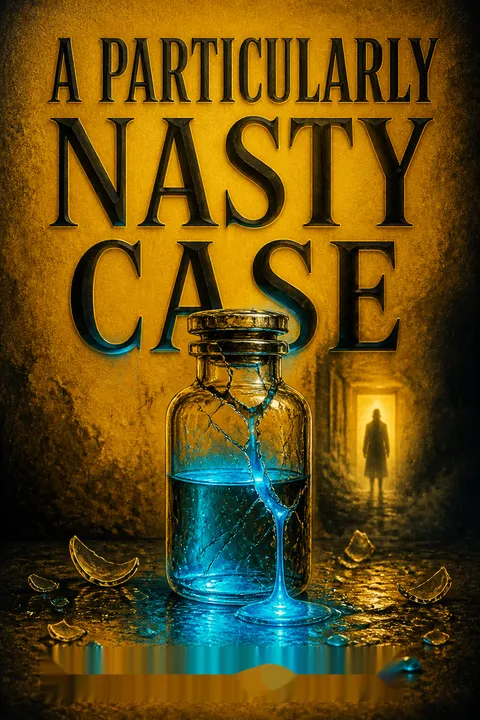

Plot Summary
Night of Bad Decisions
Eitan Rose, a consultant rheumatologist, seeks oblivion in London's gay nightlife, desperate to escape the looming dread of returning to work after a mental health suspension. His night devolves from awkward clubbing to a surreal, drug-fueled visit to a sex sauna, where he accidentally becomes the hero, saving an elderly man's life with CPR. The adrenaline rush is a bittersweet reminder of why he became a doctor, but the night's humiliations and the lies he tells to cover his tracks set the tone for the tangled web of secrets, shame, and self-doubt that will haunt him. Eitan's vulnerability and dark humor are palpable, as is his longing for connection and redemption.
Return to the Fray
Eitan wakes up hungover at a bus stop, dreading his first day back at St Jude's Hospital. The hospital is a minefield of judgmental colleagues, Kafkaesque bureaucracy, and the ever-present shadow of his suspension for erratic behavior following a patient's death. His office is now shared with Margaret, a weepy, cat-loving colleague, and he's under the watchful eye of Dr. Moran, the hospital's intimidating medical director. Eitan's anxiety is compounded by memories of his late sister Elodie, whose death from meningitis years ago still gnaws at his conscience. The chapter captures the crushing weight of stigma, the struggle to reclaim professional dignity, and the fragile hope of starting anew.
Supervision and Suspicion
Eitan's return is marred by constant supervision from Moran, who sits in on his clinics and questions his every decision. Eitan's rapport with patients is genuine, but his banter and unconventional methods draw Moran's ire. Meanwhile, Eitan's phone buzzes with flirtatious messages from Cole, a charming hospital porter he met on the roof. Their budding connection offers a glimmer of joy amid the stress. Yet, the hospital is rife with rumors, and Eitan's past—his bipolar diagnosis, substance use, and professional missteps—makes him an easy target for suspicion. The tension between authenticity and self-preservation is palpable, as Eitan tries to prove his worth while hiding his vulnerabilities.
Ghosts and Guilt
Eitan's history is laid bare through tribunal reports, emails, WhatsApp messages, and police transcripts: his manic episode after a patient's death, the breakdown of his relationship with Mo, and the enduring guilt over Elodie's death. Moran's supervision is punitive, dredging up Eitan's failures and threatening his fragile recovery. The hospital's toxic culture is exposed—bullying, cover-ups, and a lack of genuine support for staff with mental illness. Eitan's sense of isolation deepens, but his connection with Cole grows, offering a rare sense of acceptance. The chapter explores the corrosive effects of shame, the longing for forgiveness, and the difficulty of moving forward when the past refuses to let go.
A Taste of Paris
Eitan and Cole's first date in the hospital canteen, ironically named A Taste of Paris, is a study in contrasts—Eitan's self-deprecating wit and privilege clashing with Cole's working-class background and quiet resilience. Their chemistry is undeniable, but misunderstandings and Eitan's insecurities threaten to derail the budding romance. The hospital's social hierarchies are laid bare, as is the subtle snobbery that pervades even the most intimate moments. Eitan's longing for connection is matched by his fear of rejection, and Cole's warmth is both a balm and a challenge. The chapter is a poignant meditation on vulnerability, class, and the hope of finding love amid chaos.
Pranks and Consequences
Spurred by Cole's mischievous spirit, Eitan joins him in a harmless prank—rearranging Moran's office. The escapade turns unexpectedly intimate, culminating in a passionate encounter interrupted by Moran himself. The fallout is immediate: Eitan faces the threat of professional ruin, and his relationship with Cole is thrown into turmoil. The incident exposes the precariousness of Eitan's position—one misstep away from disaster—and the ease with which joy can turn to shame. The hospital's culture of surveillance and punishment is contrasted with the fleeting freedom of rebellion. The emotional stakes are high, as Eitan grapples with the consequences of seeking connection in a world that punishes difference.
Death and Silver Linings
Moran's unexpected death from a heart attack sends shockwaves through the hospital. For Eitan, it's a paradoxical relief—his most relentless tormentor is gone, and the threat of exposure for the prank vanishes. Yet, the circumstances of Moran's death are suspicious, and Eitan's instincts as a doctor and a survivor kick in. He begins to question the official narrative, sensing that something is amiss. The chapter captures the complex emotions of grief, relief, and suspicion, as well as the shifting power dynamics within the hospital. Eitan's sense of agency is rekindled, but so is his paranoia, setting the stage for a deeper investigation.
The Chamber of Secrets
Eitan and Cole, emboldened by Moran's death, break into his office to search for evidence. They discover a diary detailing the incriminating encounter, as well as clues that suggest Moran's death may not have been natural. Their investigation is both thrilling and dangerous, drawing them deeper into the hospital's web of secrets. Eitan's mental state teeters between clarity and obsession, fueled by the need to prove his innocence and expose the truth. The partnership with Cole is tested by secrets and lies, as both men grapple with trust and betrayal. The chapter is a tense, emotionally charged exploration of truth-seeking in a world built on denial.
Cold Case Clues
Eitan's suspicions grow as he uncovers inconsistencies in Moran's death—his attire, the supposed jog, and the absence of expected medical findings. Conversations with colleagues and a visit to the morgue yield more questions than answers. Eitan's investigative zeal is both a symptom of his illness and a testament to his determination. The hospital's indifference to the deaths of its leaders is contrasted with Eitan's relentless pursuit of justice. The emotional toll mounts, as Eitan's relationships with friends and colleagues fray under the strain of suspicion and self-doubt. The chapter is a meditation on the thin line between madness and insight.
Dangerous Deductions
Eitan's investigation becomes all-consuming, alienating his friends and jeopardizing his career. His mental health deteriorates under the weight of paranoia and isolation. Attempts to confront suspects and gather evidence lead to humiliation and further suspicion. The hospital's bureaucracy closes ranks, and Eitan finds himself the prime suspect in a crime he's desperate to solve. The emotional arc is one of desperation and despair, as Eitan's world narrows to a single, obsessive quest for truth. The cost of seeking justice in a system rigged against the vulnerable is laid bare, and the reader is left questioning whether Eitan is hero, victim, or unreliable narrator.
Friends and Fault Lines
Eitan's relationships with Mo, Fiona, and Margaret are tested to breaking point. His friends struggle to balance compassion with skepticism, unsure whether to trust his instincts or fear for his sanity. The stigma of mental illness looms large, coloring every interaction and undermining Eitan's credibility. Cole, once a source of comfort, becomes distant and conflicted. The chapter explores the limits of friendship, the pain of betrayal, and the loneliness of being doubted by those you love. Eitan's sense of self is battered by external judgment and internal turmoil, and the emotional stakes reach a breaking point.
The Whip and the Wake
Eitan's investigation leads him to a dominatrix, Diana Deluxe, and a series of humiliating encounters that yield crucial evidence about Moran's secret life. The wake for Moran becomes a theater of accusation and revelation, as hidden affairs and resentments come to light. Eitan's attempt to examine Moran's body for evidence backfires spectacularly, resulting in public disgrace and professional jeopardy. The hospital's culture of secrecy and shame is exposed, and Eitan's own vulnerabilities are laid bare. The chapter is a darkly comic, emotionally raw exploration of the intersection between sexuality, power, and truth.
Inhuman Resources
Eitan faces a disciplinary hearing, where the hospital's leadership—more concerned with reputation than justice—places him on medical leave. Mo's legal advocacy exposes the institution's hypocrisy and failure to support staff with mental illness. Eitan's sense of agency is stripped away, and he is forced to confront the reality of systemic discrimination. The emotional arc is one of humiliation, anger, and reluctant acceptance. The chapter lays bare the cruelty of institutions that claim to care while perpetuating harm, and the resilience required to survive in such an environment.
The Wrong Suspect
As evidence mounts against him, Eitan becomes the prime suspect in the deaths of Moran and Stein. Friends and colleagues distance themselves, and even Cole's loyalty wavers. Eitan's mental health unravels, and he is sectioned under the Mental Health Act. The chapter is a harrowing depiction of the criminalization of mental illness, the ease with which the vulnerable are scapegoated, and the agony of being doubted by everyone—including oneself. Eitan's isolation is complete, and the emotional arc is one of despair and existential crisis.
The Porter's Secret
In a devastating twist, it is revealed that Cole—real name Donal Doherty—was the rejected medical school applicant who orchestrated the murders of Moran and Stein as revenge for perceived class-based discrimination. Cole's relationship with Eitan was a calculated manipulation, designed to frame him for the crimes. The revelation is both shocking and tragically plausible, exposing the deep wounds of class, ambition, and exclusion. Eitan's sense of betrayal is profound, and the emotional arc is one of heartbreak, rage, and the shattering of trust.
The Final Diagnosis
With the truth finally exposed, Eitan is exonerated, but the scars of the ordeal remain. The hospital is forced to reckon with its failures, and Eitan's friends rally to support his recovery. Margaret, once a suspect herself, becomes a steadfast ally, and Eitan begins to rebuild his life—tentatively exploring new relationships and seeking forgiveness for past mistakes. The chapter is a meditation on resilience, the possibility of healing, and the importance of compassion in a world that too often punishes difference. Eitan's journey is one of hard-won self-acceptance and hope.
Truths and Forgiveness
In the aftermath, Eitan visits his sister Elodie's grave, finally allowing himself to grieve and begin the process of self-forgiveness. He reaches out to his estranged father, seeking reconciliation, and contemplates a future defined not by shame or suspicion, but by the possibility of joy. The emotional arc is one of catharsis and renewal, as Eitan learns to live with his scars and embrace the messy, complicated beauty of life. The story ends on a note of cautious optimism, with Eitan choosing connection, honesty, and hope over fear and isolation.
Analysis
A Particularly Nasty Case is a razor-sharp, darkly comic exploration of mental illness, institutional cruelty, and the corrosive effects of shame and exclusion. Adam Kay uses the medical thriller format to interrogate the ways in which systems—hospitals, tribunals, families—fail those who are different, whether by class, diagnosis, or temperament. The novel's emotional power lies in its refusal to offer easy answers: Eitan is both victim and unreliable narrator, his suffering both self-inflicted and systemically imposed. The ultimate revelation—that the true killer is the marginalized, overlooked porter—serves as a devastating indictment of class prejudice and the hunger for recognition. Yet, the novel is also a testament to resilience, the possibility of forgiveness, and the messy, complicated beauty of human connection. Kay's blend of humor, heartbreak, and suspense makes for a transformative reading experience, one that challenges readers to question their own assumptions about sanity, justice, and the value of every life.
Review Summary
Reviews for A Particularly Nasty Case are mixed, averaging 3.47/5. Many readers praise Adam Kay's sharp wit, dark humor, and authentic NHS setting, with frequent laugh-out-loud moments. The bipolar gay protagonist Eitan Rose divides opinion — some find him compelling despite his flaws, while others find him unlikable and his behavior inexcusable. Most readers found the murder mystery predictable. Some appreciated the serious exploration of mental health stigma. Readers familiar with Kay's nonfiction generally enjoyed it, though many felt it didn't quite match his previous work.
Characters
Eitan Rose
Eitan is a consultant rheumatologist whose life is defined by brilliance, vulnerability, and the scars of trauma. His bipolar disorder, professional setbacks, and the unresolved guilt over his sister Elodie's death shape his every action. Eitan's relationships—with colleagues, friends, and lovers—are marked by humor, self-deprecation, and a desperate longing for acceptance. His journey is one of survival in a system that punishes difference, and his psychological complexity is the novel's beating heart. Eitan's arc is a testament to resilience, the search for meaning, and the possibility of redemption.
Cole Doherty (Donal)
Cole begins as a charismatic hospital porter and Eitan's love interest, offering warmth and understanding. Beneath the surface, however, lies a deep well of resentment and pain—rejected from medical school due to class prejudice, Cole orchestrates a campaign of revenge against those he blames for his exclusion. His relationship with Eitan is both genuine and manipulative, a means to an end. Cole's psychological profile is a study in the corrosive effects of ambition denied, the hunger for recognition, and the destructive power of unresolved trauma.
Margaret Corcoran
Margaret is Eitan's colleague and reluctant office-mate, a cat-loving, choir-singing consultant with her own history of heartbreak. Her affair with Moran and her initial skepticism of Eitan's suspicions give way to loyalty and advocacy. Margaret's psychological strength lies in her ability to balance empathy with pragmatism, and her journey mirrors Eitan's in its search for meaning and connection. She becomes a surrogate family for Eitan, embodying the possibility of forgiveness and the importance of standing by those in need.
Dr. Douglas Moran
Moran is the hospital's medical director, a figure of fear and loathing whose own insecurities and failures drive him to cruelty. His supervision of Eitan is punitive, and his personal life is marked by secrets and betrayals. Moran's death is the catalyst for the novel's central mystery, and his legacy is one of harm—both personal and institutional. Psychologically, Moran represents the dangers of unchecked power, the corrosive effects of shame, and the human cost of institutional neglect.
Mo (Mohid Nassar)
Mo is Eitan's ex-partner and legal advocate, a voice of reason and compassion amid chaos. Their relationship, though ended, is defined by deep care and shared history. Mo's struggle to support Eitan while protecting himself from further hurt is a poignant exploration of the limits of love and the challenges of supporting someone with mental illness. Mo's psychological resilience is matched by his vulnerability, and his arc is one of acceptance and letting go.
Fiona
Fiona is Eitan's longtime friend, a source of humor and stability. Her ability to separate the art from the artist, to offer practical support without judgment, makes her an anchor in Eitan's turbulent world. Fiona's own struggles—with marriage, motherhood, and self-worth—mirror the novel's themes of imperfection and resilience. She embodies the importance of friendship, honesty, and the willingness to stand by those we love, even when it's hard.
Davina Hallowell
Davina is Moran's widow, a consultant anaesthetist whose marriage was marked by secrets and disappointment. Her reactions to Moran's death and the subsequent investigation are layered with grief, anger, and a desire for closure. Davina's psychological complexity is revealed in her interactions with Eitan and Margaret, and her arc is one of survival and self-discovery in the aftermath of betrayal.
Dave Webb
Webb is the hospital pharmacist and covert drug dealer, supplying Eitan with illicit substances and navigating the hospital's underbelly. His motivations are a mix of self-interest and survival, and his actions have far-reaching consequences. Webb's character is a commentary on the pressures of the NHS, the ease with which boundaries are crossed, and the moral gray areas that define institutional life.
Annabel Stein
Stein is Moran's rival and eventual successor as medical director, a woman whose drive and intelligence are matched by her capacity for cruelty. Her death is the second in the chain of suspicious events, and her history with Moran and Eitan is marked by competition and resentment. Stein's psychological profile is one of ambition thwarted, the costs of success, and the vulnerability that comes with power.
Elodie Rose
Elodie is Eitan's younger sister, whose death from meningitis is the defining trauma of his life. Though absent, her presence is felt in Eitan's memories, guilt, and longing for forgiveness. Elodie represents innocence lost, the enduring pain of grief, and the possibility of healing through remembrance and self-compassion.
Plot Devices
Unreliable Narration and Mental Health
The novel's narrative is filtered through Eitan's perspective, shaped by his bipolar disorder, trauma, and the stigma he faces. This unreliable narration creates ambiguity—readers are never entirely sure what is real, what is paranoia, and what is justified suspicion. The device is used to explore the intersection of mental illness and credibility, the ease with which institutions scapegoat the vulnerable, and the difficulty of distinguishing insight from obsession. The shifting sands of reality heighten suspense and emotional engagement.
Epistolary Elements and Official Documents
The story is punctuated by tribunal reports, emails, WhatsApp messages, and police transcripts, providing multiple perspectives and grounding the narrative in institutional reality. These documents serve as both exposition and commentary, revealing the biases, failures, and blind spots of the systems that govern Eitan's life. The device adds texture, authenticity, and irony, as the official record often contradicts lived experience.
Red Herrings and Misdirection
The investigation into Moran and Stein's deaths is littered with red herrings—sexual secrets, professional rivalries, and personal vendettas. Eitan's own behavior, shaped by illness and desperation, makes him a plausible suspect, and the narrative repeatedly invites readers to doubt his innocence. The ultimate revelation—that Cole is the true killer—relies on careful misdirection, exploiting both character psychology and reader expectations.
Class and Institutional Critique
The novel uses the hospital as a microcosm of British society, exploring class, privilege, and exclusion. Cole's vendetta is rooted in the pain of being denied opportunity due to background, and the institutional failures that enable discrimination are mirrored in Eitan's treatment as a mentally ill doctor. The device of class-based revenge is both plot engine and thematic core, driving the story's emotional and moral stakes.
Dark Humor and Satire
Adam Kay's signature black humor permeates the narrative, providing relief from the novel's darkest moments and highlighting the absurdities of medical and institutional life. The humor is both coping mechanism and critique, exposing the ways in which laughter can coexist with pain, and how institutions use banter to mask cruelty. The device deepens character, sharpens social commentary, and keeps the reader emotionally engaged.
Download PDF
Download EPUB
.epub digital book format is ideal for reading ebooks on phones, tablets, and e-readers.








































