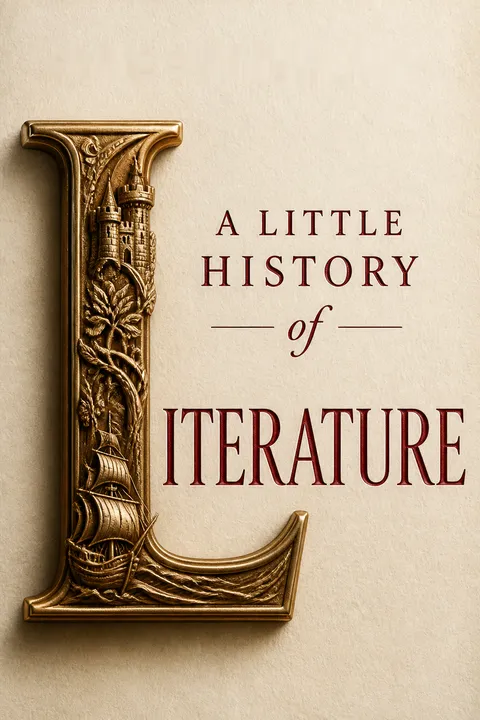

Key Takeaways
1. Literature's Core Purpose: Making Sense of the Human Condition
If we read well, we find ourselves in a conversational relationship with the most creative minds of our own time and of the past.
Lifelong journey. Literature is presented as a fundamental aspect of human life, a journey that often begins in childhood with bedtime stories and continues through adulthood. It serves as a profound source of knowledge and understanding, connecting readers to diverse perspectives across time. The act of re-reading, in particular, reveals the inexhaustible depth of great works, offering new insights with each revisit.
Truth in imagination. At its heart, literature grapples with universal questions like "What's it all about? Why are we here?" It communicates complex truths through imaginative narratives and symbols, even when depicting the wholly unreal. Allegories, such as C.S. Lewis's The Lion, the Witch and the Wardrobe, illustrate how fictional worlds can illuminate the perplexing situations of human existence, making sense of our place in the world.
Enlarging minds. Ultimately, literature is described as the human mind at its peak, expressing and interpreting the world without simplifying its complexities. It enriches life in unparalleled ways, expanding our minds and sensibilities to better handle intricate realities. Despite ancient philosophical warnings about its potential dangers, literature's ability to delight and instruct has ensured its enduring presence and value across millennia.
2. From Oral Traditions to Epic Narratives: Humanity's Earliest Stories
Myths have been a way of helping people make sense of our world.
Mythic wiring. Long before written language, humanity engaged in "myth," a complex form of oral literature that suggests we are inherently "wired" to think mythically. This innate capacity allows us to create patterns and meaning from the "blooming, buzzing confusion" of existence, aiding both understanding and memory. The simple act of hearing "tick-TOCK" from a watch demonstrates our natural inclination to impose narrative beginnings and endings.
Truth in ancient tales. Myths, though often fantastical, contain a core truth relevant across ages. Examples like the Hercules myth, with its clear plot of challenge, complication, and resolution, or Odysseus blinding the one-eyed Polyphemus, illustrate how these stories provide explanations for the senselessness of life and offer insights into human nature. The single eye of Polyphemus, for instance, symbolizes an inability to see multiple perspectives, a timeless human flaw.
Epics and nations. Epics evolve from myth, chronicling the birth of nations and celebrating heroic ideals at transitional historical moments. Works like Gilgamesh, Beowulf, and Homer's Iliad and Odyssey narrate foundational struggles, often blending mythic monsters with historical warriors. These grand narratives serve to certify the greatness of emerging empires, reflecting a society's self-definition and aspirations for power and civilization.
3. The English Language Forged: Chaucer, Shakespeare, and the Bible
He gave our literature its language.
Chaucer's foundation. English literature, as we know it, truly begins with Geoffrey Chaucer in the 14th century, who unified the diverse dialects of England into a recognizable literary language. His Canterbury Tales, a collection of stories told by pilgrims, offers a vibrant "microcosmos" of medieval society, blending courtly romance with bawdy humor and social commentary. Chaucer's innovation lay in his accessible English, setting the stage for centuries of literary development.
Shakespeare's zenith. William Shakespeare, born two centuries after Chaucer, elevated English drama to unparalleled heights, becoming the greatest writer in the English-speaking world. His plays, spanning histories, comedies, and tragedies, explored profound political questions like royal succession and human psychology through masterful blank verse and soliloquies. Despite his humble origins, Shakespeare's genius redefined what theatre could achieve, leaving an indelible mark on language and storytelling.
The King James Bible's influence. Published in 1611, the King James Bible (KJB) stands as the most-read work in the English literary canon, revered for its eloquence, subtlety, and beauty. Though a committee effort, it largely drew from William Tyndale's earlier translations, making God's word accessible to the common person. The KJB's language permeated England's intellectual and cultural fabric for centuries, shaping expression and thought, and cementing the established church's structure.
4. The Novel's Ascent: Capitalism, Realism, and the Individual
Robinson Crusoe, marooned on his island, making his fortune by his own efforts, is a new (novel) kind of man for a new (novel) kind of economic system.
Proto-novels' groundwork. Before the novel's formal emergence, works like Boccaccio's Decameron, Rabelais's Gargantua and Pantagruel, Cervantes's Don Quixote, Bunyan's The Pilgrim's Progress, and Behn's Oroonoko laid crucial foundations. These "proto-novels" explored diverse narrative forms, from subversive tales and picaresque adventures to allegorical quests and social critiques, often breaking literary rules and introducing elements like individualism and social mobility.
Defoe and the rise of capitalism. Daniel Defoe's Robinson Crusoe (1719) is widely considered the starting point of the modern English novel, intimately linked to the rise of capitalism. Crusoe, the "homo economicus," embodies the new economic system through his self-made fortune on a desert island, exploiting resources and even acquiring a "slave." The novel's realism, initially deceiving readers into believing it was a true account, mirrored the era's merchant adventurism and entrepreneurial spirit.
Swift's fantastical satire. Jonathan Swift's Gulliver's Travels (1726) expanded the novel's scope by blending realism with fantasy and biting satire. Gulliver's voyages to lands like Lilliput (tiny people) and Brobdingnag (giants) allowed Swift to critique contemporary society, politics, and even science, reflecting his deep loathing for unchecked progress. This work demonstrated the novel's capacity for imaginative social commentary, paving the way for future blends of the real and the fantastic.
5. Literature as a Force for Social Change and Moral Reflection
What Austen's novels tell us is that in order to live properly, you have first to have lived.
Moral education. Jane Austen's novels, though seemingly confined to a "small" world of middle-class courtship, offer profound moral seriousness. Her heroines, through inexperience and mistakes, undergo an education for life, emerging as morally mature individuals. Austen's masterful use of irony and prose style articulates the complexities of living properly, establishing a "Great Tradition" in English fiction focused on personal growth and societal navigation.
Dickens's social conscience. Charles Dickens, "The Inimitable," wielded fiction as a powerful tool for social reform. His novels, from Oliver Twist's attack on workhouses to Bleak House's exposé of urban filth, directly addressed and influenced public opinion on abuses of his day. Dickens's unique inventiveness, mastery of plot, and deep concern for vulnerable children, combined with his faith in humanity's essential goodness, made his work a catalyst for change, aiming to "soften hearts."
Dystopian warnings. Dystopian literature, exemplified by Huxley's Brave New World, Bradbury's Fahrenheit 451, Atwood's The Handmaid's Tale, and Orwell's Nineteen Eighty-Four, uses speculative fiction to critique societal trends and warn against potential futures. These works, often prophetic in their insights into thought control, technological intervention, and totalitarianism, serve as powerful interventions in public discourse, urging readers to critically examine their present and future.
6. The Author's Evolving Role: From Anonymous Scribe to Public Figure
It is significant that we know who Chaucer actually was and can see him, as we read, in our mind's eye.
Emergence of the author. Early literature, like Beowulf or myths, often lacked identifiable authors, being the product of collective oral traditions. Chaucer marked a pivotal shift, becoming one of the first known English authors, whose personal identity and life experiences began to shape the reception of his work. This transition from anonymous creation to recognized authorship laid the groundwork for future literary celebrity.
The dandy and the celebrity. By the late 19th century, figures like Oscar Wilde and Charles Baudelaire epitomized the "author as dandy," whose lifestyle and image became as scrutinized as their writings. Wilde, with his provocative wit and aesthetic philosophy of "art for art's sake," consciously cultivated celebrity, demonstrating how authors could become public figures whose personal lives and ideologies were integral to their literary personas.
Confessional and personal. The 20th century saw a further blurring of lines between author and work, particularly with "confessional" poets like Robert Lowell and Sylvia Plath. Rejecting T.S. Eliot's call for impersonality, these writers deliberately made their personal suffering, mental breakdowns, and intimate lives the explicit subject of their poetry. This shift emphasized the raw, unmediated voice of the poet, transforming personal agony into powerful art.
7. Technology's Transformative Power: Printing, Copyright, and Digital Futures
For the first time, it acknowledged that an author composes something original – the author's ‘own intellectual creation’, in the modern phrase – and that it has value.
From manuscript to print. The evolution of literature is deeply intertwined with technological advancements in book production. The shift from labor-intensive manuscript codices to Gutenberg's printing press in the 15th century dramatically increased book availability and literacy. This revolution, however, also introduced new challenges, particularly regarding the ownership and control of literary works.
The birth of copyright. The 18th-century Statute of Anne in Britain was a landmark, formally recognizing the author's "intellectual creation" and granting them "the right to copy" for a limited period. This legislation fostered the development of a coherent publishing industry and protected authors from piracy, establishing the legal framework for literature as a commercial product. Copyright laws, though evolving, remain fundamental to the literary ecosystem.
The digital age. The 21st century marks another "tipping point" with the rise of e-books and digital platforms, which are rapidly outselling traditional print. This new technology offers unprecedented access to vast quantities of literature, instantaneous delivery, and customizable reading experiences. The future promises even more immersive "virtual" forms, challenging traditional definitions of literature and demanding new strategies for navigating an "embarrassment of choice."
8. Modernism's Revolution: Breaking Forms and Embracing the Absurd
The ‘climate’, as the poet W.H. Auden later put it, was altered.
A new literary climate. The year 1922, and the surrounding decades, marked a profound shift in literature with the emergence of "modernism." Triggered by the trauma of World War I and a sense of cultural breakdown, writers sought to mend a "broken culture" by creating new forms from fragmented traditions. This era saw a departure from mainstream literary conventions, often published in "little magazines" and embraced by "lost generations" of writers.
Masterpieces of innovation. James Joyce's Ulysses and T.S. Eliot's The Waste Land, both published in 1922, exemplify modernism's groundbreaking spirit. Ulysses explored a single day in Dublin with unprecedented linguistic and psychological depth, breaking taboos and experimenting with "stream of consciousness." The Waste Land wove together fragments of myth, history, and diverse literary allusions to depict a barren post-war world, demanding a highly engaged and knowledgeable reader.
The Theatre of the Absurd. Modernism also gave rise to the "Theatre of the Absurd," with figures like Franz Kafka, Albert Camus, and Samuel Beckett. Kafka's works, like "The Metamorphosis" and The Castle, explored the "absurd" human condition, where meaninglessness and enigma reign. Beckett's Waiting for Godot famously depicted characters waiting for something that never comes, challenging traditional narrative and dramatic conventions, and influencing playwrights like Harold Pinter.
9. Literature Without Borders: Global Voices and Cultural Exchange
Literature, if it is great or popular enough, and even when it is as deeply rooted in its own soil as Laxness's, is now no longer confined by national boundaries.
Local roots, global reach. While literature has historically been tied to specific nations, the 21st century has seen its true globalization. Authors like Iceland's Halldór Laxness, whose Independent People is deeply rooted in Norse sagas, or China's Mo Yan, whose The Garlic Ballads critiques local bureaucracy, demonstrate how profoundly local stories can achieve worldwide recognition and influence. This global reach is often amplified by international literary prizes.
Cross-cultural influence. Writers increasingly draw inspiration from diverse global sources, creating a rich tapestry of interconnected literary traditions. Haruki Murakami, a leading Japanese novelist, exemplifies this by blending magic realism with allusions to George Orwell and Dostoevsky, consciously writing for a global audience. This cross-pollination of ideas and styles enriches literature, making it a truly "supranational" phenomenon.
Challenges of translation. Despite the expanding global literary market, language remains a significant barrier. Translation, though crucial for international dissemination, is inherently imperfect, often losing the nuances and poetic qualities of the original. While popular genres can sometimes survive "leaden translation," the death of languages every two weeks means the loss of unique literary traditions, even as English solidifies its role as the dominant "world language."
10. Navigating the Literary Landscape: Value, Popularity, and Personal Choice
The larger the reading public, the healthier.
The "too-muchness" of literature. We live in an era of unprecedented literary abundance, with millions of works available digitally and in print. This "mind-crushing plentifulness" presents a new challenge: how to choose what to read and where to invest our limited time. While some readers stick to established canons, others adopt a "shopping trolley" strategy, tailoring their literary diet to personal interests, becoming "worms in the cheese" of literature.
Prizes and popularity. Literary prizes, a largely 20th-century phenomenon, have become crucial "signposts" in this vast landscape, guiding readers and stimulating sales. From the Nobel Prize's global recognition to the Booker's commercial impact, these awards introduce an element of competition and celebrity, often resembling "Literature's Oscars." While critics debate their true value, prizes undeniably increase readership and public engagement with literature.
Beyond the "high" and "low." The distinction between "great" and "popular" literature is often fluid. "Potboilers" and bestsellers, though sometimes dismissed as "crud," often fund the publication of "high" literature and demonstrate the insatiable public appetite for stories. The evolution of popular forms, from 15th-century mystery plays to modern musicals and popular music lyrics, suggests that "poetry has never been as popular as it is today," challenging traditional notions of literary value and expanding the definition of what constitutes literature.
Review Summary
A Little History of Literature receives mixed reviews, averaging 3.82/5. Many praise its accessible, engaging writing style and broad coverage of literary history, from ancient myths to e-books. However, a common criticism is the misleading title — the book largely focuses on English-language literature, with minimal coverage of European and world authors. Some readers note Anglo-centric bias, problematic chapter titles, and superficial treatment of women writers. Despite these flaws, many recommend it as an enjoyable introduction for those seeking to expand their literary horizons.
People Also Read
Download PDF
Download EPUB
.epub digital book format is ideal for reading ebooks on phones, tablets, and e-readers.








































