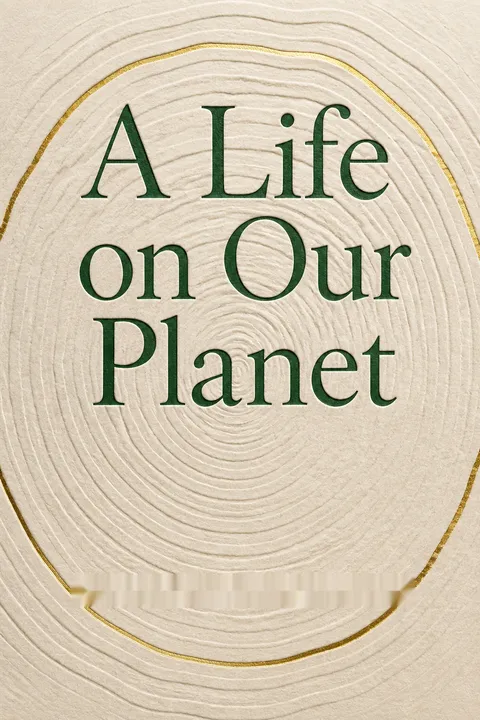

Key Takeaways
1. The Great Decline: Our Unprecedented Impact on Earth
This is the true tragedy of our time: the spiralling decline of our planet’s biodiversity.
A lifetime's witness. David Attenborough has witnessed an unprecedented decline in the natural world during his 94 years. From pristine wildernesses in his youth to emptying forests and seas today, he has seen humanity's impact transform the planet. This "Great Decline" is a direct consequence of our "Great Acceleration" since the 1950s, where human activity has surged exponentially.
Emptying the wild. The statistics are stark:
- Wild animal populations have more than halved since the 1950s.
- 96% of the mass of all mammals on Earth are humans or our livestock.
- Only 35% of remaining wilderness is left, down from 66% in 1937.
- We extract over 80 million tonnes of seafood annually, depleting 30% of fish stocks to critical levels.
Shifting baseline syndrome. We have become accustomed to an impoverished planet, forgetting the richness that existed just a few generations ago. This "shifting baseline syndrome" distorts our perception of what is normal, masking the true extent of our environmental damage. We are the "people of Pripyat," living comfortably in the shadow of a self-made disaster.
2. Breaching Planetary Boundaries: A Looming Catastrophe
We are already living beyond the safe operating space of Earth.
Earth's life-support machine. Scientific understanding reveals nine critical planetary boundaries that define a "safe operating space" for humanity. Breaching these thresholds risks destabilizing Earth's life-support system, leading to irreversible and catastrophic changes. We are currently turning up the dials on these boundaries, much like the ill-fated crew at Chernobyl.
Four flashing warning lights. Humanity has already pushed through four of these nine boundaries:
- Nitrogen and phosphorus cycles: Overloaded by excessive fertilizer use.
- Land-use change: Converting natural habitats to farmland at an unsustainable rate.
- Climate change: Warming the Earth too quickly by adding carbon to the atmosphere.
- Biodiversity loss: Causing extinctions at a rate 100 times the average, matching mass extinction events.
A grim forecast. If current trends continue, those born today could witness:
- 2030s: Amazon rainforest dieback, first ice-free Arctic summer.
- 2040s: Permafrost thaw releasing vast amounts of trapped carbon.
- 2050s: Ocean acidification leading to coral reef collapse and fisheries failure.
- 2080s: Global food production crisis, pollinator loss, new pandemics.
- 2100s: 4°C warmer planet, sea level rise making coastal cities uninhabitable, mass human migration, and an unstoppable sixth mass extinction.
3. Rewilding the World: Our Only Path to Stability
To restore stability to our planet, therefore, we must restore its biodiversity, the very thing we have removed.
A new philosophy. Our journey to a sustainable future must be guided by a return to an old philosophy: living in balance with nature. We moved from being a part of nature to being apart from it, viewing the wild as something to tame and exploit. Now, with billions of us, we must discover a new sustainable lifestyle that brings humanity back into harmony with the natural world.
The Doughnut Model. Economist Kate Raworth's "Doughnut Model" provides a compass for this journey. It defines a safe and just space for humanity by combining:
- Ecological ceiling: The planetary boundaries we must not exceed.
- Social foundation: Minimum requirements for human well-being (housing, healthcare, food, education, etc.).
This model challenges us to improve lives globally while radically reducing our environmental impact.
Nature's wisdom. The living world itself offers all the answers. If we prioritize the revival of nature, we will make the right decisions not just for the planet, but for ourselves. Increasing biodiversity inherently maximizes carbon capture and storage, creating a win-win scenario for climate change mitigation and ecological health.
4. Beyond Perpetual Growth: A Mature Economy for a Finite Planet
For, on a finite planet, the only way to achieve perpetual growth is to take more from elsewhere.
The illusion of growth. Our current economic model is fixated on perpetual growth, measured by Gross Domestic Product (GDP). This "Great Acceleration" has been achieved by "stealing" from the living world, ignoring the environmental costs of deforestation, pollution, and resource depletion. In a finite world, nothing can increase forever; all natural systems eventually mature and thrive without getting bigger.
Green growth and beyond. Environmental economists advocate for "green growth," where innovation leads to energy-efficient, low-impact products and services. This "sustainability revolution" could drive economic progress without environmental harm. However, green growth is still growth. The ultimate goal is a "growth-agnostic" world, where success is measured by well-being and planetary health, not just GDP.
New Zealand's example. New Zealand has boldly dropped GDP as its primary measure of success, adopting an index based on national concerns including people and planet. This shift in priorities allowed for decisive action during the COVID-19 pandemic, prioritizing public health over immediate economic impact. This demonstrates a readiness for a sustainable, mature global economy.
5. Transitioning to Clean Energy: Powering a Sustainable Future
We have less than a decade to switch from fossil fuels to clean energy.
Ancient sunlight's cost. Fossil fuels are ancient sunlight, stored carbon from prehistoric plants. Burning them has released millions of years' worth of carbon into the atmosphere in mere decades, replicating conditions that led to past mass extinctions. This has set us the most urgent challenge: transitioning from fossil fuels, which provided 85% of global energy in 2019, to clean energy.
The carbon budget. We have a limited "carbon budget" to stay below a 1.5°C global temperature increase. At current emission rates, this budget will be exhausted before the end of the decade. The transition to renewables (solar, wind, hydro, geothermal) is crucial, despite challenges like storage and vested interests from the fossil fuel industry.
A swift revolution. Affordability of renewables is improving, now outcompeting coal and nuclear. A high global carbon tax, like Sweden's, could rapidly accelerate this shift, stimulating innovation and efficiency. Morocco, for instance, has transformed its energy landscape, generating 40% of its needs from renewables, including the world's largest solar farm. This demonstrates that profound change is possible in a short time.
6. Restoring Our Oceans: From Exploitation to Abundance
If all international waters were designated a no-fish zone, we would transform the open ocean from a place exhausted by our relentless pursuit to a flourishing wilderness.
The ocean's vital role. The ocean, covering two-thirds of the planet, is crucial for carbon capture, biodiversity, and food supply. Currently, overfishing, destructive techniques, and widespread fishing are causing immense damage. We must help the marine world recover by adopting sustainable practices.
No-fish zones and smarter fishing. Creating a global network of "no-fish zones" (Marine Protected Areas, MPAs) is essential. These areas allow fish to grow larger and reproduce more, creating a "spill-over effect" that replenishes neighboring fishing grounds. The Cabo Pulmo MPA in Mexico demonstrated a 400% increase in marine life in 15 years. Additionally, smarter fishing techniques, real-time monitoring, and blockchain tracking can ensure sustainable yields.
Aquaculture and ocean forestry. Sustainable aquaculture, moving offshore and adopting multi-layered systems, can meet rising seafood demand without harming coastal habitats. Ocean forestry, cultivating fast-growing kelp, offers a powerful nature-based solution for carbon capture and bioenergy, without competing for land. Palau's traditional "bul" system, designating 80% of its waters as a no-fish zone, exemplifies how respecting nature can lead to abundance.
7. Reclaiming Land for Nature: More Food from Less Space
How can we get more food from less land?
The land grab. Humanity's expansion has converted over half of all habitable land to farmland, the single greatest direct cause of biodiversity loss. This destruction releases vast amounts of stored carbon and replaces self-sustaining wild habitats with sterile, industrially managed fields. To allow nature to recover, we must actively reduce our agricultural footprint.
Innovative farming solutions. Farmers in the Netherlands demonstrate how high-tech, sustainable methods can maximize yield on less land:
- Renewable energy for greenhouses.
- Automated climate control, rainwater collection.
- Hydroponics and natural pest control.
- Recycling agricultural waste.
For smaller farmers, regenerative agriculture revives exhausted soils by avoiding tilling, rotating diverse crops, and using cover crops, capturing 20 billion tonnes of carbon globally.
Urban and vertical farming. Growing food within cities on rooftops, abandoned buildings, or in vertical farms reduces transportation emissions and utilizes wasted space. These climate-controlled environments use hydroponics and LED lighting, multiplying yield up to 20 times per hectare. These innovations can significantly boost food production while freeing up vast tracts of land for rewilding.
8. Embracing a Plant-Based Diet: A Healthier, Sustainable Choice
What we eat will become more important than how much we eat.
The meat paradox. As global wealth increases, so does meat consumption, particularly beef. This is at the heart of our unsustainable demand for farmland. Nearly 80% of global farmland is used for meat and dairy, often for feed crops grown in deforested tropical regions. Beef production, for example, requires 15 times more land per kilogram than pork or chicken.
A plant-based future. A largely plant-based diet with much less meat, especially red meat, is universally recommended for a fair, healthy, and sustainable future. This shift would:
- Reduce farmland needs.
- Lower greenhouse gas emissions.
- Improve human health, potentially saving trillions in healthcare costs.
This dietary transition is a major social change, already underway, with a third of Britons reducing meat consumption.
Alt-proteins and clean meat. The food industry is rapidly developing "alt-proteins" (plant-based alternatives) and "clean meats" (grown from animal cell cultures). These products offer the taste and texture of meat with significantly lower environmental impact, requiring less land, water, and energy. As these technologies become more affordable, they could revolutionize our food supply, allowing humanity to feed itself on half the land currently farmed.
9. Empowering Women: Stabilizing Human Population Growth
Wherever women have the vote, wherever girls stay in school for longer, wherever women are in charge of their own lives and not dictated to by men, wherever they have access to good healthcare and contraception, wherever they are free to take any job and their aspirations for life are raised, the birth rate falls.
Peak human. The human population, currently 7.8 billion, is projected to reach 9.4 to 12.7 billion by 2100. While our ingenuity has always found ways to increase Earth's carrying capacity, the ongoing ecological crisis signals we are fast approaching its limits. Stabilizing population growth is crucial for a fair and just future where everyone gets a share of finite resources.
Demographic transition. Nations undergo a four-stage demographic transition: high birth/death rates, then falling death rates (population boom), then falling birth rates, finally low birth/death rates (stable population). The world population's growth rate peaked in 1962, and average family size has halved since then, indicating we are approaching the end of Stage 3.
Empowerment as the key. The fastest and most ethical way to stabilize population is by improving lives, particularly empowering women. Access to education, healthcare, contraception, and freedom of choice consistently leads to smaller family sizes. Investing in social and education systems in the poorest nations could bring "peak human" to 8.9 billion by 2060, 50 years earlier and 2 billion people fewer than current projections.
10. Designing a Circular Economy: Eliminating Waste, Mimicking Nature
In nature, the waste from one process becomes the food for the next.
No such thing as 'away'. Our "disposable society" generates immense waste, accumulating and causing damage. In nature, all materials are reused in cycles, with waste from one process becoming food for the next, and almost everything is biodegradable. We must mimic this "circular economy" to eliminate waste and pollution.
Biological and technical cycles. The circular economy distinguishes between:
- Biological cycle: Biodegradable materials (food, wood, natural fibers) are composted or digested, with waste becoming biochar or feed for insect farms. This captures carbon and enriches soils.
- Technical cycle: Non-biodegradable materials (plastics, synthetics, metals) are designed for durability, easy disassembly, remanufacturing, and recycling. This requires standardized components and new business models where products are rented, not just sold.
Zero pollution ambition. The goal is a world with no pollution – no plastics in oceans, no toxic industrial emissions. Landfill sites could become "open-cast mines" for valuable resources. By adopting this cyclical approach, humanity can eradicate waste and undo the damage of today's linear economy, creating a cleaner, healthier planet.
11. Green Cities: Urban Hubs for a Balanced Existence
In the future it may be possible for cities to give back rather than just take.
Cities as solutions. With 68% of the world population predicted to live in cities by 2050, urban environments hold immense potential for sustainability. City planners are transforming cities to be pedestrian and cyclist-friendly, with efficient public transport and centralized heating systems powered by renewables or waste. This often results in lower carbon emissions per city-dweller than in rural areas.
Nature in the city. Cities are increasingly embracing nature to improve quality of life and environmental services:
- Expanding parkland: Providing leisure spaces and cooling effects.
- Green roofs and walls: Purifying air, improving mental well-being.
- Urban wetlands: Mitigating flooding, increasing natural spaces.
- Singapore's "city within a garden": New buildings replace lost greenery with equivalent plant life above ground, creating green corridors and solar-powered "supertree" gardens.
Biomimicry challenge. Biologist Janine Benyus challenges cities to equal the environmental services of the natural habitats they replaced (solar energy generation, soil fertility, air purification, water production, carbon capture, biodiversity). The best sustainable buildings already achieve this, becoming net generators of energy, purifying air, treating wastewater, and hosting diverse life.
12. The Anthropocene Choice: Wisdom for Our Shared Future
In the end, the question of which version of the Anthropocene is about to unfold is up to us.
The human epoch. We are living in the Anthropocene, a geological epoch defined by human activity's dominant influence on the planet. This period could end in the collapse of human civilization, or it could mark the beginning of a new, sustainable relationship with nature, where we become attentive stewards of Earth.
Global unity is essential. The global dangers we face demand global solutions. Historical precedents like the international ban on whaling in 1986 and cross-border agreements to save mountain gorillas demonstrate our capacity for collective action. We must now unite to protect the entire natural world, subordinating national interests for the greater, wider benefit.
Nature's resilience, humanity's wisdom. The ruins of Pripyat, abandoned after Chernobyl, show nature's extraordinary resilience as a forest reclaimed the city, now a thriving wildlife sanctuary. Nature will recover with or without us. But for humanity to survive and thrive, we need more than intelligence; we need wisdom. We must learn from our mistakes, make amends, and work towards a stable, rich, and healthy world for all future generations.
Review Summary
A Life on Our Planet receives overwhelmingly positive reviews, praised for its insightful look at environmental changes over Attenborough's lifetime. Readers appreciate his clear explanations of complex issues, compelling statistics, and hopeful solutions for the future. Many find the book both informative and emotionally impactful, noting Attenborough's unique perspective and authoritative voice. While some criticize his optimism or wish for stronger stances, most reviewers consider it essential reading for understanding climate change and biodiversity loss.
People Also Read

Download PDF
Download EPUB
.epub digital book format is ideal for reading ebooks on phones, tablets, and e-readers.








































