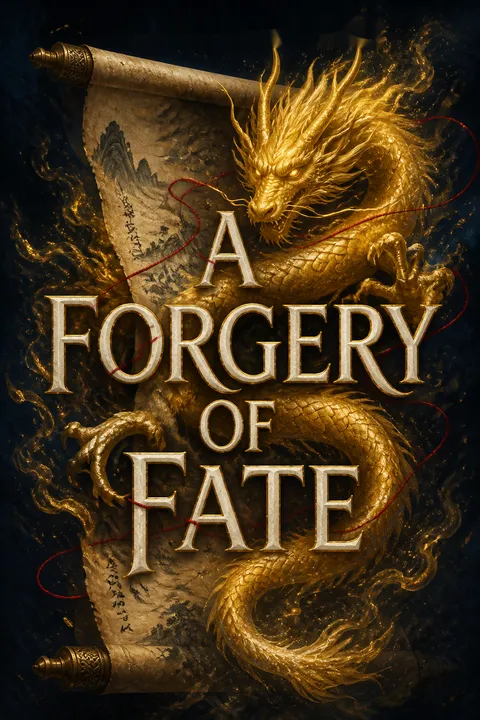

Plot Summary
Three Sisters, One Fate
Tru Saigas grows up in Gangsun with her two younger sisters, Falina and Nomi, and their fortune-telling mother. Their father, Baba, is a dreamer and adventurer, filling their lives with stories, games, and hope. The sisters are close, each with distinct personalities—Tru, the practical artist; Falina, the vain and charming one; and Nomi, the precocious scholar. Their family is poor but bound by love and the belief that fortune can be made or remade. Tru's blue hair, inherited from her father, marks her as different, a sign of both pride and trouble. The sisters' bond is their anchor, but fate has other plans, setting the stage for a story of loss, resilience, and the search for belonging.
The Disappearance of Baba
Baba's sudden disappearance at sea devastates the family. A letter arrives, declaring him lost, presumed dead, but their mother refuses to accept it, insisting he is alive and can be found. The sisters cling to this hope, even as poverty and uncertainty close in. Tru, the eldest, feels the weight of responsibility, forced to grow up quickly. Their mother's fortune-telling becomes desperate, and the family's unity is tested by grief and the struggle to survive. Tru learns that sometimes hope is a necessary lie, and that the future is not always what is foretold. The loss of Baba becomes the catalyst for Tru's journey into adulthood and the world's harsh realities.
Forging for Survival
Five years later, Tru supports her family by forging paintings, using her uncanny talent for capturing faces and details. She partners with Gaari, a mysterious one-eyed dealer, to sell her forgeries in Gangsun's black market. Tru's blue hair and sharp wit make her both a target and a survivor. The work is dangerous—thieves, corrupt officials, and rival criminals abound—but Tru's skill and Gaari's cunning keep them afloat. Every sale is a gamble, every day a test of nerve. Tru's art is more than a means of survival; it is her inheritance from Baba and her only way to keep her family together. Yet, the line between truth and deception grows ever thinner.
Debts and Desperation
Tru's mother, addicted to gambling and desperate for answers about Baba, accrues a massive debt to the crime lord Madam Yargui. The price for nonpayment is Falina's freedom—she will be sold if the debt is not paid by the Ghost Festival. Tru and her sisters scramble for solutions, pooling their meager savings and plotting schemes. Tru's only hope is to paint a miracle, something so valuable it will save her family. The pressure is immense, and the sisters' unity is tested as fear and desperation mount. Tru's resolve hardens: she will do anything to protect her sisters, even if it means risking her own soul.
The Magic Paintbrush
Tru discovers her art is more than skill—it is magic. When she paints, her visions come true, sometimes in small, uncanny ways, sometimes with world-altering consequences. Her "magic paintbrush" is both a gift and a curse, offering glimpses of the future she cannot control. In a desperate bid to save Falina, Tru paints a dragon—her most powerful vision yet. The painting is imbued with a spark of something otherworldly, attracting the attention of forces far beyond Gangsun. Tru's secret is dangerous, and as she steps into the world of magic and prophecy, she realizes her fate is no longer her own.
A Dragon's Bargain
Tru's dragon painting draws the attention of Elang, the enigmatic Demon Prince of Gangsun, who is half-dragon, half-human, and exiled from his realm. Elang offers Tru a bargain: marry him and help him return to Ai'long, the dragon realm, in exchange for her family's safety and a fortune. The marriage is to be a ruse, a means to an end, but the stakes are high—Elang needs Tru's Sight to break his curse and overthrow the Dragon King. Tru is torn between fear, duty, and the hope of finding Baba. She accepts, knowing that the path ahead is fraught with danger, deception, and the possibility of love.
The Demon Prince Unmasked
As Tru enters Elang's world, she discovers the truth behind his mask: he is not a demon, but a cursed half-dragon, shunned by both humans and dragons. Elang's curse is tied to his missing pearl—his heart—and only his Heavenly Match can break it. Tru's visions become more intense, and her connection to Elang deepens. Yet, secrets abound: Elang's true motives, the nature of Tru's magic, and the role of the demon Shani, who serves both master and her own agenda. Trust is hard-won and easily broken, and Tru must decide who to believe as the lines between friend and foe blur.
A Marriage of Convenience
Tru and Elang are wed in a private, magical ceremony, their fates bound by a red string. The marriage is a performance for the dragon realm, but the emotions that surface are real and confusing. Tru's family is kept safe in Elang's estate, but she is isolated, forced to navigate the politics and dangers of Ai'long. Elang is both protector and jailer, his own feelings masked by duty and fear of his curse. As they journey deeper into the dragon realm, the pretense of their marriage gives way to genuine connection, but the threat of betrayal and the weight of destiny loom ever larger.
Into the Dragon Realm
Tru is swept into Ai'long, a realm of beauty and desolation, ruled by the tyrannical Dragon King Nazayun. The Westerly Seas, Elang's domain, are in ruins, beset by storms and haunted by the king's wrath. Tru must master her Sight and learn the ways of dragons, aided by the demon Shani and the loyal turtle Mailoh. The court is a nest of intrigue, and every ally may be a traitor. Tru's art becomes her weapon, and her visions the key to survival. The journey is perilous, and the cost of failure is death—not just for Tru, but for all she loves.
Cursed Hearts, Hidden Truths
Elang's curse is revealed: his heart, his pearl, was stolen as punishment for his parents' forbidden love. Only his Heavenly Match can restore it, but doing so may cost Tru her own life. The two are drawn together by fate and choice, their bond deepening as they face trials and betrayals. Tru's visions show her glimpses of possible futures—some hopeful, some tragic. The Scroll of Oblivion, a legendary artifact, becomes central to their quest to overthrow Nazayun. As the Resonant Tide approaches, Tru and Elang must decide what they are willing to sacrifice for love, freedom, and the future of Ai'long.
The Painter's Gift
Tru's magic is the key to defeating Nazayun. She must paint the Dragon King's true likeness on the Scroll of Oblivion, sending him into eternal exile. The task is nearly impossible—she must capture his essence in a single, perfect moment, and only her Sight can guide her. Betrayals abound: Shani, once an ally, turns traitor under duress, and the lines between friend and enemy blur. Tru's love for Elang becomes both her strength and her vulnerability. As the final confrontation looms, Tru must trust her heart, her art, and the power of her own story to change fate itself.
The Dragon King's Wrath
Nazayun unleashes his fury, turning allies into monsters and threatening to destroy both Ai'long and Gangsun. Tru and Elang, aided by their friends and the merfolk queen Haidi, face impossible odds. The Scroll of Oblivion is their only hope, but using it comes at a terrible price. Tru's visions guide her, but the future is uncertain, and every choice carries consequences. In a final, desperate gambit, Tru risks everything to save Elang and her world, confronting the Dragon King in a battle of wills, magic, and love. The cost of victory is steep, and not everyone will survive.
Betrayal and Sacrifice
In the aftermath of the battle, Tru is forced to choose between saving Elang and preserving her own heart. The curse demands a price: only one can live. Elang, ever selfless, chooses Tru, sacrificing himself to break the cycle of pain and loss. Tru is left to mourn, her memories of their love both a comfort and a torment. The world is changed—Nazayun is gone, Ai'long is free, and Tru's family is reunited. Yet, the ache of absence lingers, and the question of whether love can conquer fate remains unanswered.
The Scroll of Oblivion
The Scroll of Oblivion, forged by the gods, is both a blessing and a curse. It can erase anything from existence, but only if painted with perfect truth. Tru's mastery of her art and her Sight make her the only one capable of wielding it. The Scroll becomes the fulcrum of the final battle, its magic both feared and coveted. In the end, it is not power or prophecy that determines the outcome, but love, sacrifice, and the courage to choose one's own destiny. The Scroll is returned to the gods, its purpose fulfilled, and the world is left to heal.
The Fall of Nazayun
With the Dragon King's defeat, Ai'long is freed from tyranny, and the balance of the realms is restored. The curse is broken, and the prisoners of the dragon realm are released. Tru's family is whole again, and the world breathes a sigh of relief. Yet, the victory is bittersweet—Elang is gone, and Tru must learn to live with both the memory of love and the pain of loss. The world is changed, but the scars of the past remain. Still, there is hope: the future is unwritten, and the power to shape it lies in the hands of those brave enough to dream.
The Price of Love
Tru returns to Gangsun, her heart heavy with grief but buoyed by the love she shared with Elang. She rebuilds her life, caring for her family and helping the refugees of Ai'long. The world moves on, but Tru cannot forget. Lanterns and festivals mark the passage of time, and the ache of absence becomes a part of her. Yet, love endures, and the red string of fate remains unbroken. When hope seems lost, a miracle occurs: Elang returns, changed but alive, his memory of Tru hidden but not erased. The possibility of new beginnings glimmers on the horizon.
Reunion and Return
At the Lantern Festival, Tru and Elang are reunited. Though he does not remember her at first, the red string and the memories they shared draw them together once more. The world is changed, but love endures. Together, they begin anew, choosing each other not because of fate or prophecy, but because of the lives they have lived and the love they have forged. The story ends with hope, laughter, and the promise of noodles—a symbol of life's simple joys and the power of second chances.
Lanterns and New Beginnings
As the years pass, Tru and her family find peace and purpose. The scars of the past remain, but they are softened by love, memory, and the promise of tomorrow. The Lantern Festival becomes a symbol of renewal, a time to honor the past and embrace the future. Tru and Elang, together at last, walk hand in hand into a world they have remade—one where fate is not a prison, but a canvas, and love is the brush that paints their story.
Analysis
A Forgery of Fate is a luminous exploration of agency, love, and the power of art to reshape destiny. Elizabeth Lim crafts a world where prophecy and free will are in constant tension, and where the act of creation—whether through painting, storytelling, or sacrifice—is an act of rebellion against the tyranny of fate. The novel interrogates the costs of hope, the pain of loss, and the courage required to choose love in the face of uncertainty. Tru's journey from survival to self-determination is a testament to resilience and the belief that the future is not fixed, but a canvas to be painted anew. The story's use of mythic motifs—the red string, the magic paintbrush, the Scroll of Oblivion—grounds its fantasy in universal questions: Can we change our fate? What is the price of love? And how do we find meaning in a world shaped by both loss and possibility? In the end, A Forgery of Fate is a celebration of second chances, the healing power of memory, and the enduring hope that, even in the darkest of times, we can choose to create a better world.
Review Summary
People Also Read
Characters
Truyan "Tru" Saigas
Tru is the eldest Saigas sister, marked by her blue hair and fierce devotion to her family. Gifted with the Sight, her art can shape reality, making her both a target and a savior. Tru is practical, stubborn, and deeply loyal, often sacrificing her own happiness for her sisters' safety. Her journey is one of self-discovery—learning to trust her magic, her heart, and her ability to change fate. Tru's relationship with Elang is complex, evolving from suspicion to love, and her willingness to risk everything for those she loves is both her greatest strength and her deepest vulnerability. Her arc is one of agency: she learns that destiny is not fixed, and that the power to rewrite the future lies within her own hands.
Elang (Gaari)
Elang is a half-dragon, half-human prince exiled from Ai'long, living under the guise of the Demon Prince and, later, as Gaari, Tru's art dealer and friend. His curse—having his heart (pearl) stolen—renders him emotionally distant, yet his actions are driven by a deep, hidden love. Elang is strategic, self-sacrificing, and haunted by his past. His relationship with Tru is fraught with secrets, misunderstandings, and longing. He orchestrates much of the plot, seeking to overthrow his tyrannical grandfather, Nazayun, and reclaim his place in the world. Elang's development is a study in vulnerability: he learns to trust, to love, and ultimately to let go, risking everything for Tru's happiness. His journey is one of redemption and the search for belonging.
Falina Saigas
Falina, the middle Saigas sister, is outwardly vain and obsessed with beauty, but her heart is steadfast. She is quick-witted, resourceful, and often the peacemaker between Tru and Nomi. Falina's arc is one of growth: she learns to value substance over appearance and to fight for her family in ways both subtle and bold. Her relationship with Tru is marked by sibling rivalry and deep affection, and her courage in the face of danger is a testament to her love. Falina's journey is about finding her own strength and redefining what it means to be beautiful.
Nomi Saigas
Nomi, the youngest sister, is a prodigy with a passion for books, science, and invention. Her practicality and curiosity often save the family from disaster, and her unwavering belief in Tru is a source of strength. Nomi's innocence is tempered by wisdom beyond her years, and her arc is one of coming into her own power. She is the glue that holds the sisters together, and her loyalty is unshakeable. Nomi's journey is about embracing her gifts and learning that intellect and heart are equally important.
Baba (Arban Saigas)
Baba is the Saigas sisters' beloved father, a dreamer and adventurer whose disappearance sets the story in motion. His love of art, stories, and fortune shapes Tru's worldview. Baba's absence is a wound that never fully heals, and his eventual return is both a miracle and a reminder of the cost of hope. He represents the power of dreams and the pain of loss, and his relationship with Tru is central to her identity. Baba's arc is one of redemption and reunion, a testament to the enduring power of family.
Mama (Weina Saigas)
Mama is a complex figure—practical, superstitious, and often exasperating. Her addiction to gambling and obsession with fate create many of the family's problems, but her love for her daughters is undeniable. Mama's arc is one of humility and growth: she learns to let go of the past, to trust her daughters, and to find strength in vulnerability. Her relationship with Tru is fraught but ultimately healing, and her journey is about learning that the future is not set in stone.
Shani (Shanizhun)
Shani is a water demon bound to Elang, serving as both protector and betrayer. Her motives are ambiguous, driven by survival, vengeance, and a grudging affection for Tru. Shani is cunning, sarcastic, and unpredictable, her loyalty always in question. Her arc is one of redemption: she betrays Tru and Elang under duress but ultimately aids in Nazayun's downfall. Shani's relationship with Tru is antagonistic but evolves into mutual respect. She embodies the story's themes of trust, betrayal, and the possibility of change.
Nazayun (The Dragon King)
Nazayun is the immortal Dragon King, ruler of Ai'long and the story's primary antagonist. He is a force of nature—cruel, capricious, and obsessed with control. His fear of change and loss of power drives him to monstrous acts, including cursing Elang and imprisoning countless innocents. Nazayun is both a symbol and a character: he represents the dangers of unchecked authority and the cost of clinging to the past. His defeat is both a personal and cosmic victory, and his arc is a cautionary tale about the perils of fear and pride.
Mailoh
Mailoh is Elang's chief servant and the heart of Yonsar. Wise, nurturing, and steadfast, she provides Tru with guidance and comfort in the dragon realm. Her loyalty to Elang and her people is unwavering, and her quiet courage is a model for all. Mailoh's arc is one of resilience: she endures loss, betrayal, and hardship, yet remains a beacon of hope. Her relationship with Tru is maternal, and her presence is a reminder that strength comes in many forms.
Queen Haidi
Queen Haidi is the ruler of the merfolk and a key ally to Tru and Elang. Wise, compassionate, and politically astute, she risks everything to help them. Haidi's transformation into a monster by Nazayun is a powerful moment of tragedy and injustice, but her eventual restoration is a testament to the story's themes of redemption and the power of love. Her arc is one of sacrifice and resilience, and her relationship with Tru is marked by mutual respect and shared purpose.
Plot Devices
Magic Paintbrush and Sight
Tru's ability to paint the future is the story's central device, blending prophecy with agency. Her art is both a weapon and a means of survival, allowing her to shape reality and challenge fate. The magic paintbrush is a symbol of creativity, hope, and the power to rewrite one's story. This device drives the plot, enabling Tru to save her family, confront the Dragon King, and ultimately change the world. It also serves as a metaphor for self-determination: the future is not fixed, and the act of creation is an act of rebellion against destiny.
The Red String of Fate
The red string that binds Tru and Elang is both literal and symbolic, representing the tension between fate and free will. It is a motif of connection, love, and the possibility of rewriting destiny. The string's presence throughout the story underscores the characters' struggles with agency, sacrifice, and the cost of love. Its eventual severing and retying mark the story's emotional climax and resolution.
The Scroll of Oblivion
The Scroll of Oblivion is a legendary artifact that can erase anything from existence if painted with perfect truth. It is the story's ultimate plot device, embodying the power and danger of art. The Scroll's use is fraught with risk: it demands honesty, precision, and sacrifice. Its presence raises questions about the nature of power, the ethics of creation, and the cost of victory. The Scroll's return to the gods at the end signals the restoration of balance and the end of an era.
Disguise and Identity
Disguise is a recurring device: Elang's many identities (Demon Prince, Gaari), Tru's playacting, and the shifting allegiances of Shani and others. These masks are both protection and prison, forcing characters to confront who they are and what they want. The gradual unmasking of truth is central to the story's emotional arc, culminating in the revelation of love and the acceptance of vulnerability.
Foreshadowing and Prophecy
Tru's Sight and the story's use of prophecy create a sense of inevitability and suspense. Foreshadowing is woven throughout—visions of dragons, hints of betrayal, and the recurring motif of the magic paintbrush. These devices build tension, but the story subverts prophecy by allowing characters to change their fates through choice, love, and courage.
Narrative Structure
The story employs a layered narrative, moving between past and present, memory and action. The use of flashbacks, dreams, and recovered memories deepens the emotional resonance and allows for complex character development. The structure mirrors the story's themes: the past shapes the present, but the future is unwritten.
About the Author
Other books by Elizabeth Lim

Download PDF
Download EPUB
.epub digital book format is ideal for reading ebooks on phones, tablets, and e-readers.








































