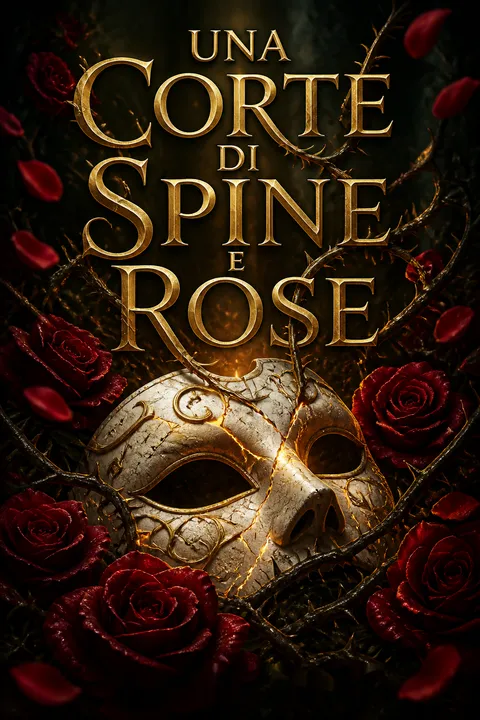

Trama
Winter's Desperate Hunt
In the heart of a brutal winter, Feyre, a mortal girl, stalks the snowy woods near her impoverished home, desperate to feed her starving family. Her world is divided by a magical wall separating mortals from the faerie lands of Prythian, a place of terror and legend. When a monstrous wolf appears, Feyre's survival instincts and hatred for faeries drive her to kill it with a rare ash arrow. The act is both a triumph and a harbinger of doom, as Feyre's kill is not just a means of survival but the first domino in a chain of events that will upend her life and the fate of two worlds.
The Wolf's Consequence
Feyre's kill brings temporary relief to her family, but the peace is shattered when a beastly faerie storms into their cottage, demanding retribution for the slain wolf—his friend. Feyre's family cowers as she confesses to the killing, and the beast offers her a choice: die now, or cross the wall and live out her days in Prythian as payment. With no real choice, Feyre leaves her family behind, her heart heavy with fear, guilt, and the weight of a promise to her dead mother to protect her kin at all costs.
Beast at the Door
Feyre is taken north, through the magical wall, to the Spring Court—an opulent, enchanted estate ruled by Tamlin, the beast who is also a High Fae lord. The court is frozen in eternal spring, its beauty masking a deep malaise. Feyre is both guest and prisoner, surrounded by masked faeries and ancient magic. She is told she will live in comfort, but the threat of death and the unknown hangs over her. Tamlin's court is empty, haunted by a blight, and Feyre's attempts to escape are futile, her fate now bound to the faerie realm.
Bargain Across the Wall
As Feyre adjusts to her new life, she meets Lucien, Tamlin's sharp-tongued emissary, and Alis, a pragmatic servant. The Spring Court is both wondrous and perilous, filled with beauty, danger, and secrets. Feyre's hatred for faeries is challenged by Tamlin's unexpected kindness and Lucien's reluctant camaraderie. She learns of a magical blight threatening Prythian, and of ancient treaties and curses. Feyre's survival instincts war with her growing curiosity and the first stirrings of something softer for her captors.
The Enchanted Court
Feyre's days are filled with painting, exploring, and learning the rhythms of the faerie court. She witnesses the court's strange customs, the masks they cannot remove, and the emptiness left by the blight. Tamlin's power is diminished, his people scattered. Feyre's initial animosity gives way to fascination and attraction, especially as Tamlin reveals his gentler side. Yet, the threat of the blight and the mysterious, cruel Amarantha looms, and Feyre's presence is a constant reminder of a curse none can speak of.
Masks and Hidden Truths
Feyre's relationship with Tamlin deepens, complicated by Lucien's warnings and the court's silence about the true nature of the blight. Feyre's illiteracy and outsider status isolate her, but Tamlin's gifts of paint and freedom to create begin to heal old wounds. The court's masks are both literal and metaphorical, hiding pain, fear, and longing. Feyre's feelings for Tamlin blossom, but danger encroaches as monstrous faeries slip through the weakened borders, and the court's secrets threaten to consume them all.
Thorns and Blossoms
Feyre and Tamlin's connection intensifies, culminating in moments of passion and vulnerability. The court celebrates Fire Night, a ritual of magic and desire, but Feyre's presence draws the attention of Rhysand, the enigmatic High Lord of Night. Feyre is marked by both Tamlin's love and Rhysand's interest, caught between two powerful fae. The blight's effects worsen, and Tamlin's desperation grows. Feyre's happiness is fragile, shadowed by the knowledge that her love may not be enough to save them.
The Blight's Shadow
The blight's true nature is revealed to be Amarantha, a cruel faerie queen who has enslaved Prythian and cursed Tamlin's court. Tamlin, forced to protect Feyre, sends her away, breaking both their hearts. Feyre returns to her family, now wealthy and safe thanks to Tamlin's magic, but she is haunted by guilt, love, and the knowledge that Tamlin is in mortal danger. Feyre's world is safe but empty, and she realizes that her heart—and her fate—are bound to Prythian.
The Suriel's Secret
Feyre learns from Alis and the Suriel that Tamlin's curse could only be broken by a mortal girl who killed a faerie out of hatred, then fell in love with a faerie and confessed it. Feyre realizes she was the key all along, but her failure to confess her love in time has doomed Tamlin and his court. Determined to right her mistake, Feyre braves the wall, returns to Prythian, and descends Under the Mountain, where Amarantha holds Tamlin and the High Lords captive.
Under the Mountain
Feyre is captured and brought before Amarantha, who offers her a bargain: complete three deadly tasks or solve a riddle, and Tamlin and his court will be freed. The court is a nightmare of cruelty, violence, and despair. Feyre is beaten, imprisoned, and forced to witness horrors. She is utterly alone, but her love for Tamlin and her stubborn will drive her to accept Amarantha's challenge, even as the odds of survival dwindle.
Amarantha's Deadly Bargain
Feyre's first task is to outwit and slay a monstrous worm, which she does through cunning and grit, though she is gravely wounded. Denied healing, she bargains with Rhysand, who saves her in exchange for a week of her life each month, marking her with a magical tattoo. Feyre's second task is a riddle she cannot read, but with Rhysand's secret help, she survives. Each trial breaks her further, and she is paraded as Rhysand's painted pet, humiliated and drugged, but she endures for Tamlin's sake.
Trials of Blood and Bone
Feyre's final task is to kill three innocent faeries with an ash dagger. She does so, shattering her soul, only to discover the last is Tamlin himself. Remembering clues about his heart of stone, Feyre stabs him, trusting he will survive. Amarantha, furious, refuses to honor the bargain and tortures Feyre to death. In her final moments, Feyre solves Amarantha's riddle—love—and breaks the curse, freeing Tamlin and the courts.
The Bargain with Night
As Feyre dies, the High Lords bestow a spark of their power, transforming her into High Fae. Tamlin slays Amarantha, ending her reign. Feyre is reborn, but haunted by the blood on her hands and the trauma of her trials. Rhysand, who aided her in secret, claims his week, hinting at a deeper connection. Feyre and Tamlin are reunited, but Feyre is forever changed—immortal, powerful, and marked by both love and sacrifice.
Painted and Paraded
Feyre and Tamlin return to the Spring Court, free at last. The court celebrates, but Feyre is haunted by guilt and the memory of those she killed. She struggles to reconcile her new immortal body with her human heart. Rhysand's bargain looms, and the threat of Hybern remains. Feyre's love for Tamlin endures, but she is no longer the girl who hunted in the snow—she is a survivor, a killer, and a faerie.
The Final Task
Feyre faces the consequences of her choices, the weight of her actions, and the reality of her new life. She is celebrated as a savior but feels like a monster. Tamlin's love is steadfast, but Feyre's soul is scarred. The world is changed, and Feyre must find a way to live with what she has done, what she has become, and the bargains she has made.
Love's Last Answer
Feyre's confession of love, even in the face of death, is the key that breaks Amarantha's curse. Love, the answer to the riddle, is both her salvation and her damnation. Feyre's journey is one of transformation—through suffering, sacrifice, and the courage to love in a world of thorns and roses.
Shattered and Reborn
Feyre and Tamlin return home, but nothing is as it was. Feyre is immortal, powerful, and marked by darkness and light. The scars of Under the Mountain remain, and the future is uncertain. But Feyre has chosen love, and with it, the strength to face whatever comes next.
Analysis
A Court of Thorns and Roses is a dark, lush reimagining of classic fairy tales, blending Beauty and the Beast with the perilous world of faerie. At its heart, the novel is a meditation on the transformative power of love, the cost of survival, and the complexity of moral choices. Feyre's journey from desperate hunter to immortal savior is marked by trauma, sacrifice, and the shattering of old prejudices. The story interrogates the nature of power—who wields it, who suffers under it, and what it means to reclaim agency in a world of cruelty and enchantment. The use of curses, bargains, and trials externalizes the internal struggles of the characters, forcing them to confront their fears, desires, and capacity for both violence and compassion. The novel's modern resonance lies in its exploration of trauma, resilience, and the search for meaning in the aftermath of suffering. Feyre's transformation is both literal and metaphorical, challenging the boundaries between human and faerie, victim and hero, love and duty. The lessons are clear: love is both a weapon and a balm, sacrifice is the price of freedom, and true strength lies in the courage to choose hope, even in a world of thorns.
Sintesi delle recensioni
Characters
Feyre Archeron
Feyre is a mortal girl hardened by poverty and responsibility, driven by a promise to her dying mother to protect her family. She is pragmatic, stubborn, and fiercely loyal, with a hidden longing for beauty and color. Feyre's journey is one of transformation—from hunter to captive, from human to High Fae, from victim to savior. Her love for Tamlin is both her weakness and her strength, and her willingness to sacrifice herself for others defines her. Feyre's illiteracy and outsider status isolate her, but her resilience, cunning, and capacity for love allow her to endure unimaginable trials. She is haunted by guilt and trauma, but her human heart remains her greatest weapon and her deepest wound.
Tamlin
Tamlin is the High Lord of the Spring Court, a powerful faerie cursed by Amarantha to wear a mask and lose his power unless a mortal girl who hates faeries falls in love with him. He is both warrior and poet, fierce and tender, burdened by guilt and responsibility. Tamlin's love for Feyre is transformative, awakening his vulnerability and hope. He is willing to sacrifice everything for her, even sending her away to protect her. Tamlin's struggle is between duty and desire, strength and gentleness, and his inability to speak the truth is both tragic and heroic. His journey is one of redemption, love, and the reclaiming of his power and court.
Lucien
Lucien is Tamlin's emissary and closest friend, a High Fae of the Autumn Court marked by a brutal scar and a metal eye. Sarcastic, sharp, and haunted by loss, Lucien is both a survivor and a skeptic. His initial resentment of Feyre gives way to respect and loyalty, and he risks his life to help her. Lucien's past is marked by family betrayal and trauma, and his friendship with Tamlin is a lifeline. He is a voice of reason, a reluctant ally, and a symbol of the cost of survival in a world ruled by power and cruelty.
Rhysand
Rhysand is the High Lord of the Night Court, a cunning, seductive, and dangerous faerie who plays a double game under Amarantha's rule. He is Amarantha's "whore," forced to serve her, but secretly works to undermine her. Rhysand is both tormentor and savior to Feyre, marking her with a bargain that binds them. His motives are ambiguous, his power immense, and his interest in Feyre hints at deeper connections. Rhysand's wit, ruthlessness, and hidden compassion make him a complex foil to Tamlin, and his actions shape Feyre's fate in ways she cannot yet understand.
Amarantha
Amarantha is the High Queen of Prythian, a former general of Hybern who conquers the faerie lands through cunning and brutality. She is driven by vengeance for her sister's death and a desire for power. Amarantha's curse on Tamlin's court is both punishment and entertainment, and her court Under the Mountain is a nightmare of torture and despair. She is a master manipulator, delighting in others' pain, and her downfall comes through her underestimation of love and sacrifice.
Alis
Alis is a faerie servant in the Spring Court, practical, blunt, and fiercely protective of her nephews. She guides Feyre, offering wisdom and warnings, and ultimately reveals the truth of Tamlin's curse. Alis's loyalty is to her family and to survival, but she risks everything to help Feyre, embodying the quiet heroism of those who endure in the shadows.
Nesta Archeron
Nesta is Feyre's eldest sister, cold, proud, and seemingly unfeeling. Beneath her icy exterior is a fierce loyalty and a capacity for sacrifice—she alone resists Tamlin's glamour and attempts to rescue Feyre. Nesta's relationship with Feyre is fraught with resentment and misunderstanding, but her actions reveal a depth of love and strength. She is a survivor, a protector, and a force to be reckoned with.
Elain Archeron
Elain is Feyre's middle sister, kind, optimistic, and devoted to beauty and growth. She is the heart of the Archeron family, tending gardens and nurturing hope even in poverty. Elain's innocence and gentleness contrast with Nesta's steel and Feyre's pragmatism, and her happiness is Feyre's greatest wish. She represents the possibility of healing and the enduring power of kindness.
The Suriel
The Suriel is a mysterious, skeletal faerie who answers questions when trapped. It reveals the truth of Tamlin's curse to Feyre, setting her on the path to redemption. The Suriel is both terrifying and oddly benevolent, a symbol of the hidden knowledge and fate that shape the world.
Jurian
Jurian is a long-dead human warrior, his soul trapped in Amarantha's ring as an eye and finger bone. His fate is a warning of the cost of hatred and the cruelty of faerie power. Jurian's presence haunts the court, a reminder of the past's unfinished business and the dangers of obsession.
Plot Devices
Curses and Bargains
The central plot device is the curse placed on Tamlin's court by Amarantha, which can only be broken by a mortal girl who kills a faerie out of hatred, then falls in love with a faerie and confesses it. This curse drives the narrative, shaping Feyre's journey from hunter to savior. Bargains—both magical and emotional—are woven throughout: Feyre's promise to her mother, her deal with Rhysand, and the bargains made by faeries and mortals alike. These bargains are binding, often with unforeseen consequences, and force characters to confront the cost of survival, love, and freedom.
Trials and Riddles
Amarantha's three tasks are classic fairy-tale trials, each designed to break Feyre physically, mentally, and morally. The riddle is a test of wisdom and love, its answer—love—serving as the key to freedom. The trials escalate in difficulty and consequence, forcing Feyre to confront her deepest fears and make impossible choices. The use of riddles and tasks creates suspense, tests character, and ultimately reveals the power of sacrifice and the redemptive nature of love.
Masks and Identity
The literal masks worn by the Spring Court symbolize the hidden truths, secrets, and emotional barriers that define the characters. Feyre's illiteracy, outsider status, and transformation from human to High Fae mirror the theme of identity—how it is shaped, concealed, and revealed. The masks also represent the roles characters are forced to play—beast, savior, whore, queen—and the struggle to reclaim agency and authenticity.
Foreshadowing and Symbolism
The narrative is rich with foreshadowing: the ash arrow, the Suriel's prophecy, the repeated references to hearts of stone, and the warnings about bargains and trust. Symbolism abounds—thorns and roses, blood and paint, light and darkness—each representing the dualities of love and pain, beauty and brutality, hope and despair. The use of color, art, and music as motifs underscores Feyre's longing for meaning and connection in a world of violence and loss.
Narrative Structure
The story follows a classic fairy-tale arc—Beauty and the Beast reimagined with faerie politics, curses, and deadly trials. The structure moves from the mortal world to the faerie realm, from captivity to love, from sacrifice to redemption. The narrative is tightly focused on Feyre's perspective, immersing the reader in her fears, desires, and transformation. The pacing accelerates as the stakes rise, culminating in a climactic confrontation that tests the limits of love and endurance.
Sull'autore
Altri libri di Sarah J. Maas




Scarica PDF
Scarica EPUB
.epub digital book format is ideal for reading ebooks on phones, tablets, and e-readers.








































