
Key Takeaways
1. Embrace Self-Reliance
If you don’t have enough money to protect yourself from danger, danger is going to find you.
Individual responsibility is paramount. The aftermath of Hurricane Katrina vividly illustrated that relying solely on government for protection is a recipe for disaster. While some innocent people suffered, many ignored warnings and lacked the personal resources or support systems to evacuate. This experience reinforced the author's belief that self-reliance is crucial for navigating life's challenges.
Work hard, learn skills. Prosperity in America stems from individual effort: learning a skill and working diligently. The author observed that even illegal immigrants find ways to earn billions, proving that opportunity exists for those willing to put in the effort. This mantra, if instilled in children, would make America a far better place, countering the "nanny state" mentality that fosters dependency.
Design your own life. Witnessing his father's unfulfilling career, where he surrendered dignity to a corporation out of fear, taught the author a profound lesson. He vowed never to rely on any company, government, or person. This conviction led him to create his own opportunities, fight his own battles, and develop a "cocky attitude" that has served him well throughout his career.
2. Confront Fear Directly
True courage is not about being fearless; it’s about overcoming fear, going ahead with something worthwhile even though you’re terrified.
Fear as a motivator. From childhood monster movies to war zones, the author learned to confront fear head-on. He believes that while fear is normal, it can be a powerful motivator if controlled. This approach helped him overcome initial anxieties as a TV reporter and later face high-risk situations in conflict areas like El Salvador and the Falkland Islands.
Confidence through challenge. Facing dangerous situations, such as covering wars or navigating hostile environments, built immense confidence. The author recounts his experiences in Vietnam's Viet Cong tunnels and Iraq, emphasizing that calculated risk-taking, not foolish chances, was key. These experiences taught him he could handle high-stakes scenarios, reinforcing his ability to stand up to injustice.
Overcoming fear for purpose. The author asserts that overcoming fear is essential for living a useful and honorable life, defining one's legacy by the wrongs righted and people helped. He believes his purpose is to confront evil, a mission that requires dealing with constant threats. This commitment to his purpose allows him to persist despite personal danger, echoing General Patton's adage: "Never take counsel of your fears."
3. Identify and Combat Evil
If you knowingly hurt another human being without significant cause, like self-defense, you are committing an evil act.
Defining evil clearly. The author's definition of evil is straightforward: knowingly hurting another human being without significant cause. He challenges the secular-progressive tendency to rationalize destructive behavior, arguing that individual pursuits should not justify harming others. This perspective was shaped by his strict Catholic upbringing, where Sister Mary Lurana was an "expert on evil."
Exposing societal harms. The author applies his definition to various cultural phenomena, questioning the morality of those who profit from:
- Rap lyrics glorifying violence and drug use
- Torture movies reveling in human suffering
- Child abuse, even when attributed to substance problems
- Terrorism, which he unequivocally labels as evil
- Catholic Church leaders who concealed pedophile priests
Accountability is crucial. The author believes his media platform, The Factor, exists to hold evil people accountable. He emphasizes rigorous research and giving individuals a chance to explain themselves before public confrontation. This approach, though controversial, has led to tangible results, such as changes in judicial sentencing for child molesters, demonstrating the power of exposing wrongdoing.
4. Value Traditional Faith
Those beliefs, sincerely held, can get a human being through many hard times.
Catholicism as a moral anchor. Despite being a "difficult child" and a "complete nonconformist," the author recognized the inherent value of his Catholic tradition. He distinguished between "crazy priests and mean nuns" and the core tenets of the faith, viewing Jesus as a "pretty good guy." This early acceptance provided an indelible role model and a framework for understanding right from wrong.
Discipline and purpose. Catholic school, though strict, instilled academic discipline and an emphasis on loving one's neighbor. This foundation, combined with constant teaching about Jesus, provided a sense of purpose and a belief in a just God. The author credits his faith with motivating him to expose "bad guys" and celebrate heroism, seeing his media job as a mission rather than just a paycheck.
Free will and the struggle. Later in life, the author reconciled the existence of evil with a just God through the concept of free will. He believes human beings choose between good and evil, and this choice defines them. This understanding reinforces his commitment to fighting active evil, seeing it as central to the Christian ethic and his personal and professional decisions.
5. Think Independently
I have never been a follower; I’ve always thought for myself.
Rejecting ideological extremes. Growing up in a conservative Levittown neighborhood, the author witnessed both conservative bigotry and liberal excesses during the Vietnam era. He found neither side appealing, choosing to remain unaligned and think for himself. This independent streak prevented him from falling into ideological traps and helped him maintain perspective during turbulent times.
Critiquing both sides. The author applies his independent thought to contemporary political issues, criticizing both liberals and conservatives:
- Liberals: For promoting the "nanny state," blaming society for poverty instead of individual responsibility, and supporting abortion on demand. He argues that liberal compassion often prioritizes feeling good over effective solutions.
- Conservatives: For failing to address illegal immigration and energy dependence, and for being "nitwits" on global warming by denying the problem. He also criticizes moralistic condemnations of social issues, preferring pragmatic, fact-based arguments.
Reality over wishful thinking. His problem-solving approach is grounded in "tough reality," not theoretical comfort zones. He advocates for solutions based on fairness, hard work, and honesty, rather than "wishful thinking." This independent, reality-based analysis, though often branded as conservative, allows him to win debates by dealing in facts rather than ideology.
6. Hold the Powerful Accountable
It is flat-out wrong to hide behind the First Amendment while doing dishonest, destructive things.
Exposing media villainy. The author believes that some powerful media figures abuse their constitutional privileges, hiding behind the First Amendment while engaging in dishonest and destructive behavior. He targets corporate boardrooms, not just "soft targets" like Al Franken or Rosie O'Donnell, for enabling this corruption. His goal is to expose these "powerful villains."
Challenging corporate leaders. He specifically calls out Jeffrey Immelt, CEO of General Electric (parent company of NBC), for:
- GE's declining stock performance under his leadership.
- Continuing to do business with Iran, a state sponsor of terrorism, despite its role in harming American troops.
- Allowing MSNBC to engage in "vicious and unprecedented" personal attacks.
The author's team uses "ambush" journalism to confront such figures when they evade scrutiny.
The crusade for justice. The author sees his work as a crusade to hold powerful individuals accountable, especially those who harm vulnerable people. He acknowledges the "acute danger" and "blowback" from this approach, including threats to his safety. However, he believes this mission is vital, distinguishing his work from most media that avoid making judgments or exposing the powerful.
7. Cultivate Loyal Friendships
You’ll be lucky if you make five good friends in your whole life.
The value of loyalty. The author deeply values loyalty, shared experiences, and camaraderie, realizing early on that true friends are a grounding force. He has actively maintained friendships from childhood, organizing biannual "Men of Adventure" trips for decades. These trips, filled with humor and shared escapades, serve as a vital connection to his past and a check on his present.
Honesty and mutual respect. His friendships are built on honesty and open communication, with no room for "weasels or phonies." Friends are expected to speak their minds and provide perspective if he "gets out of line." This mutual respect and accessibility are crucial, as true friendship is a two-way choice that cannot be forced or based on material gain.
A societal stabilizer. The author laments the decline of long-term friendships in America, replaced by "high-tech anonymous 'friendship'" on the Internet. He believes that enduring friendships, like long-term marriages, are a societal stabilizer. His old friends have made him stronger and happier, providing a constant reminder of his roots and values, regardless of his career success.
8. "Slug It Out" Against Adversity
Through the years, whenever I whined about some workplace injustice, my father’s reply always met his usual pithy and snappy standards: “Slug it out.”
Confronting workplace injustice. The author's father, a Depression survivor, instilled in him a pragmatic approach to life: "slug it out." This meant facing challenges directly and not expecting handouts or sympathy. This philosophy, combined with a "chip on his shoulder," fueled his relentless work ethic and aggressive reporting style in early journalism jobs.
Rapid career ascent. This confrontational yet determined approach allowed him to quickly climb the TV news ladder, moving from Scranton to Dallas, Denver, Hartford, and eventually New York City within five years. He credits his willingness to "get that damn story no matter what" and confront evasive individuals as key to his rapid success.
Standing up to bullies. The author recounts a dramatic incident at WNEV-TV in Boston where he physically confronted a bullying manager who was terrorizing staff. Despite the career risk, he refused to tolerate the injustice. This experience, though extreme, became "basic training" for his later work on The Factor, where he continues to "slug it out" against villains who harm the country.
9. Understand the Nature of Power
Being powerful is like being a lady. If you have to tell people you are, you aren’t.
Power's true definition. The author distinguishes between mere fame and true power, defining the latter as the ability to directly affect the lives of others. He notes that while celebrities like Paris Hilton have notoriety, truly powerful individuals, from presidents to moguls, can disturb, assist, or strengthen people through their actions and ideas.
Assessing presidential power. He analyzes his interactions with four presidents:
- George W. Bush: An honest man who faced immense challenges, but whose "rich-guy syndrome" led to a lack of urgency and poor post-Saddam planning in Iraq.
- Bill Clinton: A unique individual who rose from humble beginnings, but whose motivations and use of power remain somewhat mysterious due to his media avoidance.
- Gerald Ford: A patriotic, decent man who made the difficult but correct decision to pardon Nixon, though it cost him reelection.
- Jimmy Carter: A "disaster as president" who legitimized terrorists and lacked a grasp of the real world, despite his post-presidency humanitarian efforts.
Moguls and their influence. The author examines the power of Oprah Winfrey and Donald Trump:
- Oprah: The most powerful woman, who rose from deep poverty, uses her immense wealth and influence to help children and effect positive change, though her political endorsements carry risks.
- Trump: A brash real estate mogul whose power stems from "cold, hard cash" and intimidation, capable of revitalizing urban areas and employing thousands. The author criticizes Trump for engaging in "no-class" public feuds with less powerful figures, arguing it diminishes his brand.
10. Strive for Fairness
If you want to be treated righteously, then you must be righteous to others.
Personal experience with unfairness. From childhood, the author experienced and observed unfairness, such as his unequal punishment compared to a doctor's son in sixth grade. This fueled his lifelong aversion to injustice. He learned that while parents often dismiss complaints, school environments provided a constant arena for debating fairness.
Three ways to handle injustice. The author identifies three approaches to unfair situations:
- Ignore them: Leads to resentment and bitterness, though some can absorb much.
- Confront directly: Often leads to conflict and potential loss, but can be empowering.
- Deal strategically after the fact: A more patient approach that allows for better outcomes.
He admits his younger self often chose direct confrontation, leading to pain, but also strength.
The quest for justice. His professional life is driven by a quest for fairness, using his media platform to ensure others are treated justly. He recounts how a kind letter from a former boss, Tom Dargan, after a period of unfair criticism, taught him that "a white knight rides in when you really need one." This reinforced his belief that striving for fairness, even when life is inherently unfair, ultimately balances out.
11. Learn from Life's Mysteries
I can’t tell you how many times folks call me on the radio trying to justify bad behavior by pointing to other bad behavior.
Pop culture's inexplicable phenomena. The author, a "popular culture vulture," finds certain aspects of entertainment and public life utterly baffling. These "mysteries of the universe" highlight the immaturity and irrationality he observes:
- Celebrities: Brad Pitt's enduring fame despite a "mediocre movie résumé," Madonna's "phony English accent."
- Music: The incredibly dumb lyrics of "Hang on Sloopy," Elvis's "Do the Clam," and the "atrocity" of "To All the Girls I've Loved Before."
- Television: The inexplicable popularity of "Captain Kangaroo," "The Beverly Hillbillies," and the "dud" final episodes of Seinfeld and The Sopranos, which he views as a "condescending contempt for the audience."
Political figures and their quirks. He also finds certain political figures perplexing:
- Spiro Agnew: A "clown" who was a "complete mystery" as Vice President.
- Dick Cheney: A smart and witty man who "kept that very secret" by rarely explaining himself to the public, leading to disastrous media narratives.
Self-reflection and growth. These observations, though often trivial, serve as a backdrop for his personal growth. He advocates for self-conversation and sharp self-questioning to identify mistakes and avoid rationalizing bad behavior. This "personal no-spin zone" helps him learn from the past and approach life with a calm, creative mind, even if his younger self was "self-absorbed" and "barged in there."
Review Summary
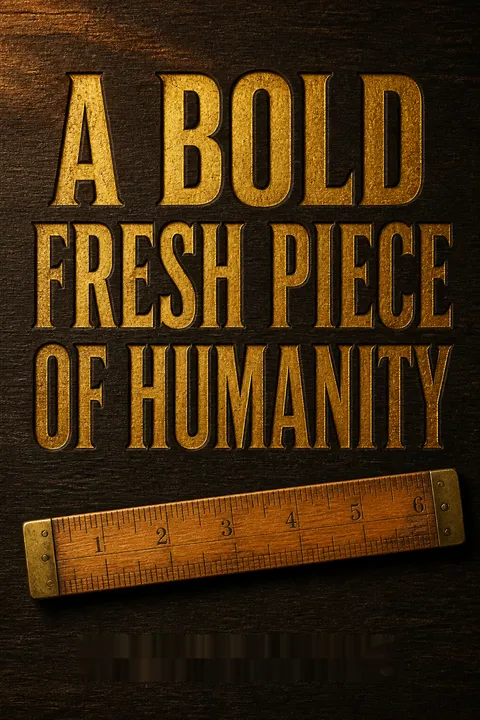
Reviews for A Bold Fresh Piece of Humanity are mixed, averaging 3.92/5. Fans praise O'Reilly's humor, self-awareness, and entertaining childhood stories, appreciating his exploration of the values and experiences that shaped him. Supporters highlight his commitment to personal responsibility and fairness. Critics, however, find the book arrogant and self-congratulatory, noting his inflated ego and lack of substantive analysis. Some feel the memoir is disjointed, mixing childhood anecdotes with random political musings. Overall, O'Reilly fans tend to love it, while skeptics remain unconvinced.
People Also Read



About the Author
Other books by Bill O'Reilly


Download PDF
Download EPUB
.epub digital book format is ideal for reading ebooks on phones, tablets, and e-readers.








































