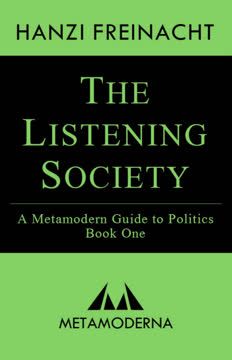
Key Takeaways
1. Embrace Sublime Mediocrity: Reject the Cult of Exceptionalism
The aim, then, is not excellence or to be outstanding—but mediocrity.
Challenge conventional self-help. This book offers a counter-narrative to the pervasive self-help genre, particularly Jordan Peterson's focus on individual responsibility and conservative values. It argues that the relentless pursuit of exceptionalism in a hyper-consumer, digital society leads to widespread dissatisfaction and mental health crises, especially among younger generations. Instead of striving to be extraordinary, which is common and often leads to superficiality, we should aim to master the ordinary.
Redefine success. The author, a self-proclaimed sociologist and philosopher, advocates for "sublime mediocrity"—a state of being truly average, unexceptional, yet finding profound satisfaction and meaning in it. This isn't about settling for less, but about recognizing that true contentment comes from within, not from external validation or status.
- Most people are mediocre in most ways, by definition.
- Aiming for exceptionalism creates constant competition and dissatisfaction.
- True satisfaction and meaning should be accessible to everyone, not just the "exceptional."
Find joy in the ordinary. By embracing our inherent mediocrity, we free ourselves from the pressure to constantly prove our worth. This allows us to appreciate the simple wonders of everyday life and cultivate a relaxed, self-accepting demeanor. It's about parenting ourselves with an openness to the extraordinary, while steadily returning to the hidden beauties of the ordinary.
2. Live in a Moderate Mess: Prioritize Deep Inner Order
People deeply invested in truly fun and meaningful projects often simply have better things to do than keeping their homes in perfect order.
Question obsessive tidiness. This commandment challenges the notion that a perfectly ordered external environment is a prerequisite for a well-ordered life or moral virtue. While extreme clutter can be detrimental, moderate messiness is often correlated with creativity and a focus on more meaningful pursuits. Historical figures like Einstein and Feynman had notoriously messy desks, yet were highly productive.
Beware of "cleanliness priming." Research suggests that excessive focus on cleanliness can lead to moral judgment, self-righteousness, and even authoritarian tendencies. People who feel "clean" are more likely to judge others harshly, linking external order to internal virtue. This superficiality distracts from genuine inner work.
- Cleanliness priming can increase moral judgment and self-reported moral superiority.
- Obsessive order can be an excuse to avoid deeper life challenges.
- It can also fuel unsustainable consumerism and unrealistic ideals.
Cultivate "deep house in order." The true "house in order" refers to inner clarity: addressing personal issues, healing traumas, and aligning one's values. This inner work is far more crucial than superficial tidiness for contributing meaningfully to the world. A moderate mess allows for greater focus on what truly matters, fostering self-compassion and tolerance rather than self-blame.
3. Unleash Your Inner Beast: Ground Life in Cosmoeroticism
Ongoing passion and growth in intimacy requires us to let go of our ideas of what we ‘should’ be doing and instead trust the wisdom inherent in our unguarded heart and uninhibited body.
Break free from inhibition. Popular culture, especially music, constantly reflects a longing for uninhibited emotional and physical expression. We often live constricted lives, suppressing desires and impulses to fit into societal norms, leading to neuroses and a muted sense of aliveness. This commandment calls for releasing a fiercer passion.
Embrace cosmoeroticism. This principle places the erotic drive—the lust for life and hunger for satisfaction in its widest sense—at the core of our being. It's about centering our attention on our desire-driven relatedness to reality, our "love affair with the cosmos." When this aliveness flows freely, we "open up" to a deeper connection with reality.
- Transcendence (spiritual insight) needs compassion.
- Compassion (caring for others) needs erotic grounding.
- Suppressed erotic energy can lead to dissatisfaction and destructive behaviors.
Heal the inner child. The path to liberating our cosmoerotic potential lies in tending to our inner child, our wounds, and vulnerabilities. By feeling and containing our deepest pains, we unlock the capacity for childlike joy and genuine aliveness. This involves cultivating adult capacities for sexual and emotional mastery, ensuring the "beast" is fed and integrated, preventing it from puppeteering our actions from the shadows.
4. Live Sincerely, Ironically: Reconstruct Meaning Beyond Nihilism
The deeper your irony goes, the greater sincerity you can muster and the more authentic life you can create.
Embrace paradoxical truth. Sincere irony is the art of being as ironic as possible to achieve true sincerity. It navigates the tension between questioning everything (irony/skepticism) and needing something to believe in (sincerity/faith). This stance builds trust by revealing self-awareness and disarming critics.
Three stages of growth:
- Authenticity/Sincerity: A direct, often naive, belief in ideals.
- Irony/Nihilism: Deconstructing facades, revealing emptiness, leading to cynicism.
- Sincere Irony: Reconstructing meaning playfully after thorough questioning. This allows for "informed naivety," "pragmatic romanticism," and "magical realism."
Re-enchant reality. By mastering irony, we can choose to believe in and commit to ideals, even knowing their constructed nature. This allows us to harness placebo effects for happiness and purpose, transforming cultural ruins into new sources of magic. It's about taking both the "red pill" (grim truth) and the "blue pill" (happy illusion) simultaneously, creating a "purple cocktail" of meaning.
5. Turn Workout Into Prayer: Build Resilience Through Body-Mind Practice
Bodily exercise, when it is well ordered, as I have said, is also prayer by means of which you can please God our Lord.
Prepare for emotional challenges. This commandment emphasizes physical and mental exercise as foundational for sustaining difficult emotions and resisting social pressure. It's about "oiling the machinery" of the body-mind to achieve a higher baseline subjective state (State 8).
The five-step sequence for body-mind workout:
- Breath: Focus on slow, nasal, subtle breathing with longer exhalations (e.g., Wim Hof method). This calms the nervous system and improves heart rate variability.
- Core and Posture: Strengthen core muscles and correct posture (e.g., the "four S's" of strengthening/stretching). This affects emotions, attentiveness, and social perception.
- Cardio: Engage in regular aerobic activity (20-30 mins, 3x/week) for overall well-being, emotional stability, and cognitive benefits.
- Strength: Incorporate weightlifting to build functional strength and improve body image, focusing on releasing tensions.
- Meditation: The "crown jewel" for rewiring the brain for higher states, but most effective when the body is prepared. Practices like "beauty meditation" can foster profound peace and connection.
Holistic body-mind connection. The body and mind are inseparable. By consciously working on these physical aspects, we influence our emotional landscape and overall experience of reality. This systematic approach builds resilience, allowing us to face life's challenges with greater composure and vitality.
6. Master the Art of Quitting: Cultivate Freedom and Healthy Boundaries
If you can’t say no to life, or the things in it, or to other people, you can’t say yes to life, either.
Quitting as empowerment. Contrary to popular belief, quitting is not for losers but for winners. It's a fundamental act of freedom and self-determination, essential for setting healthy boundaries and creating the life you truly desire. Many major life improvements stem from the courageous decision to quit detrimental situations.
The scale of conflict resolution:
- Transformative solutions: Finding a higher synthesis for mutual benefit.
- Compromise: Both parties lose something but maintain the relationship.
- Confrontation: Fighting to reshape the relationship according to one's interests.
- Quitting: The ultimate boundary, ending the relationship when other options fail.
Protect your inner child. The capacity to quit protects your inner child from harm and oppression, allowing it to commit more deeply to what truly matters. This adult capacity to say "no" is the basis for genuine "yeses" in life, fostering authentic relationships.
- Cults and abusive relationships thrive on the inability to quit.
- Quitting, when necessary, is an act of responsibility and self-care.
- It frees up energy and time for new, more aligned pursuits.
Strategic quitting. Quitting should be discerning, not frivolous. It's about identifying what no longer serves your well-being or values, and making a clean break, even if it involves short-term pain or guilt. This process sculpts your life into a work of art, removing what doesn't fit to reveal new beauty and purpose.
7. Do the Walk of Shame and Guilt: Integrate Your Anti-Self
The big liberation is when we, part by part, make friends with our anti-self.
Confront buried emotions. We all carry undealt-with shame and guilt, which act as invisible chains, inhibiting our actions and distorting our perceptions. This commandment urges us to make an inventory of these emotions, feel them fully, and allow them to run their course. This process, though uncomfortable, is liberating and strengthens our spirit.
Understand shame and guilt:
- Shame: Reacts to negative self-evaluation mirrored by others, paralyzing us to avoid further contempt. Shame itself is often shameful, leading to repression.
- Guilt: Regulates our right to belong to society, stemming from actions that break fundamental social rules. It's often deeply buried and denied.
Befriend your "anti-self." The "anti-self" is the negative self-image we desperately hope isn't true about us. By acknowledging and accepting this part of ourselves, we disarm its power. This self-acceptance reduces the need to "prove ourselves" and frees us from corrupted motivations.
- Integrated shame leads to bravery and genuine humility.
- Acknowledging guilt fosters self-respect and reduces judgment of others.
- This process purifies our perception, allowing us to see others with dignity and respect.
Embrace your full spectrum. Recognize that you are the sum of all impressions others have had of you—good, bad, and mediocre. Accepting this multifaceted self, including your flaws, is crucial for self-love and authentic connection.
8. Sacrifice Immortality: Face Fear and Embrace Life's Impermanence
Let death conquer you, as it must. And then let love of life’s rareness flow from that acceptance.
Confront the fear of death. Our deepest fears, particularly the fear of death and the terror of inescapable suffering, drive many of our "immortality projects"—achievements, offspring, or legacies designed to cheat oblivion. This commandment calls for facing these fears directly.
- Denial of death is an archetypal symbol of evil (e.g., vampires, Voldemort).
- Excessive denial of death puts us at war with life itself.
- The terror of "very low subjective states" (hellish suffering) can be more profound than death itself.
Tame the inner dragon. By contemplating our mortality and the potential for profound suffering, we can gradually diminish the grip of terror. This practice, akin to "death therapy," liberates us from the fear that underlies shame and guilt, fostering courage and resilience.
Overcome "Sklavenmoral." This "slave morality" is the internalized envy of others, causing us to suppress our own highest potentials and dreams to fit in. By facing our fears and accepting our own "greatness" (even if it seems pathetic), we break free from this subtle slavery.
- Disowning our potential stems from fear of ridicule and envy.
- Integrated fear and Sklavenmoral lead to genuine freedom and generosity.
- This process enhances our ability to manage relationships by reducing reactivity to others' negative emotions.
Reverse death therapy. Complementing the confrontation of fear, this practice involves imagining the loss of everything we cherish. By accepting that our blessings are not birthrights, we cultivate gratitude and equanimity, preparing us for inevitable losses and deepening our appreciation for life's inherent beauty.
9. Heal with Justice: Align Emotions, Thoughts, Perceptions, and Actions
Justice alone can ultimately set the emotional flows into harmonic resonance, thus ceasing the blockages that force our inner subjective states towards the anxious and dull.
Justice as wholeness. This is the most crucial commandment. Justice is the harmonizing principle that aligns our emotions, thoughts, perceptions, and actions, both within ourselves and in our relationships with others. It closes "moral gaps" in our life stories, bringing coherence and healing.
- Injustice creates internal contradictions and external conflict.
- Emotional healing requires addressing underlying injustices.
- Justice is about proportionality and coherence in social relations.
Become a "social justice warrior" in your own life. This means rooting your sense of justice in your own values, free from emotional distortions. By impartially assessing situations, even those involving personal pain, we gain clarity and the capacity to act ethically.
- Thoughts, emotions, perceptions, and actions are interdependent.
- Unresolved emotions distort perception, leading to confusion and "wrong emotions."
- Justice provides the framework to untangle these, leading to emotional clarity and appropriate action.
Justice is greater than love or fairness. While love and fairness are important, justice is the more fundamental value. The most just action, even if seemingly unloving or unfair in the short term, ultimately leads to the most loving and fair outcome. This moral clarity is the strongest source of assertiveness, allowing us to stand firm against injustice without succumbing to resentment.
10. Burn Your Maps: Continuously Update Your Worldview
Your world map always confirms itself: Either you're much too critically minded to be drawn into crazy conspiracy theories, or you are too critically minded to buy the mainstream media narrative, being one of the select few who recognize that “something else is going on here”.
Challenge your worldview. Our "world map"—the collection of theories and assumptions we hold about reality—shapes our sense of justice, our goals, and our actions. Everyone believes their own map is the best, leading to blind spots and potential for error. This commandment urges continuous map-updating.
Recognize "noisy moments" of insight:
- Aha-moments: Small, significant shifts in perspective.
- Haha-moments: Laughter-inducing shifts in frame, revealing new angles.
- Oh-moments: Minor additions to existing knowledge.
- What-the-fuck-moments: Rare, transformative shifts that rip apart basic assumptions, leading to rebirths.
Cultivate intellectual humility. Assume your map is incomplete and flawed. Invest time in learning, seeking diverse perspectives, and maintaining an open, resilient mind. This "spiritual bungee-jumping" off the edge of your current reality fosters wonder and prevents stagnation.
- Blind adherence to a map can lead to disastrous outcomes (e.g., Nazism).
- Learning from others, even opponents, enriches your understanding.
- A better map increases your capacity to wonder and navigate complexity.
Embrace mutual "red-pilling." Recognize that there are multiple "matrices" and "red pills." Instead of seeking one ultimate truth, engage in a continuous process of mutual learning and challenge. This inoculates against dogmatism and fosters a more universal perspective.
11. Do What You Hate: Seek Therapy for Your Achilles' Heel
Therapy is about what you’re bad at; indeed, so dismally bad you’re not even aware of how to wrap your head around it.
Therapy targets weaknesses. We naturally gravitate towards activities and therapies that align with our strengths and biases. However, true healing and growth come from addressing our "Achilles' heels"—the areas where we are most deficient or resistant. This often means choosing the therapy you instinctively "hate" or find unappealing.
The spectrum of psychological issues (Wilber's model, reinterpreted):
- Psychosis: Fundamental sense of reality/safety (e.g., schizophrenia).
- Personality disorders: Basic sense of self and boundaries (e.g., borderline).
- Family traumas: Deep-seated relational patterns (e.g., psychoanalysis).
- Unhelpful thought-patterns: Cognitive distortions (e.g., CBT).
- Adult identity issues: Self-esteem, social roles (e.g., positive psychology).
- Existential anxiety/lack of purpose: Meaning-making (e.g., logotherapy).
- Spirituality: Higher states of consciousness (e.g., contemplative practices).
Choose the right challenge. Therapists often diagnose based on their own expertise, not necessarily the client's deepest need. To make progress, identify your core weakness and seek a therapeutic approach that directly confronts it, even if it feels counterintuitive or "not profound enough."
- Men often need emotional/somatic therapy; women often need CBT.
- Highly intelligent individuals may benefit from somatic therapies to bypass overthinking.
- Turning a weakness into a strength can lead to exceptional mastery.
Embrace the unglamorous work. Therapy is not about doing what you love; it's about confronting what you've avoided your whole life. This "sublime mediocrity" of addressing your deepest flaws can unlock immense potential and lead to radical improvements in your life.
12. Play for Forgiveness: The Ultimate Path to Inner Peace and Transpersonal Power
Forgiveness is the key to action and freedom.
Forgiveness as the ultimate goal. All commandments ultimately lead towards forgiveness, which is the path to inner peace and happiness. It's not about condoning harm, but about releasing resentment and rumination for your own well-being. Forgiveness is a capacity, not a forced choice, and it must be earned through a process.
The stages of forgiveness:
- Forgive yourself: Acknowledge your own part in the situation, your mistakes, or your victimhood.
- Forgive the reality: Accept what happened, even if it was unjust or painful.
- Forgive honest mistakes: Differentiate between malicious intent and genuine errors.
- Forgive the enemy: Confront the malice or disregard, and choose to release the hatred. This is a spiritual victory.
- Forgive the game: See the larger context, the flaws in the "game of life" that allowed the transgression, and move towards a new paradigm.
Cultivate transpersonal power through meta-teams. In place of gurus or reliance on wealth, build a "meta-team"—a tight-knit group of friends whose relationships integrate personal, professional, and political spheres. This group, bound by deep friendship and shared purpose, fosters "source alignment" and provides honest feedback, leading to genuine, collective power that transcends individual limitations.
- Gurus and excessive wealth often deplete personal power and distort truth-seeking.
- Meta-teams are built on mutual care, shared vision, and complementary skills.
- Effective communication and "conservative radical honesty" are crucial for meta-team resilience.
Embrace the rage and grief. True forgiveness requires acknowledging and integrating righteous rage against injustice and the profound grief for life's inherent suffering. This "divine anger," when tamed and aligned with justice, becomes a source of courage and agency. By forgiving the world, even God, for its imperfections, we achieve a cosmic love and a profound sense of belonging, transforming our ordinary lives into something divine.
People Also Read





 Immersive